In this Blog
- What Adderall is and how it affects the brain
- Whether Adderall can lead to addiction or dependence
- Signs and risks of Adderall misuse
- Who is most vulnerable to Adderall addiction
- When professional support may be helpful
The medication Adderall is commonly prescribed to treat issues related to attention but the issue of abuse and addiction is continuously increasing. The majority of people usually believe that prescription stimulants are safe only because medical practitioners approve them. The awareness of the fact that Adderall is an addictive drug will help people to detect the risks at the early stages and make their decisions about their use.
FACT: Prescription stimulants like Adderall carry documented risks for misuse and addiction.
What is Adderall, and How Does It Work?
Adderall is a prescription drug and amphetamine salts combination, it is a stimulant. It impacts the central nervous system since it enhances the activities of the brain in the form of dopamine and norepinephrine. These are the attention, motivation and alertness chemicals.
Adderall is prescribed to aid in concentration and treat individuals with some diagnoses. The stimulative effects however are also the initiators of the reinforcing effects. The misuse may become even more attractive as time passes with the added energy, self-confidence, and productivity.
100% Confidential Support is Available 24/7
No matter what you’re going through, you’re not alone. Our dedicated team is here to provide a safe, judgment-free space where you can talk openly and honestly. Whether you need emotional support, resources, or just someone to listen.
We’re here for you—completely confidential and always respectful of your privacy. Call us today!
Is Adderall Considered Addictive?
Adderall is a yes addictive drug. It is a Schedule II drug since it has a great potential for abuse and addiction. Excessive consumption of the drug in huge amounts, increased frequency, and without prescription are the factors that increase the risk of addiction.
Addiction is a destructive use of something regardless of its negative impact. Depending on the long-term use of Adderall, one can become addicted to it to be able to perform on an emotional or mental level. Such dependency can be developed among those people who began to take the medication for legitimate reasons.
Contact Palm Coast Treatment Solutions to discuss recovery options
Contact Palm Coast Treatment Solutions
Battling with Drug and Alcohol Addition? Remember, you are not alone and we are here to help you!
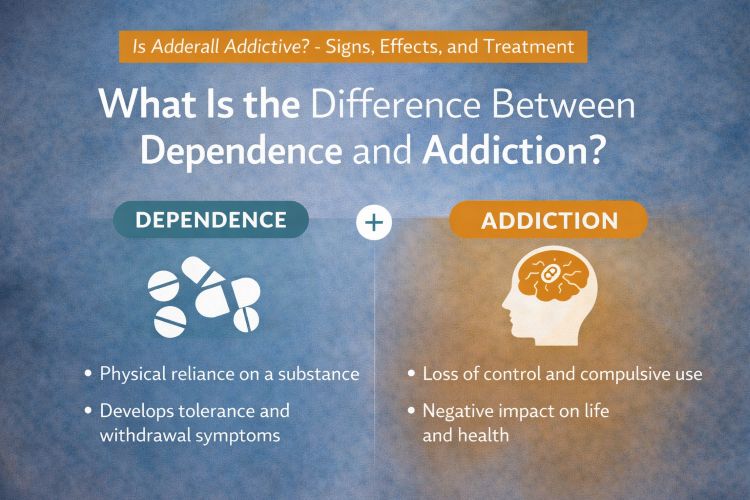
What Is the Difference Between Dependence and Addiction?
There is a difference but a similarity between addiction and reliance.
Dependence: Addiction to a substance leads to the emergence of certain levels of tolerance towards a substance in the body and there is withdrawal symptoms that occur after stopping the substance. Addiction is characterised by behaviour change, wish and uncontrollability.
Adderall is no exception as one can become addicted to it provided that they consume it regularly. In its absence, individuals cannot focus and labor. One of the areas concerning addiction is that it persists irrespective of whether it is bad or covert and even obsessive.
Overcome Addiction with Palm Coast Treatment Solutions.
Book an appointment.
How Does Adderall Misuse Develop?
A use of Adderall on a misuse basis is likely to begin small-scale. The rest of them use more doses to get concentrated or energized. It can be used by other individuals in their academic or working performance, instead of being medically necessary.
The common causes of them are:
- Performance pressure or product pressure.
- Attitude to prescription stimulants is lacking.
- Drug or impulsive history.
- Very easy access by fellow inmates or some outdated prescriptions.
Brain chemistry can also be influenced by abuse and encourages a dependence leading one to be increasingly addicted.
Who Is Most at Risk for Adderall Addiction?
Some are more susceptible. They are at risk of individuals with a history of substance use disorders, untreated mental, or chronic stress.
Young adults and students are highly prone to risk due to the pressure of academics and due to the socialization of the abuse of stimulants. In the case of Adderall, there are high risks of getting addicted to it if it is misused.
It is also dependent on the environmental factors. The continued abuse might be caused by stressful environments, insomnia, and the inability to cope.
Overcome Addiction with Palm Coast Treatment Solutions.
Book an appointment.
What Are Common Signs of Adderall Addiction?
These indicators can be behavioral, emotional and physical. They require a long time to pick and are easily ignored at the beginning.
Common indicators include:
- Exaggerations or under-exaggerations.
- Bright preoccupation in taking or ingesting Adderall.
- The heightened anxiousness, irritation, and moodiness.
- Sleep disorder or anorexia.
- The effects are put into opposition to the use.
The occurrence of early pattern recognition helps in enhancing a successful recovery.
Short-Term vs Long-Term Effects of Adderall Misuse
Timeframe | Common Effects |
Short-term | Increased alertness, appetite loss, and insomnia |
Long-term | Anxiety, dependence, mood changes, exhaustion |
Emotional impact | Irritability, emotional crashes |
Behavioral impact | Compulsive use, secrecy |
Contact Palm Coast Treatment Solutions for Confidential Support
Overcome Addiction with Palm Coast Treatment Solutions.
Book an appointment.
What Are the Risks of Long-Term Adderall Misuse?
Long term effects of abuse may be physical and emotional psychological. Continuous use of stimulants can lead to the heart strain and disturbed sleep.
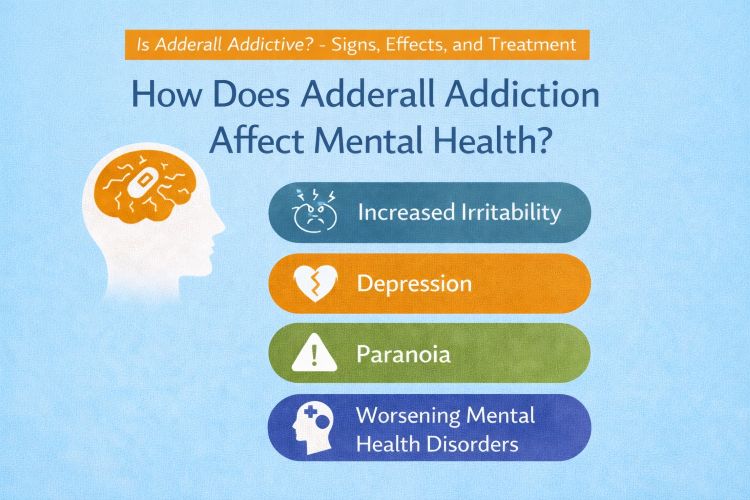
They may influence it psychologically through anxiety, depression, paranoia or a lack of emotion. Any reward system in the brain can devise mechanisms of becoming less receptive with time and it might be hard to be interested to do something without the drug.
These risks are the ones that underline the necessity of professional assistance in suspected cases of misuse or dependence.
How Does Adderall Addiction Affect Mental?
Adderall has been generally associated with addiction, which is characterized by anxiety, depression, or emotional disturbances. Other people use the stimulants to feel good or to feel energized, and this does not aim to reinforce the poor coping behaviors.
Emotional crashes may increase in level with the increase in tolerance. This cycle enhances the addiction and the deterioration of mental issues in the future.
Combined behavioral assistance will make it possible to treat the stimulant use as well as the emotional issues simultaneously.
Prescribed Use vs Misuse of Adderall
Aspect | Prescribed Use | Misuse |
Medical oversight | Yes | No |
Dosage | Controlled | Often escalated |
Purpose | Symptom management | Performance or energy |
Risk level | Monitored | Increased |
Addiction potential | Lower | Higher |
Can Someone Recover From Adderall Addiction?
Yes. Another issue, which may be addressed through the help of the corresponding assistance, is the problem of addiction to Adderall. The therapy is focused on the normalization of the brain chemistry, habits, and improvement of the emotional control.
The therapy will involve behavioral therapies which would help the victims understand triggers as well as develop coping mechanisms. Recovery of normal routines and stressor coping are also factors that resulted in misuse.
Expert Advice: Stimulant addiction recovery improves when emotional and coping skills are addressed.
Palm Coast Treatment Solutions is an alcohol treatment facility that provides recovery-focused services to individuals who have prescription stimulant abuse,e.g., Adderall.
Palm Coast Treatment Solutions gives individuals the chance to conquer both addiction patterns and hidden emotional problems in their supportive and confidential envi
Call us To Today to Learn More
Medical Disclaimer: This blog is for informational purposes only and is not a substitute for professional medical advice.
Key Takeaways
- Adderall is a prescription stimulant with recognized addiction potential
- Misuse can develop gradually through tolerance and emotional reliance
- Dependence and addiction are different but closely related
- Long-term misuse affects emotional and physical
- Integrated behavioral support improves recovery outcomes
- Early recognition and support reduce long-term risks
FAQs
1. Is Adderall addictive when taken as prescribed?
Adderall can still carry addiction risk even when prescribed, though the risk is lower under medical supervision. Factors such as dosage, duration, and individual vulnerability influence outcomes. Regular monitoring and open communication with providers help reduce misuse, dependence, and progression toward addictive patterns over time.
2. How quickly can someone become addicted to Adderall?
Addiction timelines vary widely. Some individuals develop problematic patterns within weeks, while others misuse Adderall for months or years before recognizing addiction. Risk increases with higher doses, frequent use, lack of medical oversight, and use for performance enhancement rather than medical necessity.
3. Can Adderall cause withdrawal symptoms?
Yes. Stopping Adderall abruptly after prolonged use may lead to withdrawal symptoms such as fatigue, mood changes, depression, and difficulty concentrating. These symptoms reflect changes in brain chemistry and often require professional guidance to manage safely and support long-term recovery stability.
4. Is Adderall addiction the same as other stimulant addictions?
Adderall addiction shares similarities with other stimulant addictions, including cravings and dependence. However, the prescription context can delay recognition. Misuse patterns, emotional reliance, and withdrawal experiences may differ, but recovery principles remain similar across stimulant-related substance use disorders.
5. Can Adderall misuse affect academic or work performance long-term?
While Adderall misuse may initially seem helpful, long-term use often worsens focus, motivation, and emotional stability. Tolerance, crashes, and sleep disruption can reduce performance over time. Sustainable productivity depends on y coping strategies rather than stimulant reliance.
6. When should someone seek help for Adderall misuse?
Support should be considered when Adderall use feels difficult to control, causes emotional distress, or interferes with daily functioning. Early assessment helps prevent escalation, addresses underlying stressors, and supports their behavioral patterns before addiction becomes more entrenched.
References
- National Institute on Drug Abuse (NIDA) – Prescription Stimulants
- Substance Abuse and Mental Services Administration (SAMHSA) – Stimulant Use Disorders
- National Institutes of (NIH) – Amphetamines and Addiction
- PubMed – Misuse and Dependence of Prescription Stimulants