Understanding Cannabis Rescheduling
Introduction to Understanding Cannabis Rescheduling Explained: What it is and why it matters: it is worth mentioning that the drug policy of the U.S. is going to face one of the most significant changes of the past decades. Cannabis has long been in the list of the most restricted substances, though current actions by the federal government make allusions to changes in this situation that may take place soon. It is not only a significant event in the sphere of policymakers but also in the sphere of healthcare providers, patients and families dealing with substance use and mental health concerns.
The vision of our company, Palm Coast Treatment Solutions, is that, when legislation changes, it has to be clarified. Reclassification of cannabis is not encourage its use or lessen its dangers. It involves the openness of the science, medicine and public health perceptions of how established patterns of drug classifications are being reconstituted and its impacts on treatment, research and recovery support.
Why Cannabis Rescheduling is a Big Deal
Cannabis is one of the Schedule I drugs, being the section of the Controlled Substances Act that is more than 50 years old. This classification is coded to the drug substances which are considered to be of no accepted medical use and high chance of abuse. The definition fails with modern research in the present day or with the observations that are made in the clinical world.
The federal government is in the process of actively thinking of a switch to Schedule 3. The shift not only renders cannabis legal in the whole country but also eliminates the risks of abuse. Instead, it is a symptom of transforming scientific knowledge and developments to control more, research more and medical orientations better.
Such a resource as The Knowledge of Cannabis Rescheduling Explained may help people to differentiate between facts and assumptions and to make more informed decisions concerning health, treatment, and prevention.
Cannabis Rescheduling Explained
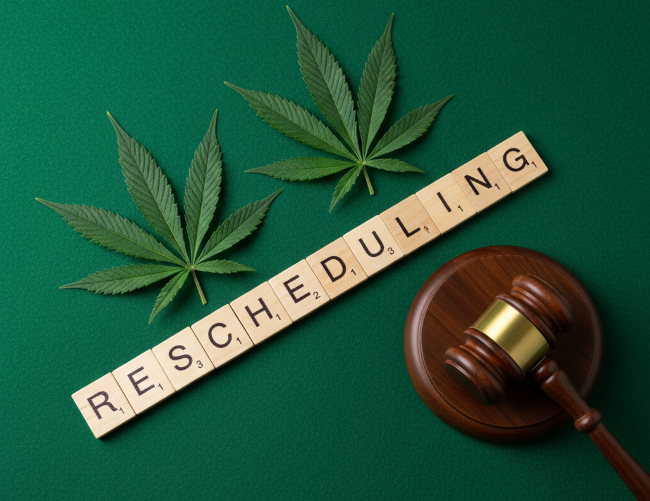
Cannabis Rescheduling Explained is a government initiative that is a federal process where marijuana will be reclassified in the Controlled Substances Act. Planning could determine the level of control where a substance will be contained with the research as well as the treatment of the substance both in the medical practice and the legal systems.
The fact that cannabis is being classified as Schedule I to Schedule III is a response to three key recognitions:
- Medical uses have been found to be possessed by cannabis.
- Its potential to be abused is less than that of Schedule I drugs.
- By properly regulated and controlled regulation, it can manage its risks.
This does not mean that cannabis is good. Rather, it is an indicator that federal policy is beginning to align more consistently with scientific proof as opposed to baseless beliefs.
Cannabis rescheduling explained is an act of evidence-based discourse rather than policy that has been disseminated through stigma to treatment providers.
How the Rescheduling Process Works
Rescheduling drug is not a political bypass. It is a multi-step process that is multi-step, involves the involvement of the federal agencies, scientific review, and regulatory approval.
This involves the following:
- Scientific and medical diagnosis of the drug.
- Risk assessment: Misuse/dependency.
- Viewing authority e.g. Food and Drug Authority.
- Recent decision with the Drug Enforcement Administration
This method is systematic and directs the decision-making towards the data rather than the trends. The re-assessment in the case of cannabis was informed by decades of research and state wide medical programs, and clinical evidence.
The first implication to the Learning how to reschedule cannabis is to equally revisit the restructuring of knowledge since it is not a quick fix solution to the problem as it is restructured.
What Schedule III Status Really Means
The drugs in Schedule III are contained and regulated. They include those whose use is justified by medicine and with average abuse like some painkillers and stimulants.
Potential implications in case cannabis is in Schedule III will be:
- More access to clinical research.
- An increased role of federal involvement on medical use.
- Reduction in regulation of healthcare research.
- Improved quality standards and control.
- It is worth noting that Schedule III will not imply the absence of access.
- It concentrates on health-informed management.
The provided disparity is essential when addressing the patients, families, and communities on the topic of Cannabis Rescheduling Explained.
Why This Matters for Public Health and Treatment
The reclassification of cannabis as far as treatment is concerned, shifts the argument, though, not the liability. The increased access does not eradicate the issues of addiction, attitude, and interactions with other substances.
Regarding the considerations of public health, it is:
- Additional information about long-term effects is more believable.
- Improved and more accurate patient education.
- There is less stigma of individuals who are in need of help.
- Stricter preventive and early intervention measures.
Cannabis Rescheduling Explained at Palm Coast Treatment Solutions is welcomed as the possibility to provide the situation of informed care and involvement of people in understanding what the advantages and risks and who can help when the use is dysfunctional.
Cannabis Use, Mental Health, and Recovery
Rebottling will not reverse the fact that cannabis can influence motivation, cognition, mood and mental health, particularly when consumed regularly or with high doses. Such clinical impacts are all of importance to individuals in the recovery process or those who have difficulty managing anxiety, depression or trauma.
The classification of federal can be useful in enhancing education and research but the choice of personal health remains to be professionally consulted. Treatment providers play a critical role in helping people reflect on their consumption habits and early indications.
That is the reason Cannabis Rescheduling Explained must be supplemented by the discussions of responsibility, moderation, and accessibility of support at any time.

How We Can Help
Policy changes can be disorienting because the headlines are of greater speed than the meaning. Cannabis Rescheduling Explained is not an advocacy book, or an anti-cannabis book; it is a book of sanity, health and informed decisions.
Signing these days, supposing that cannabis use is interfering with your mental condition, motivation, or everyday functioning, or you are concerned about a loved person, you do not need to work out how to cope with the changes yourself.
Palm Coast Treatment Solutions offers an environment of giving, nonjudgmental help which is also education-based since it keeps the lifestyle consistent and the future healthy.
Call now and speak with our staff and see how personalized care can be used with you.
Disclaimer
This content is for educational purposes only and is not intended to replace professional medical, psychological, or legal advice. Cannabis use can affect individuals differently, particularly those with mental health conditions or substance use histories. Always consult a qualified healthcare professional regarding personal health decisions.
Key Takeaways
- Cannabis rescheduling reflects updated scientific understanding
- Schedule III status does not mean cannabis is risk-free
- Rescheduling supports research, regulation, and education
- Public health remains a priority despite policy changes
- Treatment and prevention remain essential components
Frequently Asked Questions
What will cannabis rescheduling mean?
Cannabis rescheduling would recognize accepted medical use and allow expanded research. It does not legalize cannabis nationwide but reduces federal restrictions, improves oversight, and supports evidence-based healthcare conversations.
What is the process for rescheduling a drug?
Rescheduling involves scientific review, medical evaluation, and regulatory assessment by federal agencies. Data on safety, medical use, and misuse potential are analyzed before any classification changes are finalized.
Why would a drug be rescheduled?
A drug is rescheduled when new scientific evidence shows its risks, benefits, or medical uses differ from its original classification. This ensures drug policy reflects current research rather than outdated assumptions.
What does it mean to go from a schedule 1 drug to a schedule 3 drug?
Moving from Schedule I to Schedule III means the drug is recognized as having medical use and lower abuse potential. It remains regulated but can be studied, prescribed, and managed more effectively.
Will cannabis ever be illegal again?
While laws can change, a full return to nationwide prohibition is unlikely. Federal and state policies continue evolving toward regulation rather than outright bans.
What state is the most 420-friendly?
States like California and Colorado are often considered highly cannabis-friendly due to long-standing legalization, strong regulatory frameworks, and broad public acceptance.
Sources
- Drug Enforcement Administration (DEA) – Controlled Substances Act scheduling framework
- U.S. Department of Health and Human Services (HHS) – Scientific and medical evaluations
- Food and Drug Administration (FDA) – Regulatory guidance and research oversight
- National Institute on Drug Abuse (NIDA) – Cannabis use, mental health, and dependency research
- Psychology today
- Vicente LLP (top-ranked national cannabis law firm)