Key Takeaways
- Suboxone is one of the drugs approved by the FDA to recover from and overcome opioid addiction.
- Optimally, however, many individuals remain in doubt: does suboxone create addiction?
- It is less addictive than opioids and may cause addiction.
- Managing the symptoms of suboxone addiction at its early phases will help avoid complications.
- It can be participatory through professional treatment to allow individuals to safely deal with dependence and recovery.
When you or someone dear to you is contemplating receiving treatment for opioid use disorder, there is a good chance you have or will have asked the question, is suboxone addictive? It is positive and pertinent. question. Even though Suboxone is a widely used drug, including medication-assisted treatment (MAT), which helps people to get rid of opioid addiction, it is still a dependency. Knowing the mechanisms of action, the advantages, and the effects of suboxone addiction may allow you to make informed choices regarding the treatment and a long-term recovery process.
What is Suboxone
Suboxone is a prescription drug that contains two active components, namely, buprenorphine and naloxone. Buprenorphine is a partial opioid agonist, or in other words, it operates the opioid receptors of the brain, albeit not as actively as substances such as heroin or oxycodone. Naloxone can be used to prevent abuse by inhibiting the action of opioids in case the drug is injected.
This compound renders Suboxone an important substance in the process of opioid dependency treatment. It lowers the cravings and withdrawal symptoms as well as decreases the risk of misuse in comparison to full opioids.
100% Confidential Support is Available 24/7
No matter what you’re going through, you’re not alone. Our dedicated team is here to provide a safe, judgment-free space where you can talk openly and honestly. Whether you need emotional support, resources, or just someone to listen.
We’re here for you—completely confidential and always respectful of your privacy. Call us today!
Is Suboxone Addictive?
We should deal with the primary issue directly, whether suboxone is addictive. The answer to this query is yes, though, with critical background information.
Suboxone is not as addictive as other opioids because of the ceiling effect, and therefore, it cannot increase the level of effects. However, because it activates opioid receptors, the effect of the substance can be defined in the body over time.
It is said that a person who is prescribed to take Suboxone would not necessarily be addicted in the old-fashioned way, but he or she could have withdrawal symptoms when he or she stops taking them abruptly. That is why it is necessary to be supervised medically. Understanding what cross addiction is can also help clarify these risks.
Contact Palm Coast Treatment Solutions
Battling with Drug and Alcohol Addition? Remember, you are not alone and we are here to help you!
What is Suboxone Used for?
Suboxone is primarily used during the treatment of OUD. It helps people to overcome harmful opioid use to restore the brain chemistry and quench the thirst.
The doctors prescribe it during the process of detox or long-term maintenance. It does not desire to generate another addiction, but it should rather help to recover in a more secure and controlled manner. Many addiction treatment programs incorporate Suboxone as part of a broader recovery strategy.
Overcome Addiction with Palm Coast Treatment Solutions.
Book an appointment.
What Does Suboxone Do
Suboxone is based on the mechanism of partial opioid receptor use, which could help decrease the craving and withdrawal symptoms without causing the severe high effect caused by opioids.
Meanwhile, naloxone is a deterrent of abuse. Whenever a person tries to inject Suboxone, naloxone may interfere with withdrawal symptoms; thus, Suboxone will be less desirable as a source of abuse. Learning about the principles for using medication to manage symptoms can provide further insight into how Suboxone works within a treatment plan.
The combination of these two effects is the reason why most health practitioners view Suboxone as one of the most effective ways of treatment.
What are the Side Effects of Suboxone
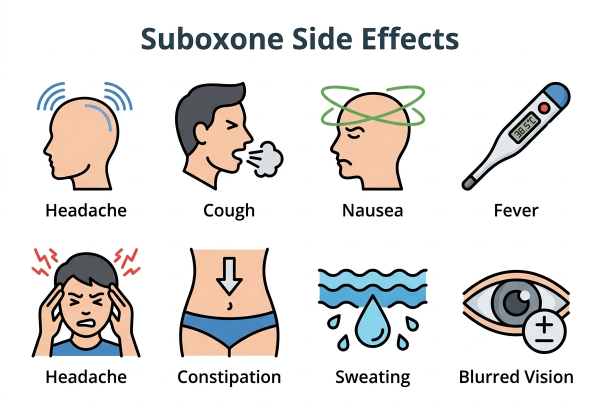
Suboxone is a drug and like any other drug, it has side effects. Common ones include:
- Headache
- Nausea
- Constipation
- Sweating
- Sleep disturbances
More threatening side effects may be breathing problems or allergies, but they are not as commonly occurring. These effects are useful in providing the answer to the question, is suboxone addictive? as abuse or overuse may be counterintuitive.
Overcome Addiction with Palm Coast Treatment Solutions.
Book an appointment.
Symptoms of Suboxone Addiction
The advocacy on suboxone addiction forms the necessary prerequisite to identify the symptoms of addiction early on to be able to intervene. Although Suboxone is not as dangerous as most of the opioids, substance abuse may also take place.
Common symptoms include:
- Patients are taking more than required.
- Desire to use Suboxone without a prescription.
- Difficulty stopping use
- Feeling the withdrawal symptoms otherwise.
- Suboxone can be abused for other things other than treatment.
These are symptoms of suboxone addiction, which might not arise immediately, such that one can easily ignore them without having the necessary awareness.
Signs of Suboxone Addiction
Whereas symptoms are immersed in the internal part of the experience, signs are visible behaviors. These may include:
- Multiple prescriptions or Doctor shopping.
- No, isolation of family or of duties.
- Mood swings or irritability
- Leaving the personal or professional responsibilities unattended.
In case such signs occur along with the symptoms of suboxone addiction, it can also be a sign of a more serious problem, which will need professional assistance. A dual diagnosis treatment approach may be necessary if mental health issues co-occur alongside addiction.
Overcome Addiction with Palm Coast Treatment Solutions.
Book an appointment.
How Long Does Suboxone Stay In Your System
Suboxone is a relatively long-acting drug, so it remains in the body over a long duration as compared to many opioids. Buprenorphine is still detectable for as many as several days, depending on the dose, metabolism, and frequency of use. This is similar to questions people ask about how long other substances stay in your system.
This extended time is effective in stabilizing people as long as they are in the process of recovery, but it instead leads to dependence, which is the reason that people wonder, is suboxone addictive.
Does Suboxone Help with Addiction
The answer is yes, Suboxone is very effective when used properly. It will aid in the prevention of opioid cravings, alleviate withdrawal symptoms, and enhance the ability to recover in the long term. Facilities that specialize in proven addiction treatment often include Suboxone as part of their protocols.
Nonetheless, one should realize that although it addresses opioid addiction, it never excludes the risk of dependence. This is important in considering whether or not Suboxone is addictive in your case.
Suboxone Addiction Withdrawal
Suboxone may cause the individual to depend on it and the abrupt cessation may cause such withdrawal symptoms as:
- Muscle aches
- Anxiety
- Insomnia
- Nausea
- Irritability
These withdrawal symptoms are usually not as severe as compared to full opioids, though they still can be uncomfortable. Medical tapering is normally advised gradually. Understanding how long drug detox takes can help set realistic expectations during this process.
Suboxone Addiction Treatment
Suboxone dependence treatment is logical by working at safe changes and supervision of therapy and medicine. Dealing with it on a comprehensive scale could involve the following:
- Medication management
- Behavioral therapy
- Counseling and support groups
- Relapse prevention planning
At Palm Coast Treatment Solutions, clients are provided with individualized treatment, which aims at treating the physical dependence as well as the etiological factors of substance use.
Options such as a partial hospitalization program or an intensive outpatient program may be recommended depending on the severity of the dependence. Additionally, family therapy can play a vital role in supporting the recovery journey.

Get Help Today
In case you struggle and ask yourself whether Suboxone is addictive, you do not need to figure it out on your own. The only way to be cured is action, yet one should comprehend the signs of suboxone addiction as this is the first step on the way to the right direction.
Book an appointment with the Palm Coast Treatment Solutions specialists and have a chat with a caring professional today and discuss effective and safe ways of treatment. You can also verify your insurance to learn more about coverage options. The beginning of your road to recovery can begin now.
Knowing that Suboxone is a drug that carries risks of addiction also enables you to take treatment with sanity and certainty. The identification of suboxone addiction symptoms and professional help through comprehensive treatment services is not only the way to achieve long-term recovery but also to make it sustainable.
Disclaimer
This content is for informational and educational purposes only and should not be considered medical advice. If you are experiencing nicotine dependence or withdrawal symptoms, please consult a qualified healthcare provider or licensed mental health professional.
FAQ’s
Is Suboxone more addictive than tramadol?
Suboxone generally has a lower addiction potential than tramadol due to its ceiling effect. However, both medications can lead to dependence if misused. Suboxone is typically used in controlled treatment settings, which reduces its risk compared to other opioids.
What is Suboxone classified as?
Suboxone is classified as a Schedule III controlled substance in the United States. This means it has accepted medical uses but also carries a moderate risk of physical or psychological dependence when not used as prescribed.
What does Suboxone do to your mind?
Suboxone stabilizes brain chemistry by partially activating opioid receptors. It reduces cravings and withdrawal symptoms without producing a strong high. This allows individuals to focus on recovery while minimizing the mental and emotional disruptions caused by opioid addiction. Exploring mental health treatment alongside Suboxone therapy can further support emotional well-being.
How harmful is Suboxone?
When used as prescribed, Suboxone is considered safe and effective. However, misuse can lead to dependence and side effects. It’s less harmful than full opioids but still requires careful medical supervision to avoid complications.
What is the 15-minute rule for Suboxone?
The 15-minute rule refers to allowing Suboxone to fully dissolve under the tongue without swallowing or talking. This ensures proper absorption and effectiveness, helping the medication work as intended during treatment.
Is Suboxone safer than opioids?
Yes, Suboxone is generally safer than full opioids. Its partial agonist nature reduces the risk of overdose and misuse. However, it still carries some risk of dependence, which is why medical guidance is essential throughout treatment. If you are wondering whether you should go to rehab, speaking with a professional can help you determine the best course of action.