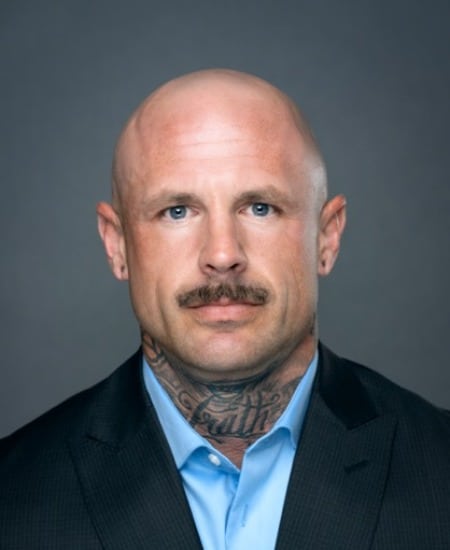

Image Source: https://apnews.com/photo-gallery/hayden-panettiere-look-back-heroes-nashville-star-s-career-photos-84b46c70273f47aea68fc3e5a9aea4a8
Hayden Panettiere died on August 16, 2026, in a rented apartment in Greenville, South Carolina. She was 36, a few days shy of her next birthday. Her boyfriend and his brother, both staying at the residence that day, found her in cardiac arrest on a sofa bed. One of them gave her naloxone and called 911, according to the coroner’s report, and when paramedics arrived, they continued advanced life-support measures, but she couldn’t be revived and was declared dead at the scene. Neither man realized, the coroner’s office said afterward, that she had relapsed; one told investigators she “was very good at hiding it.” The coroner later said she’d taken a combination of fentanyl, a fentanyl byproduct called 4-ANPP, Xanax, a muscle relaxant, and an antipsychotic (Entertainment Weekly; Yahoo/BBC). Five substances, stacked on top of each other, in a body that had already been through more than a decade of treatment, relapse, and treatment again.
People are searching “how did she die” right now because the answer isn’t obvious from the headlines alone, and because it genuinely surprised a lot of people who thought she’d gotten through it. She hadn’t entirely hidden that she was struggling. She’d written a memoir about it. She’d done a speaking tour about it. And it killed her anyway, which is the part worth sitting with before we get into the timeline.
If you recognize any part of this story in yourself or someone you love, please know that help exists and recovery is possible. Palm Coast Treatment Solutions provides confidential, evidence-based addiction care, including residential, partial hospitalization, and intensive outpatient programs, guided by licensed clinicians who treat substance use and co-occurring mental health conditions together. A member of their admissions team is available to talk through your options, with compassion and without judgment.
Call 386) 284-4151 or visit Palm Coast Treatment Solutions. If this is a medical emergency, call 911 first. The SAMHSA National Helpline, 1-800-662-4357, is also free, confidential, and staffed 24 hours a day.
A Kid Who Started Working Before She Could Talk

Panettiere’s first commercial ran when she was eleven months old. By eleven she was in Remember the Titans. At sixteen she was Claire Bennet on Heroes, the cheerleader who couldn’t be killed, a bit of casting irony nobody intended at the time but hard not to notice now.
Here’s the detail that should bother you more than it probably does: she said people on her own team started giving her pills before red carpets and interviews when she was fifteen. Not street dealers. Her team. To make her seem, in her words, more “animated” and “exciting” for cameras (People). She told People she managed to stay sober while actually shooting Heroes, but off set, things slid. “As I got older,” she said, “the drugs and alcohol became something I almost couldn’t live without.”
Fifteen is not a random age to flag here. The prefrontal cortex, the part of the brain that handles impulse control and weighing consequences, isn’t done developing until somewhere around 25. Hand a fifteen-year-old a substance that alters reward circuitry while that circuitry is still under construction, and the effects run deeper than habit; they shape the architecture still being built.
Then Came Nashville, a Near-Fatal Birth, and a Diagnosis Nobody Took Seriously Enough
In 2014 she gave birth to her daughter, Kaya, with then-fiancé Wladimir Klitschko. The delivery nearly killed her. Her blood wouldn’t clot, she needed seven transfusions, and she developed an infection afterward. When she came out of anesthesia, she said she felt nothing. Not relief, not love, nothing. She described the months after as “a total blackout of emotion, like my soul was dead” (Mercury News).
Four months postpartum, between seasons of Nashville, she checked into treatment and was diagnosed with postpartum depression. By her own account, she’d already started leaning on alcohol and Klonopin to handle the panic attacks. And this is the line that stuck with me reading through her old interviews: “I didn’t know where the alcoholism was ending and the postpartum was beginning” (ABC News). Nobody around her could tell either, apparently; she’s said more than once that people cared a lot more about her drinking than about the depression underneath it.
That’s not just her experience. CDC survey data puts postpartum depression at around 1 in 8 new mothers, and nearly 60% of those cases never get a clinical diagnosis at all. Half of the ones that do get diagnosed never get treated. When a new mother reaches for a bottle instead of a therapist, it’s usually because nobody offered the therapist first.

The Part of the Story That Doesn’t Fit on a Magazine Cover
What happened between 2015 and her death wasn’t a slow slide, and it wasn’t a clean comeback either. It was both, over and over.
She left Nashville for treatment in 2015 and came back to finish the show in 2018. That same year she split from Klitschko and made the decision, one she’s talked about since with real anguish, to send Kaya to live with her father in Ukraine, because she knew she couldn’t be the mother Kaya needed at that point. Her drinking got worse after that. She’s described waking up shaking and only being able to function after a drink. A doctor told her, bluntly, that her liver was heading toward failure (People).
In 2020 she went into residential rehab for eight months. She talked later about how physically brutal the withdrawal was. Then, for a few years, she seemed to be doing genuinely well: steady interviews in 2022 and 2024, a mental health speaking tour, a 2023 loss (her brother Jansen died) that she said tested her sobriety hard but didn’t break it. Then in September 2024, she slurred noticeably in a televised interview. Her rep said she wasn’t under the influence. A month later, according to a source who talked to In Touch (cited via Yahoo Entertainment), she was back in rehab.
By 2025, on the set of her last film, the director later said she was “fighting to stay sober,” and that her team had discussed staging an intervention. As far as he knows, it never actually happened.
This is, almost to the letter, what the research on addiction relapse describes. NIDA’s commonly cited figure is that 40 to 60 percent of people with substance use disorder relapse, roughly the same range as relapse rates for hypertension or asthma, conditions nobody calls a moral failure. One often-cited clinical estimate puts it even starker: more than two-thirds of people relapse within weeks or months of starting treatment, and something like 85 percent relapse within a year. Panettiere wasn’t failing at recovery. She was living through what recovery from a serious substance use disorder usually, statistically, actually looks like.
This is often the point where professional, clinical support becomes essential. Repeated relapse after a period of sobriety is a recognized clinical signal that the current level of care may no longer be sufficient, not a sign that recovery has failed. Palm Coast Treatment Solutions offers Partial Hospitalization and Intensive Outpatient programs designed specifically for this stage of recovery. You can review their levels of care at palmcoastts.com/programs or speak with their clinical team at (386) 284-4151.
What Actually Killed Her

The coroner’s office in Greenville took until September 22 to finalize it: death by the combined toxic effects of fentanyl, 4-ANPP, alprazolam, methocarbamol, and quetiapine. Investigators looked into whether the fentanyl came from a dealer in Southern California; the DEA got involved around August 20. By October 28, Greenville police closed the case, ruling it accidental, with no evidence of foul play.
It’s worth explaining why that specific mix is so lethal, because it isn’t an exotic combination; it’s depressingly common. Fentanyl is an opioid, and opioids suppress the brain’s drive to breathe. Alprazolam is a benzodiazepine, and benzodiazepines do the same thing through a different pathway. Put them in the same body at the same time, and the two effects don’t add together politely; they compound. The Agency for Healthcare Research and Quality lists opioid-benzodiazepine combinations as one of the highest-risk overdose scenarios clinicians see.
There’s a second layer most people miss: illicit fentanyl rarely comes alone anymore. CDC’s 2024 numbers show 79,384 total overdose deaths in the U.S. that year. Synthetic opioids, mostly illicit fentanyl, were involved in close to 48,000 of them. Fentanyl also shows up, uninvited, inside other drugs: it was present in 48% of prescription opioid overdose deaths, nearly 59% of meth overdose deaths, and over 67% of cocaine overdose deaths that year. A lot of people who die from fentanyl never knowingly took fentanyl at all.
Why Child Actors Keep Ending Up Here
Panettiere isn’t an isolated case, and it’s worth saying so plainly. Drew Barrymore was in rehab at twelve. Demi Lovato’s struggles are well documented. A Wayne State University survey done for the child-actor advocacy group A Minor Consideration found that child performers were three times more likely to misuse alcohol or drugs than other young Americans.
Addiction physicians who’ve treated former child stars point to a pattern that isn’t really about talent or temperament. Kids in that world get “adult access,” meaning money, substances, and unsupervised time with adults, long before they have an adult’s capacity to manage any of it. Add a parent who’s also functionally your manager, which blurs a relationship that’s supposed to be unconditional into one that’s transactional, and you get what one researcher called attachment that’s “less caring and more over-controlling.” Panettiere herself told the New York Times in May that a lot of what her mother pushed her into “was not about my mental health.” Add nonstop public scrutiny on top of all of it, with essentially no private space to fall apart in front of, and most of the risk factors addiction researchers look for are already in place, stacked into one childhood.
"Recovery Is Real," She Said It, and She Meant It

I want to be careful here, because it would be easy to read all of this and conclude that treatment doesn’t work. That’s not what the data says, and it’s not what she said either, right up until the end. In a 2024 interview she put it this way:
“Only 5 to 8 percent of people who go in for treatment really recover? But that’s in the rearview mirror for me, thankfully. I love being in a position now to be able to help people who are still struggling with it and let them know that there is a time when you can get over the hill. Recovery is real. It can happen.”
The number she quoted is harsher than most clinical estimates, but the sentiment underneath it is correct. NIDA treats relapse as a signal to adjust treatment, not as proof the treatment failed, the same way a diabetic’s blood sugar spike tells a doctor to change the insulin regimen rather than abandon insulin altogether. People do get years, sometimes decades, of sustained recovery, often after multiple treatment episodes that didn’t stick.
What seems to have made her final stretch so dangerous wasn’t a lack of effort. A source close to her told People after her death: “It can be an incredibly lonely world when you’re struggling… she wanted to be sober, but there were times when she couldn’t handle feeling judged by people around her.” Shame and isolation are two of the most well-documented reasons someone who knows exactly what they need to do still doesn’t call for help after a slip. Knowing the right move and being able to make it are not the same thing, especially alone, especially ashamed.
What to Actually Do If This Sounds Familiar
If someone is overdosing right now: call 911. If you have naloxone (Narcan), administer it. It’s available over the counter in most states and can reverse an opioid overdose within minutes. Stay with the person. Narcan will not reverse the effects of benzodiazepines, muscle relaxants, or antipsychotics, which is a significant reason mixed overdoses like this one are so difficult to fully reverse, even when naloxone is given in time.
If you’re the one struggling, or you’re ready to stop pretending you’re fine: Please reach out. Palm Coast Treatment Solutions provides residential, partial hospitalization, and intensive outpatient treatment for substance use and co-occurring mental health conditions, built around an individualized, evidence-based plan of care. Call (386) 284-4151, or start with their resources page. If you need a free national line right now, SAMHSA is 1-800-662-4357, available 24/7, in English and Spanish, with no insurance required.
If you’re in crisis, period: 988 connects you to the Suicide and Crisis Lifeline, day or night.
If you just had a baby and something feels wrong: Postpartum Support International is at 1-800-944-4773. Asking your OB or midwife to screen you for depression at any visit, prenatal or postpartum, is a reasonable and appropriate request, not an overreaction.
If someone you love is relapsing and you don’t know what to do: Consider contacting an addiction medicine specialist or a professional interventionist before attempting a family confrontation on your own. Palm Coast Treatment Solutions can also walk a family through what a structured intervention and admissions process looks like, clinically and compassionately. Research on structured interventions shows outcomes improve significantly when they are professionally guided rather than improvised.
You do not have to wait for a “rock bottom” moment to reach out. The data above, and Panettiere’s own story, both point in the same direction: the earlier someone receives evidence-based treatment, the better their long-term odds, and reaching out is never the wrong call, even when you’re not fully sure yet.
Questions People Are Actually Asking
So how exactly did Hayden Panettiere die? An accidental overdose, August 16, 2026, in Greenville, South Carolina. The coroner’s office found fentanyl, 4-ANPP, Xanax, methocarbamol, and quetiapine in her system, acting together. Police closed the case on October 28 after confirming there was no foul play.
Was she 36 or 37 when she died? 36. Her birthday was a few days after she died.
When did her addiction actually begin? By her own account, at 15, when people on her professional team started giving her stimulants before public appearances.
Did she really have postpartum depression, or was that overstated by tabloids? It was a formal diagnosis, made during a 2015 treatment stay about four months after her daughter was born, following a delivery so difficult it required seven blood transfusions.
Was she sober when she died? The reporting is genuinely mixed. She’d been vocal about sobriety through 2024, but multiple sources describe a relapse that same year, and a director said she was still “fighting” to stay sober in 2025, with an intervention reportedly discussed but never carried out.
Is a 40 to 60 percent relapse rate normal, or is that unusually bad? It’s the standard figure NIDA cites for substance use disorders generally, and it’s roughly in line with relapse rates for chronic illnesses like hypertension and asthma. The framing matters clinically: relapse is treated as part of the disease process, not as a failure of willpower.
Why would mixing Xanax and fentanyl be so much worse than either alone? Both suppress the body’s drive to breathe, through different mechanisms, and combined they don’t simply add risk, they compound it. It’s considered one of the most dangerous overdose combinations in clinical medicine.
Are former child actors genuinely more prone to addiction, or is that just a media narrative? There’s actual survey data behind it. A Wayne State University study found child performers were three times more likely to misuse drugs or alcohol than their peers, and addiction specialists point to early, unsupervised access to substances as the main driver.
Where do I call if I need help today? Palm Coast Treatment Solutions at (386) 284-4151 for evidence-based addiction treatment. SAMHSA, 1-800-662-4357, for a free national referral line. 988 for any mental health crisis. Postpartum Support International, 1-800-944-4773, for perinatal depression.
She spent years, publicly and uncomfortably, laying out exactly what this disease did to her life, specifically so someone else might catch it earlier than she did. Please take her up on it.
If today is the day, you don’t need to wait for an emergency to make it real. Palm Coast Treatment Solutions provides confidential, evidence-based treatment for substance use and co-occurring mental health conditions, delivered with clinical care and without judgment. Call (386) 284-4151 or visit palmcoastts.com to speak with someone today. You don’t need a plan or the right words. You just need to make the call.
Sources
- People, “Everything Hayden Panettiere Said About Her Addiction Struggles”
- People, “Hayden Panettiere’s Director Says Her Team Discussed an ‘Intervention’ Before Her Death”
- People, “The Tragic Death of Hayden Panettiere: Inside Her Final Days”
- CNN, “Hayden Panettiere death investigation closed by police in South Carolina”
- CNN/KESQ, “Inside Hayden Panettiere’s troubling final months”
- Entertainment Weekly, “Hayden Panettiere’s death investigation closed almost 3 months after actress died of accidental overdose”
- The Straits Times, “Hayden Panettiere’s death ruled accidental”
- The Mercury News, “Actress Hayden Panettiere… dies in South Carolina at age 36”
- ABC News, “Hayden Panettiere opens up about struggle with alcoholism, postpartum depression”
- Yahoo Entertainment, “Inside Hayden Panettiere’s Sobriety Journey”
- Yahoo, “Hayden Panettiere Death Ruled Accidental”
- Hollywood Insider and Wayne State University survey via A Minor Consideration, “Drugs and Alcohol: Preventative Measures… Must Be Provided to Young Stars”
- CDC, NCHS Data Brief No. 549, “Drug Overdose Deaths in the United States, 2023–2024”
- CDC, Vital Signs: Postpartum Depressive Symptoms
- CDC, Trends in Postpartum Depressive Symptoms
- NIAAA, Alcohol Treatment in the United States
- NIAAA, Strategic Plan FY 2024–2028
- NIDA, Drugs, Brains, and Behavior: The Science of Addiction
- AHRQ, Mitigating Overdose Risk, MOUD Playbook
This article is informational and isn’t a substitute for medical or mental health care. If you or someone you know is in crisis, call 911, 988, or 1-800-662-4357.