Key Takeaways
- Interaction between an alcohol prescription drug and drug may not be either of the following: delayed breathing (slow breathing), dizziness, or confusion.
- Alcohol can disrupt or render drugs futile or poisonous.
- Opioids, benzodiazepines, and antidepressants are some of the types of drugs that are more dangerous because they are taken with alcohol.
- Depending on the medication, even the slightest amounts of alcohol can trigger a serious reaction.
- Always consult a healthcare professional on whether to take a drink or not when taking prescription medication.
Ever wondered why you must not take alcohol in combination with your prescription? You are not alone. Some of us believe that a drink or two drinks will not do any harm to our medications but this is also one that can be drastic, even fatal. I could witness how such a blend of circumstances could transform what appeared as innocent into a threat because I am the one who works with individuals facing mental health issues and substance use on an individual basis.
The use of alcohol with prescription drugs can alter the functionality of the prescription drugs, complicate the side effects and increase the probability of overdosing of these drugs even more. Alcohol can make your body balance unpredictable, either when you are taking drugs to treat anxiety, pain, and sleep or when you are taking drugs to treat blood pressure. We will cut up the reasons why it is so and why it ought to receive serious attention.
So what could be wrong about using prescriptions and alcohol together? It is associated with the majority of drugs, which interact to affect different drugs in a different way that may either increase sedation, slow down breath rate, impair judgment, and damage body organs, including the liver.
These interactions can reduce the efficacy of drugs or enhance any side effects significantly. In another case alcohol and prescription drugs may lead to an overdose, chronic health problems or even death, despite moderate use of the two medications.
What Happens When You Mix Alcohol and Prescription Medications?
The only way to know the extent of danger of mixing up the prescriptions and alcohol is by being familiarized with how the two drugs act on your body. Alcohol is a central nervous system depressant. Just like prescription drugs, the majority of them such as anxiety, sleep or pain drugs, slow down the brain processes.
The two not only add their effects but also multiply.
This can lead to:
- Extreme drowsiness or sleepiness.
- Breathing or breathing problems.
- Lack of coordination and judgment.
- Disaster or exposure to accidents or harm.
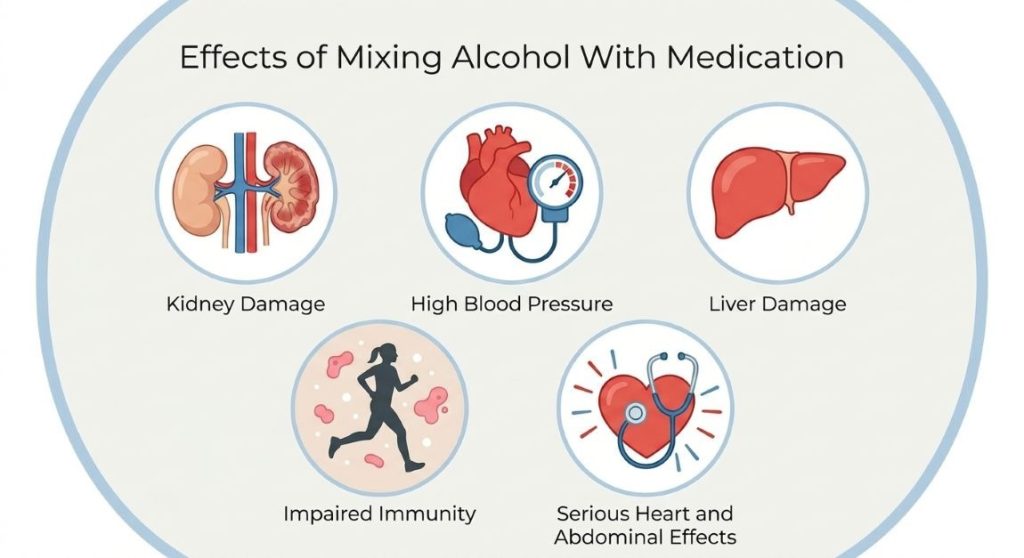
It also has internal damage, which may be due to combining alcohol and prescription medications, as can be found in information adapted by alcohol.org, where it is recognized that the liver is the organ that breaks down the drug and alcohol. The liver cannot handle toxins effectively in its reliance and thus gets damaged in the end.
100% Confidential Support is Available 24/7
No matter what you’re going through, you’re not alone. Our dedicated team is here to provide a safe, judgment-free space where you can talk openly and honestly. Whether you need emotional support, resources, or just someone to listen.
We’re here for you—completely confidential and always respectful of your privacy. Call us today!
Why Should Drugs and Alcohol Not Be Taken at the Same Time?
The short explanation of why it is unsafe to take prescription drugs and alcohol concomitantly? Do you have the two substances competing in your body? Alcohol can also influence absorption, distribution, and excretion of drugs used.
And by that I mean that in the real world it translates in the following way:
- Less effective: There will be no help in your drug as it would have helped.
- Increase in toxicity: This can lead to the elevation of the drug in your blood.
- Unexpected reactions: One can have potential new or increased side effects.
Antidepressants and alcohol can promote the symptoms of depression or anxiety e.g. Combined pain drugs/alcohol reduces breathing levels to life-threatening levels. The alcohol can result in excessive drowsiness even with ordinary drugs like antihistamines.
Contact Palm Coast Treatment Solutions
Battling with Drug and Alcohol Addition? Remember, you are not alone and we are here to help you!
High-Risk Medications You Should Never Mix with Alcohol
Still wondering why it is unsafe to take prescriptions and alcohol at the same time, we can attract your attention to a list of some risks of taking this or that medicine:
- Opioids (Painkillers)
Combining opioids and alcohol under the policy of polysomnomania can significantly decelerate or even stop breathing, which means that there will be an increased chance of overdose. - Benzodiazepines (Anxiety Medications)
These are medications that are already relaxing to the nervous system. This is enhanced by alcohol which causes blackouts or fatal respiratory depression. - Antidepressants
Alcohol is able to bury their positive impacts and worsen mental illness. - Sleep Aids
The effect of combining can lead to over-drowsiness, lapse of memory and loss of coordination. - Blood Pressure Gotoprolol (e.g., metoprolol)
There can be insecure changes in blood pressure, light headedness and fainting caused by alcohol.
These are just the few instances on why one should not take prescriptions with alcohol. The combination disrupts the normal working of your body that is likely to become unsafe in the near future.
It is not necessary to devise how to cope with alcohol yourself or stack up drugs in such a way that they are hard to use when you, or the person you are in love with, become unruly.
Overcome Addiction with Palm Coast Treatment Solutions.
Book an appointment.
The Hidden Risks: It’s Not Always Immediate
The fact that it is dangerous to take prescriptions with alcohol is one of the most concerning reasons. Are they not always effects at once? This would probably occur because when you start out, you can be fine at first but when a couple of hours later you would end up having delayed reactions.
Long-term risks include:
- Liver damage
- Heart complications
- Cognitive decline
- Heightened dependence or addictions.
The patients that we typically encounter in clinical practice have not learned about the damage they have until it is at an advanced level. It is due to this that there is a need to be aware.
Mental Health and Substance Use: A Dangerous Cycle
The issue of alcohol and prescription drug does not matter psychologically in many times of torturous agony. Many individuals use alcohol to get rid of their stress, anxiety or depression- in some instances, when they are at least taking some medication to overcome the issues at hand.
This leads to a roundabout:
Alcohol enhances symptoms of mental disorders.
The efficiency of medication is reduced.
To cope with it the person just takes up more alcohol.
And why it is unsafe to mix prescriptions and alcohol: It is not so much a matter of physical, as of emotional health.
Can You Ever Drink Alcohol While on Medication?
The most widespread argument connected with the danger of the combination of prescriptions and alcohol is a question of whether there is any dosage of alcohol that is safe to use or not.
It depends on:
The kind of drug…
Your dosage
Your overall health
But there are a lot of medicines, yet there are stringent warnings against using alcohol. Be afraid not to turn upon your physician or drug merchant. It is far better to ask than run the risk of getting involved in negative communication.
Overcome Addiction with Palm Coast Treatment Solutions.
Book an appointment.
Practical Tips to Stay Safe
To reduce risks and gain more understanding of the reasons that make prescriptions a dangerous mix with alcohol, keep in mind the following simple rules:
- Check the legality of the drug.
- Ask your medical professional about alcohol oscillations.
- Consider before imbibing seldom.
- Record of medications.
- Talk to your physician about your consumption of alcohol.
All these are sometimes trifling steps that may have dismal consequences.
Start Your Recovery Journey
This being the case, then why is it harmful when it comes to the use of prescriptions together with alcohol? Because even in cases where they can be incurable, the mix can readily and successfully disrupt the functioning of your body. Counted among the minor choices as it appears, what may be seen as such endangers one with serious health risks in the future.
Your awareness is your first line of defense. The more you become familiar with these interactions, the more you are equipped to become safer and make informed choices.
Do you have a drinking or drug abuse problem? You have to have a sense and a nurturing attitude.
👊 Continue by calling Palm Coast Treatment Solutions and speaking with a thoughtful specialist, and arranging a personalized treatment and long-term recovery
Overcome Addiction with Palm Coast Treatment Solutions.
Book an appointment.
Frequently Asked Questions (FAQs)
What happens when you mix alcohol and prescription medications?
Mixing alcohol with prescription medications can intensify side effects like drowsiness, dizziness, and slowed breathing. It may also reduce drug effectiveness or cause toxic reactions, increasing the risk of overdose, accidents, and long-term health complications.
Why should drugs and alcohol not be taken at the same time?
Drugs and alcohol should not be taken together because they interact unpredictably in the body. Alcohol can alter how medications work, increasing side effects or reducing effectiveness, which may lead to serious health risks or dangerous physical and mental impairments.
Which billionaire doesn’t drink alcohol?
Several well-known billionaires, including Warren Buffett and Elon Musk (reportedly minimal consumption), are known for limiting or avoiding alcohol. Their choices often reflect a focus on productivity, health, and maintaining mental clarity in high-performance environments.
Can you drink alcohol while on metoprolol?
Drinking alcohol while taking metoprolol is not recommended. Alcohol can lower blood pressure further, causing dizziness or fainting. It may also reduce the medication’s effectiveness, making it harder to manage heart conditions safely.
What drug should never be mixed with alcohol?
Opioids, benzodiazepines, and certain sleep medications should never be mixed with alcohol. These combinations can dangerously suppress breathing, increase sedation, and significantly raise the risk of overdose or death.
What is the 2 2 2 rule for alcohol?
The 2 2 2 rule generally refers to limiting alcohol intake—two drinks, no more than twice a week, and allowing two alcohol-free days between sessions. While not universal, it promotes moderation and reduces health risks.