Lorem ipsum dolor sit amet, consectetur adipiscing elit. Ut elit tellus, luctus nec ullamcorper mattis, pulvinar dapibus leo.
Both programs address substance use and mental health issues when living at home or in sober housing. For those who require intensive daily care but don’t need to stay in treatment overnight, PHP is like a full-time treatment day. With IOP, people who are stable enough to practice new skills between their sessions can use it, much like a part-time schedule.
The biggest distinction between IOP and PHP is the intensity of the treatment. A partial hospitalization program (PHP) offers 20 or more hours of treatment per week, typically most of the day on weekdays. Intensive outpatient program (IOP): approximately 9 to 19 hours a week, with time left over for work, school, or family.
It can be difficult to decide which is the best option, especially if you’re already stressed or worried about someone you love. The terminology used for the labels is medical, and each program defines them somewhat differently.
Fortunately, you don’t have to do it alone. A clinical assessment matches level of care to your needs, and your level of need may change as you improve.
Not sure which level fits right now? Palm Coast Treatment Solutions can explain your options
What is the Difference Between IOP and PHP?
IOP and PHP differ mainly in hours, daily structure, and how closely clinicians monitor progress. PHP runs most of the day, most weekdays, with frequent medical and psychiatric check-ins. IOP runs a few hours on several days each week. Both use group therapy, skills training, and relapse prevention, but PHP delivers more of it.
Feature | PHP Program | IOP Treatment |
Weekly hours | 20 or more | About 9 to 19 |
Typical schedule | Most of the day, most weekdays | A few hours, several days a week |
Medical and psychiatric oversight | Frequent, often daily | Regular, less frequent |
Can you keep working full-time? | Usually not | Often yes. |
Best for | Higher symptoms, early recovery, step-down from inpatient | Stable symptoms, step-down from PHP |
Where you sleep | Home or sober living | Home or sober living |
The biggest IOP vs PHP difference is time, and those ranges follow federal definitions. Under Medicare rules, a PHP requires a physician to certify a need for at least 20 hours of services per week, while an IOP requires at least 9 hours.
ASAM update: The latest edition of the ASAM Criteria now calls partial hospitalization “high-intensity outpatient,” since this care does not actually take place in a hospital. (American Society of Addiction Medicine)
Who is IOP Treatment Best For?
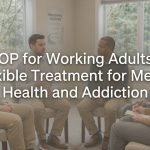
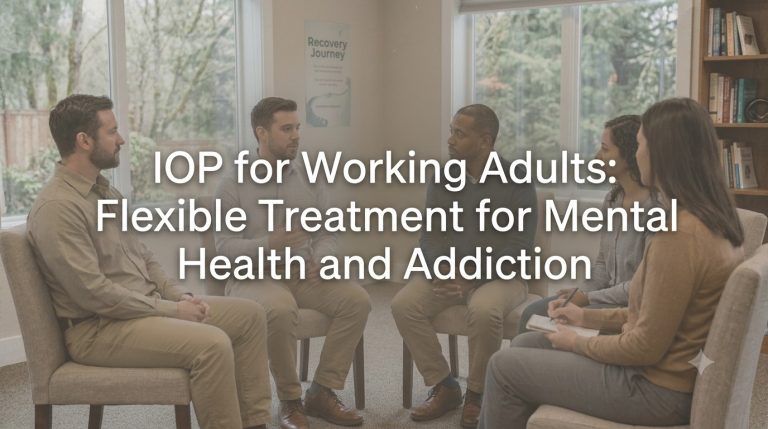
IOP treatment is a structured outpatient program that provides several hours of therapy a few days each week. It suits people whose symptoms are manageable, who have a stable home, and who need more support than weekly counseling. It also works as a step-down after PHP or residential care.
IOP therapy often includes:
- Group therapy focused on coping skills and relapse prevention
- Cognitive behavioral therapy (CBT) to change thought patterns behind use
- Family sessions to rebuild trust and communication
- Medication management when needed
- Peer support that connects you with others in recovery
Balancing recovery with a job or kids at home? Ask Palm Coast Treatment Solutions about IOP
100% Confidential Support is Available 24/7
No matter what you’re going through, you’re not alone. Our dedicated team is here to provide a safe, judgment-free space where you can talk openly and honestly. Whether you need emotional support, resources, or just someone to listen.
We’re here for you—completely confidential and always respectful of your privacy. Call us today!
What Does a PHP Program Look Like?
A PHP program feels like a full treatment day. You typically attend most of the day on weekdays, then return home in the evening. Days combine group therapy, skills sessions, psychiatric care, and medication management. PHP therapy suits people who need daily structure but not 24-hour supervision.
Because PHP meets so often, clinicians can spot warning signs quickly and adjust care the same week. That daily contact makes it a strong choice right after detox or residential treatment, or when outpatient care has not been enough.
Fact: Medicare began covering intensive outpatient programs for behavioral health in January 2024.
Contact Palm Coast Treatment Solutions
Battling with Drug and Alcohol Addition? Remember, you are not alone and we are here to help you!
IOP vs PHP: Which One Do You Need?
You likely need PHP if cravings are strong, symptoms disrupt daily life, you recently left detox or residential care, or IOP has not worked. IOP fits better if you are medically stable, have a supportive home, and can stay substance-free between sessions. A clinical assessment makes the final recommendation.
PHP May Fit Better If You… | IOP May Fit Better If You… |
Just finished detox or residential care | Completed PHP and feel steadier |
Struggle to get through a day without using | Can manage cravings between sessions |
Have serious depression or anxiety alongside addiction | Have stable mental health symptoms |
Need daily structure to stay safe | Need to keep working or studying |
Neither program replaces medical detox. If withdrawal from alcohol, benzodiazepines, or opioids could be risky, detox usually comes first.
Still torn between PHP and IOP? A confidential assessment with Palm Coast Treatment Solutions brings clarity.

Overcome Addiction with Palm Coast Treatment Solutions.
Book an appointment.
Can You Move Between PHP and IOP?
Yes. Most people step down from PHP to IOP as symptoms settle and skills grow, then move to standard outpatient care and aftercare. Care can also step up. If cravings return or mental health worsens during IOP, a clinician may recommend moving back to PHP for a while.
NIDA principle: A person’s treatment plan must be reviewed continually and modified as needed to match their changing needs. (National Institute on Drug Abuse, Principles of Effective Treatment)
A common path looks like this:
- Assessment determines your starting level.
- PHP builds stability during the most fragile weeks.
- IOP lets you practice skills while life resumes.
- Outpatient care provides lighter, ongoing support.
- Aftercare keeps connection and accountability in place.
Expert Advice: Ask your care team what milestones will signal your step-down from PHP.
How Can Families Support PHP or IOP Care?
Families help most by protecting treatment time, keeping home substance-free, and joining family sessions. During PHP, practical help like rides, childcare, or covering chores matters a lot. During IOP, the focus shifts to noticing progress, respecting new boundaries, and watching for early warning signs of relapse.
Small, steady actions go a long way:
- Ask what your loved one learned in group this week, and listen without judging.
- Keep alcohol and unused medications out of the house.
- Celebrate step-downs, like moving from PHP to IOP, as real milestones.
- Get support for yourself through family therapy or a peer group.
Overcome Addiction with Palm Coast Treatment Solutions.
Book an appointment.
Does Insurance Cover IOP vs PHP Treatment?
Most private insurance plans cover both IOP and PHP for substance use and mental health conditions, though benefits and prior authorization rules vary. Medicare has long covered PHP and added IOP coverage in January 2024. Verifying benefits before admission shows your actual costs.
According to a 2024 policy summary from the Center for Health Care Strategies, Medicare members who needed more than weekly therapy but less than PHP previously fell into a coverage gap. The new IOP benefit closed that gap.
Policy insight: IOPs offer more intensive treatment than weekly counseling but less intensive care than PHP. They can serve as a step down, a step up, or a first entry point into care. (Center for Health Care Strategies, 2024)

IOP vs PHP Care at Palm Coast Treatment Solutions
Palm Coast Treatment Solutions offers both levels at 160 Cypress Point Parkway in Palm Coast, so clients can step between them without changing teams. Every plan starts with a comprehensive intake assessment. Your level of care and length of stay are based on your progress, not a fixed calendar.
The Partial Hospitalization Program provides short-term, intensive clinical care. The Intensive Outpatient Program often follows as a step-down, then the Outpatient Program and Aftercare Program continue support.
Care may include cognitive behavioral therapy, dialectical behavior therapy, group therapy, and family therapy. It may also include medication-assisted treatment, case management, and peer support. The Dual Diagnosis Treatment program addresses co-occurring mental health conditions.
Ready to find your starting point in recovery? Call Palm Coast Treatment Solutions
Overcome Addiction with Palm Coast Treatment Solutions.
Book an appointment.
FAQs
What is the difference between IOP and PHP?
PHP, or partial hospitalization, generally provides more intensive treatment and structure than IOP, or intensive outpatient treatment. PHP often involves treatment on most weekdays for several hours each day, while IOP usually requires fewer weekly hours. Exact schedules vary by program, clinical needs, and insurance requirements.
Is PHP more intense than IOP?
Generally, yes. PHP typically provides more treatment hours, greater daily structure, and closer clinical monitoring than IOP. However, neither level is automatically appropriate for everyone. The right setting depends on symptom severity, safety concerns, medical and psychiatric needs, home support, and the person’s ability to function outside treatment.
How long does a PHP program last?
PHP duration varies according to clinical needs, progress, and the program’s structure. Some people participate for several weeks before transitioning to a less intensive level of care, such as IOP or outpatient treatment. Others may need longer or shorter periods. A treatment team typically reassesses progress throughout the program.
How long does IOP treatment last?
IOP treatment can last several weeks to several months, depending on the person’s needs, progress, goals, and response to treatment. Some people transition to standard outpatient care after completing IOP, while others require additional intensive support. Treatment length should be determined through ongoing clinical assessment rather than a fixed timeline.
Can I work while in IOP therapy?
Often, yes. IOP programs are designed to provide intensive treatment while allowing participants to continue many daily responsibilities, including work, school, or family commitments. Scheduling varies between programs, so people should discuss available treatment times with the provider. Someone experiencing significant instability may require a more intensive level of care.
Do I live at the facility during PHP?
No. PHP is generally a nonresidential level of care, meaning participants attend structured treatment during the day and return home or to another supportive living environment afterward. Because PHP does not provide overnight residential supervision, clinicians consider safety, housing stability, and available support when determining whether it is appropriate.
Can I go straight into IOP without doing PHP?
Yes. Someone does not necessarily need to complete PHP before entering IOP. If an assessment shows that the person can safely participate in treatment while living outside a structured setting, IOP may be appropriate as an initial level of care. Treatment intensity can be adjusted if needs change.
Does PHP include medication management?
Many PHP programs include psychiatric evaluation and medication management, although services vary by provider. Medication may be used to treat mental health conditions or substance use disorders when clinically appropriate. Some programs can provide medication-assisted treatment, while others coordinate prescriptions and medical care with outside healthcare professionals.
Is IOP or PHP better for dual diagnosis?
Both IOP and PHP can provide treatment for co-occurring mental health and substance use disorders. PHP may be more appropriate when symptoms are severe, unstable, or require closer monitoring, while IOP may suit people who are stable enough for less intensive care. A professional assessment helps determine the appropriate level.
What happens after IOP ends?
After completing IOP, many people transition to standard outpatient therapy, medication management, mutual-support groups, or other continuing-care services. The next step depends on individual progress and remaining needs. Continuing treatment can help maintain gains, address triggers, strengthen coping skills, and support relapse prevention after intensive services end.
References
- Federal Register. (2023). Medicare program: Hospital outpatient prospective payment and ambulatory surgical center payment systems, CY 2024 final rule. Centers for Medicare & Medicaid Services.
- Center for Health Care Strategies. (2024). New changes to intensive outpatient program coverage in Medicare.
- American Society of Addiction Medicine. The ASAM Criteria: Frequently asked questions.
- National Institute on Drug Abuse. Principles of effective treatment. Principles of Drug Addiction Treatment: A Research-Based Guide (Third Edition).
- National Institute on Drug Abuse. (2023). Treatment and recovery.
- McCarty, D., et al. (2014). Substance abuse intensive outpatient programs: Assessing the evidence. Psychiatric Services, 65(6), 718–726.
This article is for informational purposes only and should not replace professional medical advice, diagnosis, or treatment. If you or someone you know is struggling with substance use, contact Palm Coast Treatment Solutions or visit palmcoastts.com to learn about available treatment options.