In This Blog
- What is stimulant abuse
- Commonly misused stimulants
- Early behavioural symptoms of stimulant abuse
- Physical symptoms associated with stimulant misuse
- Symptoms that are psychological and emotional
- Social and lifestyle modifications associated with stimulant abuse
- Dangers of not treating stimulant abuse
- When support may be needed
Stimulant abuse is the misuse of drugs that work by boosting alertness, energy, and focus. While some stimulants are prescribed to treat medical conditions, when abused or taken for non-medical reasons, one can find themselves dependent and suffering from health problems, altering their behavior in a short amount of time. Early warning sign recognition is of primary importance for timely intervention.
Stimulant abuse can be a slow progression in which symptoms can easily be missed in the beginning. Changes may occur in physical health, emotional stability, or working on a daily functioning basis. Understanding these indicators can help one grasp warning signs when stimulant use may be crossing into dangerous territory.
What are Stimulants?
Stimulants are substances that hasten the central nervous system’s activity. They lead to a level of increased dopamine and norepinephrine, resulting in increased energy, focus, and euphoria. Common stimulants are those that are prescribed by doctors, illegal drugs, and even some over-the-counter products.
When misused, stimulants mess with the chemistry of the brain, tax the cardiovascular system, and can make one psychologically unstable. Abuse takes place when substances are taken in higher doses, more often, or without medical supervision.
FACT: Stimulant abuse often progresses unnoticed until physical or psychological symptoms worsen.
Common Physical Signs of Stimulant Abuse
Physical symptoms are a common way of measuring stimulant abuse, as they are usually the most obvious. Depending upon the dosage, frequency, and the specific substance used, these signs may vary.
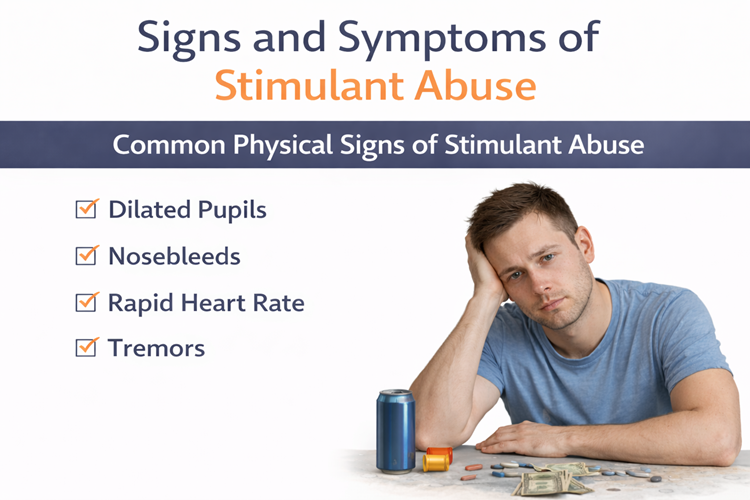
Physical symptoms include the following:
- Rapid or irregular heartbeat
- Elevated blood pressure
- Decreased appetite and weight loss
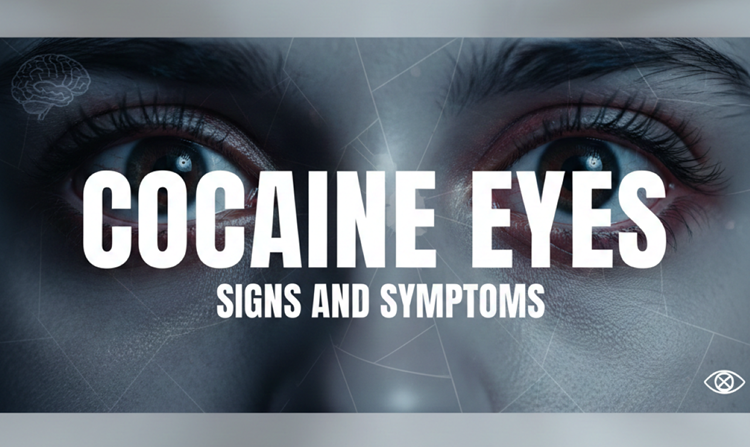
- Dilated pupils
- Excessive sweating
- Tremors or muscle twitching
Sleep disturbance is not uncommon. People can have insomnia for a long time, followed by extreme fatigue. In the long run, as a result of overuse, the use of stimulants could lead to a weak immune system and make the individual susceptible to illnesses.
Behavioral Signs of Stimulant Abuse
Behavioral changes can usually be noted when there is a rise in the use of stimulants. These shifts may impact relationships, workplace performance, and daily responsibilities.
Some of the indicators of behavior include:
- Increased agitation or restlessness
- Impulsive decision-making
- Neglecting personal or professional obligations
- Secretive behavior concerning substance use
- Financial difficulties related to acquiring stimulants
Risk-taking behaviors may rise, particularly in the state of intoxication. These behaviors occur again, even when the negative consequences are made apparent.
Contact Palm Coast Treatment Solutions Today for confidential stimulant abuse support
Psychological and Emotional Symptoms
Stimulant abuse has a great impact on mental and emotional health. At times, mood swings are extreme and unpredictable.
Some of the psychological symptoms include the following:
- Anxiety or panic episodes
- Irritability or aggression
- Paranoia or suspicious thinking
- Mood swings
- Depression during withdrawal periods
Prolonged abuse may be one of the causes of stimulant-induced psychosis, in which the person may experience hallucinations or delusions. These symptoms often increase with constant use.
Cognitive and Functional Impairments
Although stimulants may be beneficial to the focus of the individual in the short-term, long-term abuse disrupts cognitive functioning. Concentration, memory, and judgment get lost over time.
For example, individuals may suffer with decision-making, emotion control, and task completion. These impairments interfere with work, education, and interpersonal relationships, creating overall instability in life.
Signs of Dependence and Loss of Control
Dependence is the development of stimulant use from compulsive rather than intentional use of the drug. People feel that they cannot function without the substance.
Warning signs of dependence are:
- Using stimulants to cope with stress or emotions
- Needing greater doses to achieve the same effect
- Unsuccessful attempts to reduce or stop use
- Continued use despite the knowledge of harm
Loss of control is one of the main indicators that point at the need to obtain professional intervention.
Stimulant Withdrawal Symptoms
When the pattern of use of stimulants reduces or ceases, it usually leads to withdrawal symptoms. These symptoms can be mentally and physically torturing.
Some of the common withdrawal symptoms are:
- Extreme fatigue
- Depressed mood
- Increase in appetite
- Sleep disturbances
- Difficulty concentrating
While withdrawal from stimulants is not usually medically dangerous, without proper help, the symptoms of withdrawal can lead to the risk of relapse.
Expert Advice: “Early recognition of stimulant abuse symptoms improves treatment outcomes significantly.”
When to Seek Professional Help
Professional evaluation is advised in cases where the use of stimulants affects an individual’s daily life, health, and emotional stability. Early intervention minimises the risk of long-term complications.
If symptoms become more severe or there are multiple warning signs, the initiation of a structured treatment will provide for stabilization, therapy, and recovery planning specifically geared to individual needs.
Contact Palm Coast Treatment Solutions today for confidential stimulant abuse support
Medical Disclaimer: This blog is for informational purposes only and is not a substitute for professional medical advice.
Key Takeaways
- Stimulant abuse affects physical, behavioral, and psychological health
- Symptoms often develop slowly and worsen over time
- Behavioral and emotional changes are critical warning signs
- Dependence demonstrates loss of control and danger to one’s
- Early treatment improves long-term recovery outcomes
FAQs
What are the most common signs of stimulant abuse?
Common signs of stimulant abuse include rapid heartbeat, weight loss, insomnia, anxiety, agitation, impulsive behavior, and mood swings. Individuals may also become secretive, experience financial problems, or neglect responsibilities. These symptoms often intensify as stimulant use becomes more frequent or compulsive.
Can prescription stimulants be abused?
Yes, prescription stimulants can be abused when taken without medical supervision or in higher doses than prescribed. Misuse increases risks of dependency, cardiovascular strain, anxiety, and sleep disruption. Even medically prescribed stimulants require careful monitoring to prevent harmful patterns of use.
How does stimulant abuse affect mental health?
Stimulant abuse can worsen anxiety, depression, irritability, and paranoia. Long-term use may trigger psychosis, emotional instability, and impaired judgment. These mental health effects often persist beyond intoxication periods and may intensify during withdrawal, increasing emotional distress and relapse risk.
What happens during stimulant withdrawal?
Stimulant withdrawal typically includes fatigue, depression, sleep changes, increased appetite, and difficulty concentrating. While not usually medically dangerous, withdrawal can feel overwhelming and increase relapse risk. Professional support helps manage symptoms and provides effective coping strategies during the early stages of recovery.
When should someone seek treatment for stimulant abuse?
Treatment should be considered when stimulant use interferes with health, work, relationships, or emotional stability. Warning signs include loss of control, dependence symptoms, and continued use despite harm. Early professional intervention improves outcomes and reduces long-term physical and psychological consequences.