Key takeaways
- Nature therapy for mental health supports emotional balance and stress reduction.
- Regular time in natural environments can improve mood and focus
- It works well alongside traditional mental health treatments
- Even short, consistent exposure to nature is beneficial
- Professional guidance can enhance long-term results
The beneficial aspect of Nature Therapy to mental health is gaining ground due to more individuals desiring a naturalized way of handling stress, anxiety and depression and emotional burnout. In the screwing-machine world, reconnecting with nature provides the most basic, yet most effective thing: space to breathe, unwind and rest.
We are physically and psychologically enjoying the benefits of being off-site at Palm Coast Treatment Solutions, unless there is a particular reason to remain at home with the client. Mental health will not need mountain climbing and off-road in-nature therapy. It concerns the active involvement in the natural environment to allow for the integration of emotions, disenchantment, and spiritual power.
What is Nature Therapy
Nature therapy (also known as ecotherapy or green therapy) in therapy entails guided or self-guided time presence in the natural setting to achieve mental and physical wellness. It unites both humans and nature, and it is oriented towards the reduction of stress, anxiety, and depression due to activities like hiking, gardening, and forest bathing in the green or blue areas.
Nature Therapy for Mental Health
Ecotherapy (or nature therapy) may be implemented to improve the state of mental health to combat stress, anxiety, and depression through well-planned outdoor activities with a nature-based backdrop. It improves serotonin and Vitamin D synthesis and improves mindfulness .The most significant techniques through which people can be put into contact with nature and improve their thinking, as well as promote their emotional nature and feelings, are forest bathing, walking in nature, and gardening.
Key Benefits of Nature Therapy
The substantial benefits of Nature Therapy include the following.
- Reduced Stress and Anxiety: Green spaces will result in low cortisol, and therefore a reduction in stress and anxiety.
- Positive Mood: The effects experienced by natural light and air are the triggers that cause serotonin to be released and thereby alleviate what causes the depression.
- Better Cognitive Ability: Nature time could assist in enhancing concentration, attention, and cognitive capacity.
- Improved Sleep: To bike the body in connection to sleep-wake (melatonin production), this is accomplished through exposure to natural light.
- Increased Self-Esteem: The physical factors that accompany the process of outdoor activities are normally demanding and they help acquire confidence and motor skills.
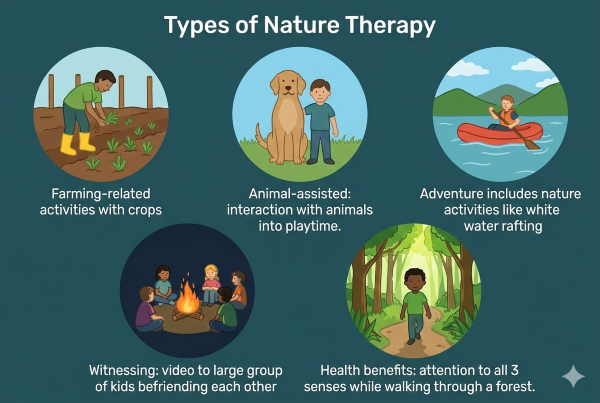
Types of Nature Therapy
- Forest Bathing (Shinrin-yoku): This is a Japanese tradition of being in the forest, to which all 5 senses are followed.
- Horticultural Therapy: Therapy that makes use of gardening or planting as the therapy of promoting mental and physical well-being.
- Nature Walks and hiking: Nature with a global mind.
- Green Exercise: A natural exercise that has physical activities like cycling or yoga in a natural environment.
- Wilder Nature Exposure: Nature experiences that are longer such as the ones in the state parks.
How Nature Therapy Supports Mental Health
Being outdoors is effective at several levels, including physical, emotional, and psychological levels. Contrary to fast remedies, nature therapy, as far as the mental health process is concerned, is a gentle manner of aiding the nervous system and a lasting change is brought about.
There is the primary mental health benefit, i.e.,
- Relaxed stress levels and lowered cortisol levels.
- Light anxiety and depression symptoms.
- An improved attention and method of thinking.
- Greater emotion management.
- increased reference and belongingness.
Nature also provides a calming atmosphere in which the mind can relax and allow it to rest so that one is better placed to think and feel without being overloaded.
The Science Behind Nature Therapy for Mental Health
Being in nature is good at different levels, including physical, emotional, and psychological ones. However, unlike quick fixes, nature therapy, in terms of the mental health process, is subtle in assisting the nervous system and creates a lasting change.
The significant psychological benefits are:
- Less stress and cortisol levels.
- Less significant anxiety and depression symptoms.
- Thinking process and better focus.
- Greater emotion management.
- Increased certitude and contentment.
The natural surrounding is an easy state of mind where one can take time and allow his/her mind to rest in such a state so as to be better placed to think and feel without getting overwhelmed with thoughts.
Nature Therapy for Mental Health and Stress Reduction
Chronic stress is one of the greatest contributors to mental health problems in the contemporary world. Mental health therapy inherently represents a natural intervention, which is designed to perpetuate the stress cycle without necessarily resorting to the use of medication and/or technology.
Time in nature helps by:
- Slowing racing thoughts
- Regulation of the breathing patterns of the person.
- Creating psychological homelessness to everyday stresses.
- Promoting the here and now.
A regular biweekly or monthly conditional dose of 20 minutes in the natural environment can bring a high degree of stress and emotional tension benefit.
Take control of your mental health today with Palm Coast Treatment Solutions compassionate expert care.
Who Can Benefit Most From Nature Therapy?
Nature therapy is too cheap and even flexible; hence, it can be applied to any age and individuals of any background. It could be of great help, especially with individuals who are experiencing:
- Anxiety disorders
- Mood or depression disorders.
- Trauma or PTSD
- Chronic stress or burnout
- Issues of substance use recovery.
Nature therapy, being low risk and flexible, can be subjected to modification to suit the physical ability, comfort of the person and his or her good favor.
How to Start Practicing Nature Therapy for Mental Health
Nature therapy in mental health is not more difficult to initiate because it has no special documentation regarding equipment requirements and game planning. The thing is that it is every question of consistency and intention.
Simple ways to begin:
- Take a walk in a park or along the water daily.
- Meditate on breathing outdoors.
- Change, minimise and collaborate on the phone less often in nature.
- Journal, after having been abroad.
- Participate in outdoor classes of therapy during attendance.
It is a matter of being present, right here and now and actually feel what is happening in the surroundings as opposed to being distracted or rushing.
Why Nature Therapy Matters in Long-Term Mental Wellness
Mental health is not a single-dimensional treatment method aimed at managing symptoms but a lifelong journey towards becoming strong and balanced. It is justified by the nature therapy of mental health, which gives individuals an affordable, long-term instrument which they will still be able to use even following the end of formal treatment.
By means of the creation of regular relaxation and communion, individuals will probably interact more with triggers, manage stress, and be emotionally sound in their daily existence.
Take the Next Step Toward Healing
When it becomes an issue about the quality of your life, you do not have to cope with stress, anxiety and emotional exhaustion by yourself. The evidence-based and caring care offered by Palm Coast Treatment Solutions may include nature therapy to enhance mental health as one of the personalized approaches to treatment.
Call us at the moment and discover the helpful programs we could provide, which help you to reconnect with yourself and the world around you.
Frequently Asked Questions (FAQs)
1. What is nature therapy for mental health?
Nature therapy for mental health involves spending intentional time in natural environments to support emotional well-being. It helps reduce stress, improve mood, and promote mental clarity through calming sensory experiences and mindful engagement.
2. Is nature therapy scientifically supported?
Yes. Research shows that exposure to natural environments can lower stress hormones, reduce anxiety, and improve mood. These findings support nature therapy for mental health as a valuable complementary approach to traditional treatments.
3. How often should I practice nature therapy?
Most people benefit from regular exposure, even 20–30 minutes a few times per week. Consistency matters more than duration when practicing nature therapy for mental health.
4. Can nature therapy replace traditional mental health treatment?
Nature therapy for mental health is best used as a complement, not a replacement. It works most effectively when combined with professional therapy, counseling, or medical care when needed.
5. Who should avoid nature therapy?
Most people can safely engage in nature therapy. However, individuals with mobility limitations, severe allergies, or certain medical conditions should consult a professional to adapt activities safely.
6. Does nature therapy help with anxiety?
Yes. Nature therapy for mental health is especially helpful for anxiety by calming the nervous system, reducing overthinking, and promoting relaxation through natural sensory input.
7. Can nature therapy help with depression?
Many individuals with depression report improved mood, energy, and motivation when practicing nature therapy consistently, particularly when combined with structured mental health support.
8. Is guided nature therapy more effective than doing it alone?
Guided sessions can provide structure and therapeutic insight, especially during early recovery. However, self-guided nature therapy for mental health can also be effective when practiced mindfully and regularly.