Key Takeaways
- Such action of ibuprofen and alcohol can lead to increased backache and stomach ulcers.
- The low doses when they occur so rarely may not do harm to it, yet they are not completely justifiable.
- The higher the level of their combination, the higher is the risk of health.
- Combining them should be avoided in cases of people who have previous diseases (ulcers, kidney diseases or liver malfunctions).
- Always adhere to the instructions on the dosage and think safely.
Ever wondered, ” Can you use ibuprofen and drink alcohol?” They will take some painkillers (over-the-counter); many will go and at the end of the day, take a drink to calm them down. But, they are not all as safe as taking ibuprofen with alcohol. Knowing the response of these substances may assist you in eliminating the superfluous hazards to your health and make more sensible choices.
At Palm Coast Treatment Solutions, we are convinced that informed decisions make good engagements, which can result in good health and healing. And now we shall proceed down to rude language, over which you will have the honor to carry out the following inquiry, what will be the result of these two materials being amalgamated?
Do you use Ibuprofen and alcohol? The relative consumption of the two at low frequency would not inflict any direct harm on the healthy users but when added together, it would cause a risk of stomach ailments, bleeding within the probes, and put a strain on the kidneys. Combined with the fact that the medical prescriptions are based on the first ones, trusted Internet resources, like Healthline, compound the risks with increased dosages and the frequency of usage as well as the level of underlying conditions. It is advisable to visit a healthcare provider in order to be safe in case you frequently use one or both substances or it’s a combination of both.
Understanding Ibuprofen and Alcohol Separately
Are you able to take ibuprofen and drink alcohol? How we can respond to this question can then be: How does each of them influence itself as independent of the other.
The family of Ibuprofen, known as the NSAIDs (nonsteroidal anti-inflammatory drugs) is one of the groups of drugs. It alleviates pain, inflammation and fever, by preventing the action of some chemicals in the body.
Rather, alcohol is a depressant that interacts with your central nervous system. It alters mood, coordination and judgment, as well as such organs as your liver and stomach lining.
These two are digested in your body in a manner in which they can overlap particularly when it comes to stomach irritation and overworking of the internal organs.
100% Confidential Support is Available 24/7
No matter what you’re going through, you’re not alone. Our dedicated team is here to provide a safe, judgment-free space where you can talk openly and honestly. Whether you need emotional support, resources, or just someone to listen.
We’re here for you—completely confidential and always respectful of your privacy. Call us today!
What Happens When You Combine Them?
Once you take ibuprofen, it enters your system, and when this happens, it blocks the pain signals and reduces inflammation. On the other hand, alcohol is a depressant to your central nervous system. And after all do you not know that those two substances, when in contact with each other in your stream of blood, do not merely coexist but may act to accelerate the action of the other.
Increasing Chance of Gastric Injuries.
Both alcohol and ibuprofen have the capability to irritate the stomach lining. This annoyance when added together, may be aggravated, and they may lead to:
- Stomach pain
- Acid reflux
- Ulcers
- Gastrointestinal bleeding
Even a hundredth part of a minute will be counted.
Hereditary tendency to Internal Bleeding.
There is already a warning of bleeding with NSAIDs such as ibuprofen. This is also complemented with alcohol, which is known to thin the blood and dilute the stomach lining.
Kidney Stress
Ibuprofen can cause a slower blood flow to the kidneys, in which alcohol can leave ones body dehydrated. They can act together to cause danger to the kidneys and also pose a risk to kidney damage when administered regularly.
- Response and Attention to Stuttering.
Alcohol affects alertness. Alcohol may conceal some symptoms, and symptoms caused by escalating pain may not be easily detected when taking ibuprofen to treat pain.
Contact Palm Coast Treatment Solutions
Battling with Drug and Alcohol Addition? Remember, you are not alone and we are here to help you!
When is it Especially Risky?
The issue is whether you can take ibuprofen and drink alcohol? is even more problematic in some circumstances:
- You smoke or frequently drink.
- You are taking high amounts of ibuprofen.
- History of stomach wounds or bleeding.
- You are liver- or kidney-problematic.
- You’re over age 60
- You take other medicines which make bleeding interfere.
Only in that case even intermixing, which occurs quite rarely, may cause severe problems.
Overcome Addiction with Palm Coast Treatment Solutions.
Book an appointment.
What Do Experts Say?
They can also focus on the fact that small, yet regular usage of such health resources as Healthline can be acceptable to some but not to others. The combination augments the risks of gastrointestinal and kidney problems, particularly when regularly taken.
The least frequent questions to ask a medic are not to take alcohol when taking NSAIDs or on a long-term basis.
Safer Alternatives to Consider
Still not certain, but are you able to take ibuprofen and take alcohol? The following are some of the less risky alternatives (you have):
- The ibuprofen should be taken in the morning and not in the evening.
- Choose non-NSAID painkillers (in consultation with the doctor).
- Be moist to make the kidneys to work.
- Restrict the use of alcohol in the treatment of pain.
- Minor changes can help decrease your risk substantially.
Overcome Addiction with Palm Coast Treatment Solutions.
Book an appointment.
When to Seek Help
Unless you are experiencing some of the following symptoms when you mix ibuprofen and alcohol, seek medical attention immediately:
- Severe stomach pain
- Stool that is dark or bloody.
- Vomiting blood
- Dizziness or fainting
- Reduced urination
This could be an indication of severe complications.
Take Control of Your Health Today
As you find yourself continuously abusing your substances or you are not in control when it comes to alcohol, maybe the first step that you require is to take a closer look at your behavior. In Palm Coast Treatment Solutions, what we are offering to you is a customized caring nature, in which we are helping you begin to be in control and make a healthier future.
All it takes is a call to Palm Coast Treatment Solutions, where you can talk to an expert about how you can live a healthier and safer life, starting with a single consultation.
Overcome Addiction with Palm Coast Treatment Solutions.
Book an appointment.
Long-Term Impact of Mixing Substances
Even few people know that the question concerning whether you are able to consume ibuprofen and alcohol can be an indicator of a bigger tendency. The common use of the two substances is also liable to:
- Chronic digestive issues
- Tolerance and develop addiction.
- Problems of liver and kidneys.
- Failure to heal wounds as soon as possible.
This may appear as a lowly habit but over a period of time, it may turn out to be a life-threatening illness.

Final Thoughts
Then would you be capable of taking ibuprofen and alcohol? It may not be a mixture that one becomes unhealthy from taking low doses of, but when it is used in low frequency by some users in health care, then it is not a harmless mix. Possible stomach damage, blood pressure issues, and kidney problems are possible, so caution during exercise is critical.
Unless you are certain that they are, it is best not to mix them at all -or seek out a medical expert who can be sensitive to your special medical requirements.
Disclaimer
This content is for informational and educational purposes only and should not be considered medical advice. Always consult a qualified healthcare provider regarding any questions or concerns about medications, alcohol use, or underlying health conditions.
Frequently Asked Questions
What happens if you drink alcohol with ibuprofen?
Combining alcohol with ibuprofen can irritate your stomach lining, increasing the risk of ulcers and bleeding. It may also strain your kidneys and mask pain symptoms, making it harder to detect underlying issues.
Which pain reliever can I take with alcohol?
Acetaminophen is sometimes considered, but it also carries risks when combined with alcohol, especially for the liver. It’s best to consult a healthcare provider before mixing any pain reliever with alcohol.
How long after taking ibuprofen is it safe to drink?
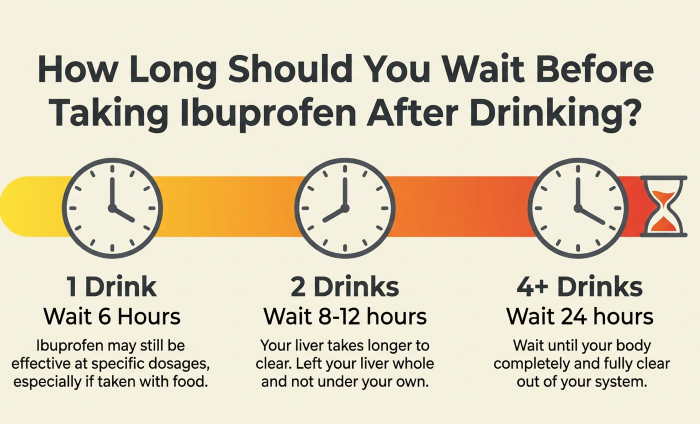
Waiting at least 8–10 hours allows your body time to process ibuprofen. However, safety depends on dosage, frequency, and individual health factors, so avoiding alcohol altogether is the safest option.
What can you not mix with ibuprofen?
Avoid combining ibuprofen with other NSAIDs, blood thinners, certain antidepressants, and alcohol. These combinations can increase the risk of bleeding, stomach damage, and other serious side effects.
Can I take ibuprofen if I’m still drunk?
Taking ibuprofen while intoxicated is not recommended. Alcohol already irritates your stomach and affects your judgment, increasing the risk of misuse and potential complications like internal bleeding.
Can I drink alcohol after 2 hours of taking medication?
Two hours is usually not enough time for ibuprofen to fully process in your body. Drinking alcohol this soon may increase side effects and risks, especially if taken regularly or in higher doses. Outpatient treatment and aftercare are key to long-term health. If you are struggling, finding a rehab near me or an alcohol rehab program can provide the support you need.
Sources
- Healthline – “Ibuprofen and Alcohol: Is It Safe?”
- National Institute on Alcohol Abuse and Alcoholism (NIAAA)
- U.S. Food and Drug Administration (FDA) – NSAID Safety Guidelines
- Mayo Clinic – NSAIDs and Alcohol Interactions
.