Key Takeaways
- PTSD and Addiction frequently occur together, creating a challenging cycle that affects both mental and physical health.
- Trauma-related symptoms can increase the likelihood of substance use as a coping mechanism.
- Early recognition of PTSD and Addiction improves the chances of effective treatment and recovery.
- Integrated treatment approaches that address both conditions at the same time are often the most successful.
- Professional support, therapy, and structured treatment programs can help individuals regain stability and long-term wellness.
Trauma may have invisible effects on people. A lot of people cannot overcome the emotional suffering even after a traumatic event has already occurred, and some people resort to drugs in order to handle the feelings of insecurity. Living with PTSD and Addiction: What You Should Know is a valuable source of information since it informs the reader about the key warning signs, how to help a loved one, or address help for themselves.
For those seeking structured support, our mental health treatments are designed to address these complex needs. PTSD and the Addiction are complex, as they can support one another when comorbid. Such symptoms that are caused by trauma like anxiousness, flashbacks and insensibility of feelings, can cause a person to seek the help of drugs or alcohol. In the long run this coping style may degenerate into dependency.
An understanding that trauma and substance use are interrelated is one of the major steps on the road to recovery and healing, often beginning with a professional assessment at a treatment center serving Central Florida.
What is Post-Traumatic Stress Disorder (PTSD)?
Post-Traumatic Stress Disorder, abbreviated as PTSD, is a mental illness that may develop following the occurrence or witnessing of a traumatic event by an individual. Such experiences can be accidents, violence, abuse, even combat in the army or any other life-threatening circumstances.
Individuals affected by PTSD will have the feeling that the traumatic experience is still occurring, although it has already occurred. The memories can be recollected in the form of flashbacks, nightmares or intrusive thoughts. The daily experiences, including some sounds or conditions, can arouse some strong emotional reactions.
Specialized approaches like trauma therapy can be highly effective in processing these memories. Increased alertness and sleeping problems, irritability and emotional detachment may also be considered as symptoms. Although trauma cannot be addressed the same way by all people, the long-lasting symptoms that disrupt normal life are usually an indicator of PTSD.
In case they are not treated, these traumatizing events render people more susceptible to PTSD and Addiction. Drugs can reduce emotional pain in the short run, but in the long run, they do increase the trauma that was previously caused. Integrated care, such as that found in our dual diagnosis treatment program, is crucial for addressing both issues simultaneously.
100% Confidential Support is Available 24/7
No matter what you’re going through, you’re not alone. Our dedicated team is here to provide a safe, judgment-free space where you can talk openly and honestly. Whether you need emotional support, resources, or just someone to listen.
We’re here for you—completely confidential and always respectful of your privacy. Call us today!
What is Addiction?
Addiction is a recurring disorder that is described as the tendency to use substances compulsively, even when misusing them. It influences the reward system in the brain, whereby individuals find it hard to control their consumption of alcohol or drugs at times when they wish to quit.
Being widely misunderstood as a weakness of willpower, addiction is a very complicated phenomenon, which is seen through biological, psychological, and social dimensions. Drugs like alcohol, opioids, stimulants, and tranquilizers can change brain chemistry and strengthen repetitive use. For those struggling with specific substances, we offer targeted programs like cocaine addiction treatment or alcohol addiction treatment.
The integration of PTSD and Addiction is possible when a person has encountered traumatic experiences as well as been a substance abuser. One may start taking substances to cope with emotional distress but with time, the brain will start getting addicted to the substance to cope with mood and stress.
Addiction as a curable health issue should be understood. However, it is possible to heal people and recreate their lives, provided they have appropriate support and professional help. Understanding the available options, such as our outpatient treatment programs, can be the first step.
Contact Palm Coast Treatment Solutions
Battling with Drug and Alcohol Addition? Remember, you are not alone and we are here to help you!
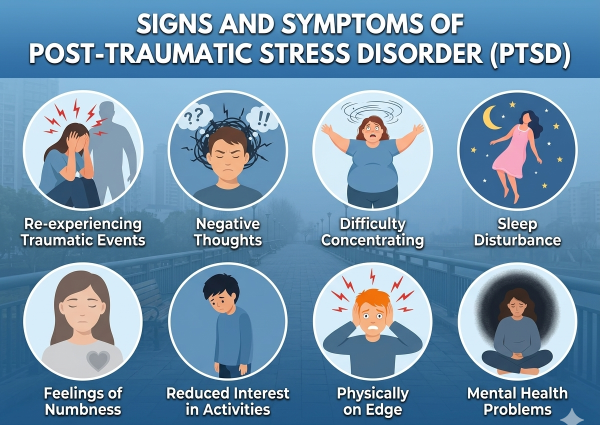
Signs and Symptoms of PTSD
The ability to identify the symptoms of PTSD would enable people to seek support before the problem becomes more severe. However, experiences are different; however, symptoms usually belong to a few categories.
Intrusive Symptoms
These can be undesirable recollections, flashbacks and upsetting dreams concerning the traumatic experience. People can experience severe emotional responses to remind them about the trauma.
Avoidance Behaviors
Individuals with PTSD would not enter or go to the places that have some conversation or situations that would take them back to the encounter or event that caused them trauma. This shyness can, over time, restrict day-to-day life and interactions.
Changes in Mood and Thinking
Negative thoughts, guilt, emotional numbness, and detachment are most often experienced. Others can have a problem with depression or the inability to feel positive.
Physical and Emotional Reactivity
Irritability, sleeping problems, hypervigilance, and lack of focus may be experienced. Such reactions may put people on alert.
Such symptoms that last months and years might be adding to PTSD and Addiction particularly when substances are employed to counter emotional distress. Professional support, like individual therapy, can provide personalized strategies for managing these symptoms.
Overcome Addiction with Palm Coast Treatment Solutions.
Book an appointment.
Risk Factors for Developing PTSD
Not all people who go through traumas develop PTSD. But there are some causes which may bring about the risk of developing the condition.
Severity of Trauma
Psychological impact is usually more powerful in a life-threatening or a lasting traumatic situation.
Previous Trauma
Those with a history of previous traumatic experiences might be susceptible to developing PTSD with the onset of a new experience.
Lack of Support
When there is little or no emotional support following a traumatic event, the process of recovery can become harder.
Mental Health History
Anxiety or depression are the influencing factors that can make a person more vulnerable to trauma-related disorders. Our medication management services can help stabilize these underlying conditions.
All these risk factors may also impact the development of PTSD and Addiction, in particular, when subjected to trauma-related distress, people seek to find the means of coping with it by using substances.
Professional help can potentially make your life or the life of a person you love better if they are facing trauma and drug use issues. The Palm Coast Treatment Solutions provides evidence-based care and treatment that is compassionate and aimed at both treatment and recovery. You can verify your insurance online to understand your coverage options.
Make a call now to talk with a treatment specialist and start on the road to healing and recovery.
Co-Occurring PTSD and Addiction
Coming together, PTSD and substance use disorder are referred to as co-occurring disorders. Such a combination is the rule since both conditions affect the emotional regulation and coping mechanisms.
Individuals struggling with trauma can resort to alcohol or drugs to help them cope with anxiety, dull painful memories, or sleep better. Although substances can provide a short-term effect, they usually have a severe effect on the symptoms of PTSD in the long run. For some, the path to misuse begins with prescription medication, and understanding prescription drug addiction is a vital part of the puzzle.
This gives rise to a spiral of trauma symptoms, which cause substance use, and mental health is aggravated because of substance use. Tolerance also leads to the possibility of people taking larger quantities of substances, which makes the recovery even more difficult.
This cycle cannot be stopped without simultaneously treating both the trauma and substance use. Not taking into account one of the conditions and treating the other is hardly going to provide any lasting results. A partial hospitalization program can offer the intensive, structured care needed to address both.
Integrated care makes people learn what the correlation between PTSD and addiction is, and they learn to have better coping patterns towards stress and emotional stimulation.
Overcome Addiction with Palm Coast Treatment Solutions.
Book an appointment.
Treatment for PTSD and Addiction
Treatment should be aimed at achieving a combination of the conditions. Integrated care helps one to gain a better idea on the relationship between substance use and trauma, besides developing more effective coping skills.
Therapy
The therapies, like cognitive behavioral therapy (CBT) and trauma-centered therapy, can be adopted to help an individual to process the traumatic memories as well as adopt healthier ways of thinking. Our CBT therapy and DBT therapy options are particularly effective for this.
Medication
Some drugs can also have a psychological effect of alleviating anxiety, depression, and sleeping problems related with PTSD.
Dual Diagnosis Treatment Plans
Full-fledged programs that treat PTSD and Addiction treatment are made specifically to treat both. Such programs in many cases involve therapy, counseling, and systematic assistance. Our intensive outpatient program is a common and effective level of care for these co-occurring conditions.
Support Networks
Long-term recovery can be enhanced by peer support groups, involvement of the family, and continuous counseling. We also offer specialized support like grief counseling to address the underlying losses that often accompany trauma and addiction.
Trauma and addiction recovery is a long process, and with the right treatment strategy, many people get back on their feet and have stable inner and emotional health. For young adults facing these challenges, a dedicated young adult mental health program can make a significant difference.

Begin Your Recovery Process
You need not struggle with trauma and drug use on your own. The compassionate staff of Palm Coast Treatment Solutions offers individuals unique treatment programs which treat trauma and addiction in a supportive atmosphere.
For those concerned about privacy, our confidential drug treatment options ensure a safe and discreet environment. Call Palm Coast Treatment Solutions now, and find out how integrated care with compassion can be used to help you or a loved one rediscover a healthier future.
When you or a loved one is struggling with the issues of PTSD and Addiction, it can be possible to find the breakthrough of recovery through professional help. When given proper treatment, he or she can recover; it’s not just possible, but achievable. Our holistic approach includes family therapy to rebuild the support systems essential for lasting recovery.
Overcome Addiction with Palm Coast Treatment Solutions.
Book an appointment.
Frequently Asked Questions
Are people with PTSD prone to addiction?
Yes, individuals with PTSD may be more vulnerable to substance misuse. Many people use alcohol or drugs to manage distressing symptoms like anxiety, sleep problems, or intrusive memories. Over time, this coping strategy can lead to dependency and contribute to co-occurring disorders.
What is the trauma addiction cycle?
The trauma addiction cycle occurs when a person uses substances to numb emotional pain caused by trauma. While substances may temporarily relieve symptoms, they often worsen mental health over time, leading to increased use and reinforcing the cycle of trauma and addiction. Breaking this cycle often requires the structure of a partial hospitalization program or a similar intensive setting.
What are the 17 symptoms of complex PTSD?
Complex PTSD can include symptoms such as emotional flashbacks, difficulty controlling emotions, negative self-beliefs, shame, dissociation, relationship struggles, and persistent feelings of threat. These symptoms often develop after prolonged trauma and can significantly affect daily functioning and relationships.
What is the link between trauma and addiction?
Trauma can disrupt emotional regulation and stress responses. Many individuals turn to substances to manage distress, anxiety, or intrusive memories. Over time, repeated use can change brain chemistry, increasing the risk of addiction and reinforcing unhealthy coping patterns. Professional help at a facility like Palm Coast Treatment Solutions can help untangle these complex links.
What mental illness is prone to addiction?
Several mental health conditions are linked to higher addiction risk, including PTSD, depression, anxiety disorders, bipolar disorder, and ADHD. When mental health symptoms remain untreated, individuals may use substances to self-medicate, increasing the likelihood of developing substance use disorders. Our mental health diagnosis services can provide clarity and a path forward.
What does high-functioning PTSD look like?
High-functioning PTSD describes individuals who maintain work, relationships, and daily responsibilities while still experiencing trauma-related symptoms internally. They may hide anxiety, emotional numbness, or intrusive memories, making the condition harder to recognize and treat.