In This Blog:
- Clinical definition of substance use disorders.
- The brain neurochemistry in the dependency state.
- The behavioral health and chronic use correlation.
- Diagnosing the comorbidity problems.
- Combined professional control is an important aspect.
Is Addiction a Mental Illness? To understand this, we should mention the way by which the major health bodies have classified Addiction as a relapsing chronic brain disorder.
It is widely referred to as Mental Illness since it greatly impacts on the brain structure and its functions that influence the feelings, thoughts, or the actions of an individual.
These changes affect the reward system of the brain, because it is even more challenging to make a person govern his desires even if they are harmful.
By looking at these challenges from a clinical perspective, the individuals will be empowered to go beyond stigma to clinical control.
This blog discusses behavioral health, and substance use where tracks of recovery are structured.
Expert Advice: A professional support environment offers essential tools for managing complex mental health conditions.
Defining Substance Use Disorder
Substance Use Disorder is the clinical name that describes when a patient is not successful in stopping the consumption of a substance despite the fact that it causes impairment.
It is characterized by a hopeless need to consume and lack of control.
Medical practitioners categorize the condition as a psychological problem since it involves essential changes in the brain decision making centers.
A comprehensive checkup is provided in a treatment environment to observe the severity of the given situation.
The Biological Impact on the Brain
The dependency influences the brain chemistry that has a great influence on the pathways which are involved in the motivation and reward.
The brain is being flooded with substances that mimic the dopamine that enhances an artificially induced high which the brain finds it difficult to reproduce naturally.
The substance leaves tolerance and physical dependence over time and the brain becomes accustomed to its presence.
This biological transition is the major reason for stable recovery with professional oversight.
Brain Region Affected | Function Impacted | Result of Dependency |
Basal Ganglia | Reward and Motivation | Decreased ability to feel pleasure naturally |
Extended Amygdala | Stress and Emotion | Increased irritability and anxiety during withdrawal |
Prefrontal Cortex | Decision-Making and Control | Difficulty resisting impulses and planning for the future |
Transitioning to Supervised Support
In monitored conditions individuals have an opportunity to test these biological changes without the impact of external factors.
This environment provides the security that is required to bring stability in the brain chemistry under constant professional oversight.
FACT: Addiction is a chronic health condition, not a moral failure.
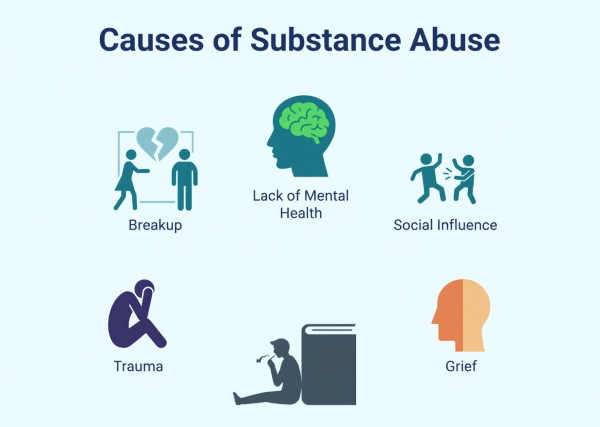
The Connection Between Mental Health and Substance Use
Along with mental health conditions, substance abuse is very common to exist simultaneously. This has usually been referred to as a dual diagnosis or co-occurring disorder.
Some people self-medicate for untreated anxiety or depression with the use of some substances.
The chronic use of a substance may cause or worsen psychological symptoms in other occasions.
That is why integrated professional recovery services help in dealing with both sides to achieve long-term stability.
Identifying Shared Risk Factors
Many risk factors can increase vulnerability of a person to not only addiction but also mental illnesses.
These are genetic predispositions, environmental stress, and early childhood trauma.
Risk Factor Category | Examples |
Genetic | Family history of substance use or mood disorders |
Environmental | High-stress living conditions or lack of social support |
Developmental | Exposure to substances or trauma at a young age |
Biological | Pre-existing imbalances in brain chemistry |
The Value of Professional Oversight
The recognition of these risk factors constitutes an essential process of rehabilitation.
A Supervised support system provides the tools to manage such vulnerability using evidence-based practice and lifestyle modification.
Reach out to Palm Coast Treatment Solutions for professional guidance today.
Why Willpower is Not Enough
Since dependency involves physical alteration in the brain structure, relying on sheer will power in altering it is insufficient.
Wiring of the brain is distorted in such a way that it puts the priority of the substance above the rest of the healthy needs in the body.
Professional care in terms of therapy and direction can help rewire these responses.
Monitored setting will ensure that the individual has a system that could guide him/her outside of self-control.
Treatment Approaches for Integrated Care
Effective recovery services are directed to focus on physical and mental health.
This includes behavioral therapies that help individuals to figure out triggers and develop new and healthy response mechanisms.
In a treatment settings, individuals can also be provided support for co-occurring conditions, including state of anxiety or a bipolar disorder.
It is the most appropriate way to have integration where there is the provision of a sustainable and healthy future.
Core Therapeutic Goals
- Stabilization: Assisting the individual in being stable and physically safe.
- Education: It is about learning how substances influence the mind.
- Skill Building: Emotional and stress management skill training.
- Relapse Prevention: Making a step-by-step guide to maintain healthy daily living.
The Path to Long-Term Wellness
Recovery services could only be used as a prevention towards regaining your life and psychological well-being.
These services provide different interventions like personal counseling as well as group work that initiates the sense of community.
The continuity of care is essential to keep the individual supported as he/she gets into daily obligations once again.
The wellness process is achievable with the help of professional support.
Support is available at Palm Coast Treatment Solutions to start healing now.

Reclaiming Your Future
It is a brave and necessary thing when you resolve to tackle the problems of your health.
Many people find that the support that is experienced in a treatment environment makes it possible to overcome the stigma and focus on real healing.
Focus remains on enhancing sustainable development by offering evidence-based care and helping patients.
A well-organized program and the assistance of professional supervision can finally make the process of attaining a healthier lifestyle a reality.
Medical Disclaimer: This blog is for informational purposes only and is not a substitute for professional medical advice.
Key Takeaways
- Is Addiction a Mental Illness? Yes, it is a chronic brain disorder that affects thoughts and behaviors.
- Dependency alters brain chemistry, specifically the reward and decision-making centers.
- Co-occurring mental health conditions are common and require integrated professional oversight.
- Genetic and environmental factors play a role in a person’s vulnerability to dependency.
- Long-term stability is achieved through structured recovery services and aftercare.
FAQs
Can addiction be cured?
While there is no “cure” in the traditional sense, the condition can be successfully managed long-term. Recovery involves a continuous commitment to health and the use of tools learned in a treatment environment. Professional oversight helps you navigate the challenges of maintaining stability throughout your life.
How do I know if I have a co-occurring disorder?
If you struggle with both substance use and persistent feelings of anxiety or depression, you may have a dual diagnosis. A comprehensive assessment in a monitored setting is the best way to identify these overlapping concerns. Integrated recovery services address both simultaneously for the best outcome.
Why do I feel like I’ve lost control?
Substances hijack the brain’s reward system, making the drive to use more powerful than your conscious desire to stop. This loss of control is a primary symptom of the disorder and a sign that you need professional oversight. A supervised support system can help you reclaim that control.
Is there a genetic link to dependency?
Yes, research shows that genetics can account for about half of a person’s risk for developing a substance use disorder. However, environmental factors also play a major role. Regardless of your history, professional recovery services can help you build a new, healthy path forward.
What is the first step in getting help?
The first step is acknowledging that you need assistance and reaching out to a professional support environment. They will guide you through an intake process and help you establish a plan tailored to your specific needs. Support is available to help you take that first step today.
References
- https://my.clevelandclinic.org/health/diseases/16652-drug-addiction-substance-use-disorder-sud
- https://www.nimh.nih.gov/health/topics/substance-use-and-mental-health
- https://americanaddictioncenters.org/stimulants/amphetamine/adderall/long-term-effects
- https://www.cdc.gov/stopoverdose/stigma/index.html