Key Takeaways
- Drug use may distort brain chemistry and hurt emotional health.
- Most individuals are addicted and at the same time have mental illnesses.
- Addiction usually correlates with such conditions as anxiety, depression, and trauma.
- The proper treatment will be the treatment of the addiction and the mental health.
- Professional care and early intervention can make a significant contribution to long-term recovery.
Substance abuse is a serious problem for a large number of people with addiction, which raises the question: How does substance abuse affect mental health? Substance use and emotional well-being are two intraprofessional factors which are very closely interrelated and connected. Drugs and alcohol have the potential to alter the functionality of the brain, affect the mood, and exacerbate pre-existing psychological problems. The relationship formed over time may result in a reciprocal association in which afflicted mental health results in substance use, and stricken substance use results in afflicted mental health.
Mental health is also a major subject to be learned about on the subject of substance abuse before recovery. As soon as individuals comprehend that addiction influences their emotions and behavior as well as the ways of thinking, they will possess enough energy to start the process of healing with the aid of supportive help and therapy and restore the balance and improve their state.
Substance Use and Mental Health
To explain how drug abuse influences Mental Health, it is useful first to ask how drug abuse influences the brain. Drugs and alcohol affect neurotransmitters, chemical messengers involved in the process of regulating mood, motivation, pleasure, and emotional responses.
When chemicals repeatedly change these brain signals, they may upset the natural balance that promotes healthy thinking and emotional stability. Consequently, people can develop some of the symptoms like anxiety, irritability, mood swings, or even depression.
With time, the contribution of mental health to substance abuse can be observed. A person who started to take alcohol to calm himself down can start to experience more anxiety or emotional instability without it. This change occurs due to the fact that the brain slowly starts to rely on the substances to regulate the emotions, making daily stress hard to cope with.
In most situations, substance use may as well hide underlying intellectual health conditions, thereby delaying successful diagnoses and treatment.
Can Mental Health Problems Cause Substance Abuse?
Mental health and addiction usually cut both ways. Although addiction may cause psychological problems, the presence of mental health issues may also predispose one to substance abuse.
Human beings, who are depressed, anxious, traumatized, or chronicly stressed, resort to using drugs or alcohol under the pretext of dealing with tough feelings. This is what is usually known as self-medication.
In such a way that the immediate benefits of substances are employed to grant relief in cases of emotional pain the habit gets solidified. This is a shame because this is normally used to resolve the situation rather than the actual problem. Rather, it tends to propagate the loop whereby substance abuse influences mental health by being more devastating in the long run.
For example:
- An anxious person can take alcohol to calm down.
- The depressed person could abuse the stimulants to feel more active.
- Traumatized people can use substances that help them to feel numb to painful emotional memories.
Even though substances, in the short run, can minimize distress, they end up disrupting the healing process of the emotions and professional therapy.
Effects of Drug Abuse on Mental Health
The various substances have varied impacts on the brain, although most of them have similar psychological effects. By learning how abuse of substances impacts mental health, one will be able to identify warning signs at an earlier stage.
The most prevalent mental health effects are:
Depression
Alcohol and selected drugs may interfere with the presence of serotonin and dopamine in the body, which may be a reason behind unremitting sadness, exhaustion, and de-motivation.
Anxiety and Panic
The process of withdrawal and a lot of stimulants may cause severe anxiety or panic attacks.
Paranoia and Psychosis
Other drugs may cause paranoia, hallucinations or distorted thinking, especially stimulants or hallucinogens.
Emotional Instability
Substance use might lead to extreme mood alterations, irritability and inability to control emotions.
Cognitive Difficulties
Long-term use of the drug may influence memory, decision-making and concentration and focus.
The fact that mental health is prone to the influence of substance abuse in such a way makes it hard to live day-to-day. The capacity to build relationships, performance at work, and own well-being can be adversely affected since the level of emotional stability drops.
What is a Dual Diagnosis?
Dual diagnosis occurs when the individual has both a substance use disorder and a mental condition.
This is a more prevalent situation than some may portend. Studies have revealed that a good number of people who immediately need treatment of an addiction problem are at the same time found to be affected by other conditions, including depression, anxiety disorder, or post-traumatic stress disorder (PTSD).
Dual diagnosis brings out the context of the extent to which mental health is deeply impacted by substance abuse, as well as how mental illness might promote addiction in some manner or another. The problem of treating only one side is sure to give the relapse, as the other condition will remain untreated.
The overall treatment is the approach aimed at the recovery of addictions and mental health at the same time.
Recognizing a Dual Diagnosis
Being aware of the symptoms of dual diagnosis may enable people to be offered proper treatment earlier. Others that can be used as common indicators include:
- Taking substances to treat emotional distress.
- Mood change associated with substance use.
- Mental disorders that are aggravated by substance abuse.
- Problem working, attending school or relationships.
- Recurring post-addiction treatment relapses.
These warning signs tend to manifest in combination in the case of substance abuse related to mental health. Early intervention by professional guidance can be of great help to them to recover.
Dual Diagnosis Vs. Co-occurring Disorders: What’s the Difference?
Mostly, the terms “dual diagnosis” and “co-occurring disorders” are used in the same context. They can refer to the same case in the majority of clinical cases: a patient with a substance use disorder and with a mental health issue.
However, there are situations when co-occurring disorders can be understood less literally as any combination of mental health issues that represents itself and accompaniment to addiction.
No matter what the words may be, the bottom line is the same: successful treatment should take into consideration the impact substance abuse has on the mental state and the impact mental issues have on the use of substances.
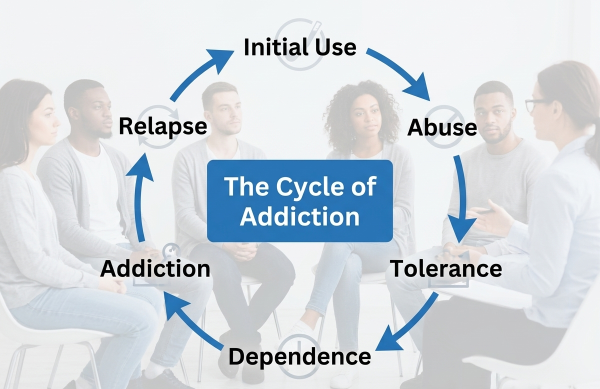
The Cycle of Addiction & Mental Health Issues
Mental health problems and addiction tend to form a vicious circle which may prove hard to escape:
- Mental health or emotional disturbances are manifested.
- Substances are used by a person in order to cope or run away.
- Interim reprieve strengthens substance use.
- The brain chemistry alters and deteriorates emotional wellness.
- Greater distress is a determinant of greater use of substances.
This vicious cycle shows the extent to which mental health is influenced by substance abuse. The cycle has the possibility of escalating over time without intervention, so the addiction and psychological symptoms become more severe.
The professional treatment is aimed at breaking this cycle by means of therapy, medical care and emotional support.
Recovery and Rehabilitation: A Dual Approach
Treatment of addiction with mental health issues is most effective, as the recovery process can be effective. This is a combined system that acknowledges that substance abuse has a strong influence on mental health and demands holistic treatment.
Treatment may include:
- Single counseling and psychotherapy.
- Drug control where necessary.
- Such behavioral therapies as Cognitive Behavioral Therapy (CBT)
- Peer support and group therapy.
- Training in stress management and coping skills.
- Family therapy and education.
Mental health and addiction programs assist individuals in developing healthier coping mechanisms, enhancing emotional management and establishing a long-term recovery program.
Through the appropriate support system and treatment model, a large number of individuals can be in a position to restore their balance and build up their lives.

Get Professional Support Today
When you are struggling and you are asking yourself How Does Substance Abuse Affect Mental Health, then you are not alone. The first phase in the recovery process is the awareness of the relationship that exists between addiction and emotional states.
Palm Coast Treatment Solutions provides evidence-based, high-quality care grounded in the area of compassionate treatment of both substance use and mental health issues.
Call Palm Coast Treatment Solutions today to talk with someone who cares and find out also what is available in terms of treatment.
Being ready to seek help is the first step to be taken that could open the door to a long-lasting healing process, better mental health, and a healthier future. It is time to make a first step towards budget recovery.
Get in touch with Palm Coast Treatment Solutions and find out how effective, caring treatment can be used to recoup not only the mental healing but also be able to revive the well-being over time.
Disclaimer
This content is for informational and educational purposes only and should not be considered medical or mental health advice. If you or someone you know is experiencing symptoms of substance use disorder or mental health concerns, please seek guidance from a licensed healthcare professional or qualified treatment provider.
Frequently Asked Questions
How is substance abuse related to mental health?
Substance use and mental health are closely connected. Drugs and alcohol can change brain chemistry, affecting mood, behavior, and thinking patterns. Over time, substance use may worsen existing mental health conditions or contribute to new psychological challenges.
What percentage of drug addicts have mental health issues?
Studies show that nearly half of individuals with substance use disorders also experience a mental health condition. This overlap highlights how frequently addiction and psychological challenges occur together, which is why integrated treatment addressing both issues is often recommended.
How does substance abuse impact?
Substance abuse can impact many areas of life, including emotional health, relationships, physical well-being, and decision-making. It can disrupt brain function, increase stress levels, and make it harder for individuals to manage daily responsibilities and maintain stable mental health.
Why do people use substances as a coping mechanism?
Some individuals use substances to temporarily escape stress, trauma, anxiety, or depression. While drugs or alcohol may provide short-term relief, they often worsen emotional health over time and make underlying issues more difficult to manage.
How does substance abuse affect your mind?
Substance use can interfere with brain chemistry, leading to mood swings, anxiety, depression, or impaired judgment. Over time, these changes may affect memory, concentration, and emotional regulation, making it harder to maintain mental stability.
What are the 4 C’s of addiction?
The four C’s of addiction are craving, loss of control, compulsion, and continued use despite consequences. These characteristics describe how addiction affects behavior and decision-making, often making it difficult for individuals to stop using substances without professional help.
Sources
- National Institute on Drug Abuse (NIDA). Substance Use and Mental Health
- Substance Abuse and Mental Health Services Administration (SAMHSA). Co-Occurring Disorders and Treatment.
- American Psychiatric Association. Diagnostic and Statistical Manual of Mental Disorders (DSM-5).
- National Alliance on Mental Illness (NAMI). Mental Health and Substance Use