In This Blog
- Defining the detection window for methamphetamine in biological samples
- Identifying the physical factors that influence how the body processes stimulants
- Understanding the typical timeline for a standard urine screening
- Exploring how different testing methods compare in accuracy and duration
- Finding structured support and professional resources for long-term wellness
To anyone worried about drug tests or looking to get a better vision of the road to wellness, knowing the duration of Meth in the Urine is an important bit of knowledge. Methamphetamine is a strong stimulant of the central nervous system, which is metabolized by the body in a multifaceted metabolic path related to the liver and kidney.
The metabolites of this stimulant may take days to clear the system as opposed to a few hours, as is the case with some substances, which is determined by how often they are taken as well as the individual’s peculiar chemistry.
This is important because having these detection windows helps in making informed decisions and being aware of the effect this substance has on the body physically in terms of its internal systems. The need to seek professional assistance to cope with the issue of dependency and health restoration can be better understood by looking into the science behind metabolism and excretion.
Expert Advice: Hydration and kidney health are primary factors in how quickly stimulants clear the system.
How Does Your Body Process Meth?
When methamphetamine enters the body, it is rapidly absorbed into the bloodstream and distributed to various organs, including the brain. The liver is responsible for breaking down substances into metabolites, which are then filtered by the kidneys and excreted.
This process is not instantaneous. Because the drug has a significant half-life, a portion of the original dose remains in the system for an extended period. This is why a screening can detect Meth Stay in Urine even days after the initial effects of the drug have faded.
FACT: Urine tests are the most common method for detecting recent stimulant use.
What Makes Meth Stay in Your System?
There is no single answer for how long a substance will remain detectable, as every person’s body functions differently. Several biological and lifestyle factors determine the speed at which the body can clear these chemicals.
Key factors include:
- Metabolic Rate: Individuals with faster metabolisms tend to process and excrete substances more quickly than those with slower rates.
- Frequency of Use: Chronic or heavy use leads to an accumulation of metabolites in the body’s tissues, extending the detection window significantly.
- Body Composition: Since some metabolites can be stored in fatty tissues, body mass index can play a role in the duration of presence.
- Age and Health: Younger individuals and those with healthy liver and kidney function generally clear toxins more efficiently.
How Long Does Meth Show on Drug Tests?
Standard screenings are designed to identify the presence of specific metabolites that indicate recent use. While urine testing is the standard, other biological samples can provide a different historical perspective on a person’s habits.
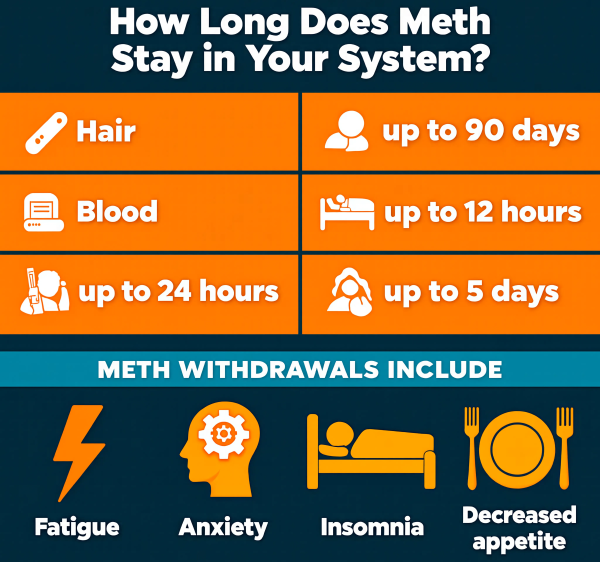
For most individuals, the window for Meth Stay in Urine ranges from two to five days. However, in cases of long-term or high-dose usage, this period can extend to a week or more as the body struggles to keep up with the detoxification process.
Testing Method | Typical Detection Window | Primary Use Case |
Urine Test | 2 to 5 days | Standard employment or legal screening |
Blood Test | Up to 3 days | Accident or emergency room assessment |
Saliva Test | 1 to 2 days | Recent use or roadside testing |
Hair Follicle | Up to 90 days | Historical use and long-term monitoring |
Does Urine pH Affect Meth Detection?
The acidity or alkalinity of a person’s urine (urine pH) can significantly impact the excretion rate of stimulants. When urine is more acidic, the body tends to eliminate methamphetamine more rapidly.
Conversely, alkaline urine can cause the kidneys to reabsorb some of the substance, leading to a longer period where meth stays in urine. While some people try to alter their pH levels through diet, these changes are often minimal and do not provide a reliable way to bypass a professional screening.
How Does Meth Affect Your Body?
Beyond the question of detection, it is important to consider the toll these substances take on the body. Stimulants put an immense amount of stress on the cardiovascular system, increasing heart rate and blood pressure to dangerous levels.
Over time, this can lead to permanent damage to the heart and blood vessels. The strain on the kidneys and liver during the clearing process also increases the risk of organ failure in heavy users. Understanding these risks is a powerful motivator for seeking a different path.
How Does Meth Affect Your Brain?
The presence of stimulants in the system affects more than just physical health; it fundamentally alters brain chemistry. This leads to intense mood swings, intense anxiety, and in some cases, symptoms of psychosis.
As the drug clears the system, individuals often experience a “crash” characterized by extreme fatigue and depression. Professional monitoring during this time is essential to ensure the safety and stability of the individual as their brain begins to recalibrate.
If you are ready to start your journey, Palm Coast Treatment Solutions is here at (386) 284-4151.
Why Does Professional Meth Testing Matter?
Professional drug tests are highly sensitive and can detect even small amounts of metabolites. These tests are designed to prevent tampering and ensure that the results are an accurate reflection of a person’s recent health history.
For those in a support program, these screenings are not about punishment but about accountability and safety. They provide a clear record of progress and help the support team adjust the wellness plan to meet the individual’s current needs.
What Happens During Meth Detox?
The period when the substance is clearing the body can be physically and emotionally taxing. This phase, often referred to as detoxification, is the first step toward long-term health and requires a structured environment for success.
A professional team can provide the following:
- Constant monitoring of vital signs to ensure physical safety.
- Support for managing the intense cravings that occur during the clearing period.
- Nutritional guidance to help the body replenish essential vitamins and minerals.
- A calm, secure environment away from the triggers of daily life.
How to Identify Your Meth Use Triggers
One of the most important aspects of a wellness program is learning to identify the situations that lead to use. By understanding these triggers, individuals can develop new coping mechanisms that do not rely on substances.
This process involves looking at social circles, stress levels, and emotional health. When a person understands the “why” behind their habits, they are much better equipped to stay committed to their goals after the Meth Stay in Urine period has passed.
Support Component | Focus Area | Long-Term Benefit |
Physical Care | Organ health and nutrition | Restored vitality and energy |
Behavioral Therapy | Thought patterns and triggers | Reduced risk of returning to use |
Peer Groups | Connection and shared wisdom | Emotional stability and community |
For expert help and structured care, contact Palm Coast Treatment Solutions.
Rebuilding Relationships After Meth Addiction
Dependency often strains the bonds between family and friends. The process of healing involves more than just physical clearing; it requires a dedicated effort to restore trust and communication with loved ones.
Involving family in the support process can help heal old wounds and create a unified front for the future. As the individual achieves stability, they can begin to fulfill their roles as a partner, parent, or employee with renewed clarity.
How Long Does the Brain Take to Recover?
The brain has a remarkable capacity for healing, but it takes time. After the initial Meth Stay in Urine window closes, the brain continues to repair the pathways damaged by stimulant use.
Over months of abstinence, cognitive functions such as memory, focus, and emotional regulation begin to return to normal levels. This recovery is a marathon, not a sprint, and requires ongoing dedication to a healthy lifestyle and professional guidance.

Why Choose a Meth Recovery Program?
A structured program provides the foundation needed for a successful transition to a healthier life. These services offer a level of oversight and expertise that is impossible to replicate on one’s own.
By choosing a professional path, individuals gain access to a community of peers and experts who understand the complexities of stimulant use. This collective wisdom is a powerful tool for maintaining motivation during the difficult early stages of the journey.
Healthy Ways to Cope Without Meth
Life will always present challenges and stressors, but substances are not the only way to manage them. Wellness programs focus on teaching individuals how to navigate life’s ups and downs using healthy tools like exercise, mindfulness, and communication.
These new skills become the “safety net” that protects the individual long after they have left a formal program. By practicing these habits daily, they become second nature, leading to a more resilient and fulfilling life.
Meth Detection and Starting Your Recovery
While knowing how long meth stays in urine is helpful for understanding a screening window, the true value lies in recognizing the need for a total lifestyle change. Every day that the body is free from stimulants is a day that it can heal and grow stronger.
Choosing wellness is a commitment to yourself and your future. With the right support and a dedicated plan, it is possible to move beyond the shadow of dependency and into a life characterized by health, purpose, and genuine connection.
Palm Coast Treatment Solutions offers comprehensive support services and personalized guidance for those seeking a healthier lifestyle. Their team focuses on providing a structured environment where individuals can address their habits through evidence-informed methods and ongoing peer support.
Medical Disclaimer: This article is for informational purposes only and is not a substitute for professional medical advice.
Key Takeaways
- Meth stays in urine typically for two to five days, though heavy use can extend this window.
- Factors such as metabolism, age, frequency of use, and urine pH all influence detection times.
- Urine testing remains the most common and effective method for identifying recent stimulant use.
- The physical and psychological “crash” after use requires professional monitoring for safety.
- Long-term wellness is achieved through structured support, behavioral changes, and community connection.
FAQs
How soon after use can meth be detected?
Methamphetamine can be detected in urine as soon as two to five hours after consumption. The body begins processing the drug immediately, and metabolites are quickly filtered by the kidneys, making them visible in a standard screening shortly after the initial effects are felt.
Can drinking lots of water clear the urine?
While drinking water is essential for general health and kidney function, “flushing” the system with excessive water is not a reliable way to hide use. Professional screenings often check for creatinine levels and specific gravity to determine if a sample has been diluted, which can lead to an invalid result.
Is a hair test more accurate than a urine test?
Accuracy is similar, but the “history” they provide is different. A hair test can identify use from up to ninety days ago, while a urine test focuses on the last few days. For this reason, hair tests are often used for long-term monitoring rather than checking for immediate impairment.
What does a “false positive” mean?
A false positive occurs when a test incorrectly identifies a substance that is not actually present. Some over-the-counter medications can occasionally trigger a false positive for stimulants. In these cases, a more detailed lab confirmation (like GC/MS testing) is used to verify the exact chemical structure and clear up the error.
How can I start a support program?
Starting a program begins with a confidential conversation with a professional. They will assess your needs and help you find the right level of care, whether it involves detoxification, residential support, or outpatient services. Reaching out is the first and most important step toward a healthier future.