
You’ve been taking ibuprofen for a headache or some muscle pain and are wondering if it’s safe to drink. Or perhaps a family member has been coping with chronic pain by taking ibuprofen and using alcohol to cope. Either way, you deserve a clear, honest answer instead of vague reassurances.
The quick answer: it’s safe to say that a little alcohol and a little ibuprofen every now and again, in healthy people, is not going to do much harm. But the risks are there; they’re well documented, and they can increase in a way that could affect anyone who drinks more than just a little or takes ibuprofen regularly.
We’ll explore precisely what happens when you combine ibuprofen and alcohol, which organ systems are most vulnerable to the effects, how long one should wait between taking them, who is most susceptible, and when this combination may signal a more serious underlying issue that needs to be tackled.
Expert’s Advice: Avoid combining ibuprofen with alcohol regularly; consult a physician about pain options.
What Is Ibuprofen and How Does It Work?
Ibuprofen is a type of drug called a nonsteroidal anti-inflammatory drug (NSAID). It prevents the action of enzymes called cyclooxygenase (COX-1 and COX-2), which are involved in the body’s production of prostaglandins. The prostaglandins are chemicals which produce pain, inflammation, and fever. Ibuprofen works by decreasing the amount of ibuprofen produced, which helps to relieve pain and decrease swelling.
It’s marketed as Advil, Motrin, and Nuprin, and is one of the most popular OTC (over-the-counter) drugs on the market. Prescription strength ibuprofen, in 600 mg to 800 mg doses, is also popularly used for arthritis, back pain, menstrual cramps and post-surgical pain.
When taken with alcohol, the same COX inhibition which makes ibuprofen effective at reducing pain also has consequences in the stomach, kidneys and cardiovascular system, some more serious than others.
FACTS: Ibuprofen’s half-life is roughly two hours, clearing almost fully within ten hours.
Can You Drink Alcohol After Taking Ibuprofen?
The direct answer is: in most cases, an occasional drink taken well after a single low dose of ibuprofen will not cause serious harm in a healthy adult with no underlying organ conditions and no chronic alcohol use. However, no combination of ibuprofen and alcohol is entirely risk-free, and several contexts make it genuinely dangerous.
NSAID-related gastrointestinal complications account for more than 100,000 hospitalizations annually in the United States, according to pharmacokinetic research cited in clinical literature. Alcohol’s role in amplifying those complications is a contributing factor in a significant portion of those cases.
What Happens in Your Body When You Mix Ibuprofen and Alcohol
Both ibuprofen and alcohol are processed primarily through the liver and excreted via the kidneys. Both irritate the gastrointestinal tract. Both affect platelet function and blood clotting. Understanding what each substance does on its own makes it easier to see why combining them raises measurable risks.
Gastrointestinal System
Ibuprofen inhibits COX-1, an enzyme that plays a protective role in the stomach by stimulating the production of mucus that lines and shields the stomach wall. When COX-1 is inhibited, the stomach’s protective mucus layer thins, making the lining more vulnerable to irritation, ulceration, and bleeding.
Alcohol independently irritates the stomach lining, increases acid production, and further weakens the stomach’s mucosal barrier. When both substances are present simultaneously, their gastric effects are additive and potentially synergistic. The stomach becomes more vulnerable to injury from both directions at once.
Symptoms of gastrointestinal irritation from this combination include nausea, upper abdominal pain, and stomach cramps. More serious consequences include gastric ulcers, peptic ulcer disease, and gastrointestinal bleeding. Signs that require immediate medical attention include vomiting blood, black or tarry stools (which indicate digested blood in the gastrointestinal tract), and severe abdominal pain. These symptoms are medical emergencies.
Kidneys
Ibuprofen affects kidney function by inhibiting COX enzymes in the renal tissue, which reduces the production of prostaglandins that help regulate blood flow to the kidneys. At therapeutic doses in healthy, well-hydrated individuals, this effect is mild. In dehydrated individuals or those with reduced kidney function, it can meaningfully reduce the glomerular filtration rate, the speed at which the kidneys filter blood.
Alcohol is a diuretic. It suppresses antidiuretic hormone, causing the body to produce more urine and lose fluid. This dehydrating effect compounds ibuprofen’s impact on renal blood flow. Research cited by Pathways Recovery documents that this combination creates a synergistic reduction in glomerular filtration rate, and that patients with chronic kidney disease or alcohol use disorder are particularly vulnerable.
Regular heavy drinking independently doubles the risk of developing chronic kidney disease, according to clinical data. Combined with regular NSAID use, kidney stress is compounded.
Symptoms of kidney distress include changes in urination (decreased output or discoloration), swelling in the legs or ankles, fatigue, and flank pain. Acute kidney injury from this combination, while uncommon in occasional users, is a recognized clinical risk in heavy drinkers and those with pre-existing kidney conditions.
Liver
Ibuprofen is metabolized in the liver. Unlike acetaminophen (Tylenol), which carries a well-known and serious risk of liver toxicity when combined with alcohol, ibuprofen’s direct liver toxicity risk is lower at standard doses. However, alcohol places its own metabolic demand on the liver, and the simultaneous processing of both substances increases hepatic workload.
In people with existing liver disease, heavy alcohol use, or both, this additional metabolic burden can elevate liver enzyme levels and potentially contribute to further liver damage over time. The risk is significantly lower than with acetaminophen and alcohol, but it is not zero, particularly in people already drinking at levels that have compromised liver function.
Cardiovascular System
Both ibuprofen and alcohol have documented effects on blood pressure and cardiovascular function. Ibuprofen can cause fluid retention and raise blood pressure, particularly with long-term use or at higher doses. Alcohol’s cardiovascular effects are complex: while light consumption has been associated with modest blood pressure benefits in some studies, regular moderate to heavy drinking raises blood pressure and increases the risk of atrial fibrillation, stroke, and heart failure.
A 2025 scientific statement from the American Heart Association published in Circulation concluded that regular alcohol consumption at any level carries cardiovascular risk, with no safe lower threshold firmly established. Combining elevated ibuprofen use with regular alcohol use in a person with hypertension or existing cardiovascular disease creates compounding cardiovascular strain.
Blood Clotting and Bleeding Risk
Ibuprofen inhibits platelet aggregation, reducing the blood’s ability to clot. Alcohol at high doses also has anticoagulant properties. When both substances are present, the risk of bleeding from any source, including the gastrointestinal tract, increases. This is one reason that people taking blood thinners such as warfarin are specifically warned to avoid NSAIDs and to limit alcohol use.
How Long After Ibuprofen Can You Drink Alcohol?
This is the most practically useful question, and it has a clear pharmacokinetic basis.
Ibuprofen’s half-life in healthy adults is approximately 1.8 to 2 hours. This means the drug concentration in the bloodstream drops by half every 2 hours. After five half-lives, approximately 97% of the drug has been eliminated and its bioavailability is considered clinically insignificant.
The calculation:
Half-Lives Elapsed | Time After Dose | Ibuprofen Remaining |
1 | 2 hours | 50% |
2 | 4 hours | 25% |
3 | 6 hours | 12.5% |
4 | 8 hours | 6.25% |
5 | 10 hours | ~3% |
The clinical recommendation: Wait at least 10 hours after your last ibuprofen dose before drinking alcohol. This is the window supported by pharmacokinetic reasoning and cited by multiple clinical sources as the appropriate minimum for occasional, moderate drinking in healthy adults.
For higher doses or prescription-strength ibuprofen (600 mg to 800 mg): A conservative 12-hour wait is more appropriate. Higher doses take longer to clear to negligible levels.
For people with liver conditions: The liver’s reduced processing capacity means ibuprofen may take 17 hours or longer to clear. Waiting at least 24 hours is advisable.
For chronic or heavy drinkers: The combination risks described throughout this guide are most serious for people who drink heavily or regularly. The same waiting period calculation still applies, but the more important conversation in this context is whether regular alcohol use alongside regular ibuprofen use represents a pattern that deserves attention on its own terms.
How Long After Drinking Can You Take Ibuprofen?
The same principle applies in the other direction. Alcohol clears from the bloodstream at approximately 0.015% blood alcohol concentration (BAC) per hour. A person who reaches 0.10% BAC is fully alcohol-clear in roughly 6 to 7 hours. However, as clinical sources note, clearance from the bloodstream is not the same as recovery for the stomach lining and kidneys. A conservative 10-hour wait in both directions is the safest approach.
Taking ibuprofen for a hangover is a particularly high-risk practice worth addressing directly. During a hangover, the body is already dehydrated, the stomach lining is already irritated from the alcohol exposure the night before, and the kidneys are already under strain. Taking ibuprofen in this state amplifies all three of these existing vulnerabilities simultaneously.
Worried drinking is affecting your health beyond ibuprofen use? Call Palm Coast Treatment Solutions for confidential guidance
Ibuprofen and Alcohol Risks by Dose
Not all ibuprofen use carries equal risk. Dose matters.
Ibuprofen Dose | Alcohol Amount | Risk Level |
OTC (200 to 400 mg), single dose | One drink, healthy adult | Low for occasional use |
OTC (200 to 400 mg), single dose | Two or more drinks | Moderate |
Prescription (600 to 800 mg), single dose | Any alcohol | Moderate to high |
Any dose, regular use | Regular drinking | High |
Any dose | Heavy drinking (4+ drinks) | High |
Long-term use for chronic pain | Any alcohol | High, consult physician |
The risk is not primarily from a single incident of overlap. It is from the pattern of regular, repeated co-use, which is where gastrointestinal bleeding, kidney damage, and liver strain become clinically significant.
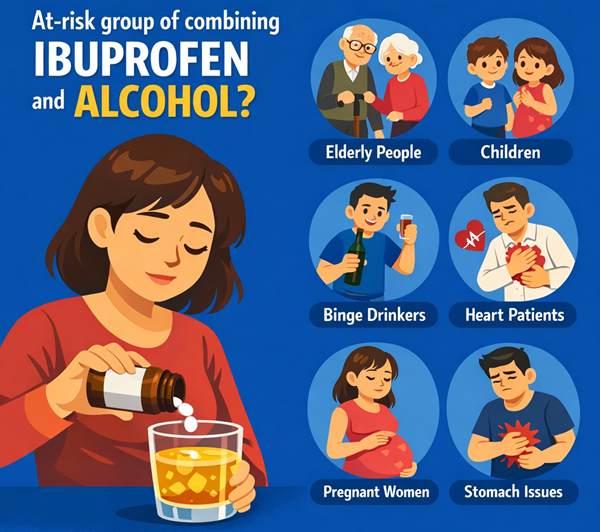
Who is at Highest Risk When Combining Ibuprofen and Alcohol?
Certain populations face a substantially elevated risk from this combination.
People With Alcohol Use Disorder
For people who drink heavily or compulsively, the risk from ibuprofen use is significantly elevated across all organ systems. Chronic heavy alcohol use already compromises the stomach lining, liver function, and kidney function. Adding regular NSAID use to an already-stressed system creates compounding vulnerability. People in this group should avoid ibuprofen when possible and consult a physician about safer pain management alternatives.
There is also a behavioral pattern worth recognizing: ibuprofen is frequently used to manage pain, headaches, and physical discomfort that are themselves consequences of heavy drinking. The morning-after headache treated with ibuprofen, taken when alcohol and its metabolites are still circulating, is a scenario that places the stomach and kidneys under significant simultaneous stress.
People Who Use Ibuprofen to Manage Drinking-Related Pain
Using ibuprofen to manage pain that is itself a product of heavy alcohol use, whether headaches, muscle pain, or gastrointestinal discomfort, is a pattern that warrants honest reflection. When this pattern becomes regular, it may signal a level of alcohol use that is causing ongoing physical harm and is worth addressing directly.
Older Adults
Kidney and liver function decline naturally with age. Older adults are more susceptible to the renal and gastrointestinal effects of NSAID use at all doses, and the addition of alcohol amplifies those risks. The Cleveland Clinic and most geriatric clinical guidelines recommend extreme caution or outright avoidance of NSAIDs in older adults, particularly those who drink.
People With Pre-Existing Conditions
People with chronic kidney disease, peptic ulcer disease, gastroesophageal reflux disease (GERD), liver disease, cardiovascular disease, or hypertension face elevated risk at doses and drinking amounts that would be considered low-risk in a healthy adult. These individuals should consult their physician before using ibuprofen at all in the context of any alcohol use.
People Taking Blood Thinners or Other Medications
Ibuprofen interacts with warfarin and other anticoagulants by further reducing platelet aggregation. This combination significantly increases bleeding risk throughout the body, not just in the gastrointestinal tract. Alcohol at any level amplifies this further. People taking anticoagulants should avoid ibuprofen entirely and discuss pain management alternatives with their prescriber.
Ibuprofen vs. Other Pain Relievers with Alcohol
People often wonder whether switching to a different pain reliever is safer when alcohol is involved.
Pain Reliever | Drug Class | Risk With Alcohol |
Ibuprofen (Advil, Motrin) | NSAID | GI bleeding, kidney damage, liver strain |
Acetaminophen (Tylenol) | Analgesic | Serious liver toxicity, especially in heavy drinkers |
Aspirin | NSAID | GI bleeding, increased bleeding risk throughout body |
Naproxen (Aleve) | NSAID | Similar to ibuprofen; longer half-life extends risk window |
Ketorolac (Toradol) | NSAID | Highest GI bleeding risk among common NSAIDs |
Acetaminophen is frequently assumed to be the safer option when alcohol is involved, but this is a misconception that can cause serious harm. Acetaminophen is metabolized by the liver and produces a toxic metabolite (NAPQI) that the liver normally neutralizes. Alcohol depletes the glutathione that neutralizes NAPQI, allowing it to accumulate and cause potentially fatal liver damage. This risk is significant even at standard acetaminophen doses in people who drink three or more drinks per day.
The safest approach when alcohol is a regular part of your life is to discuss your pain management options with a physician who understands the full picture, including how much you drink.

Is Ibuprofen and Alcohol Safe Together
Most people asking whether ibuprofen and alcohol are safe together are asking a practical question about a specific situation. But some people reading this are in a different situation: alcohol is a regular and increasing part of their life, the physical consequences of drinking have become routine, and managing those consequences with OTC medications has become a pattern.
If ibuprofen has become part of how you manage the aftermath of drinking regularly, that pattern itself is worth paying attention to. Not because of the ibuprofen, but because of what it signals about the role alcohol is playing in your life and body.
Physical dependence on alcohol can develop without a person recognizing it for what it is. The morning-after cycle, needing something to manage pain or discomfort that is directly caused by drinking the night before, is a signal that the body is being stressed in ways that deserve honest evaluation.
If managing hangover pain with ibuprofen has become routine, Palm Coast Treatment Solutions offers compassionate, evidence-based support.
Palm Coast Treatment Solutions
If alcohol has become a central part of how you manage stress, pain, or daily life, and if the physical consequences are becoming harder to ignore, Palm Coast Treatment Solutions in Palm Coast, Florida, is here to help. PCTS provides compassionate, evidence-based treatment for alcohol use disorder and co-occurring conditions, tailored to where each person actually is.
PCTS offers a full continuum of care, including Outpatient Programs, Intensive Outpatient Programs (IOP), Partial Hospitalization Programs (PHP), Dual Diagnosis Treatment, Adult Mental Health Programs, and Aftercare Programs. Their clinical team understands that alcohol use rarely exists in isolation from anxiety, depression, chronic pain, or other conditions that need real attention alongside the addiction itself.
Recovery from alcohol use disorder is real and achievable. If you have been using ibuprofen or other medications to manage the physical effects of drinking, that is a compassionate, experienced team worth talking to.
Call Palm Coast Treatment Solutions at (386) 284-4151 or visit their contact page to speak with someone today.
FAQs
Is it safe to drink alcohol after taking ibuprofen?
Occasionally taking a single low dose of ibuprofen and then having one or two drinks several hours later is unlikely to cause serious harm in a healthy adult with no underlying organ conditions and no history of heavy drinking. However, the combination carries documented risks to the gastrointestinal tract, kidneys, and liver, and those risks increase with higher doses, more alcohol, or regular repeated co-use. No overlap is entirely risk-free.
How long should you wait after taking ibuprofen before drinking alcohol?
The clinically supported recommendation is to wait at least 10 hours after your last ibuprofen dose before drinking. This is based on ibuprofen’s half-life of approximately 1.8 to 2 hours and the five-half-life pharmacokinetic principle, after which approximately 97% of the drug has been eliminated..
What are the risks of mixing ibuprofen and alcohol?
The primary risks are gastrointestinal bleeding (from simultaneous stomach lining irritation and reduced mucosal protection), kidney damage (from compounded reduction in renal blood flow and alcohol-induced dehydration), liver strain (from simultaneous metabolic processing of both substances), cardiovascular stress (elevated blood pressure, fluid retention), and increased bleeding risk from reduced platelet aggregation.
Can you take ibuprofen for a hangover?
No. Taking ibuprofen during a hangover is a high-risk practice. During a hangover, the body is already dehydrated, the stomach lining is already irritated from the previous night’s alcohol exposure, and the kidneys are already under strain from alcohol’s diuretic effects. Adding ibuprofen simultaneously amplifies all three of these vulnerabilities and significantly increases the risk of gastrointestinal bleeding and acute kidney injury.
Is acetaminophen safer than ibuprofen when drinking?
Not for people who drink regularly. Acetaminophen (Tylenol) carries serious liver toxicity risk when combined with alcohol, especially in people who drink three or more drinks per day. Alcohol depletes the glutathione that the liver uses to neutralize acetaminophen’s toxic metabolite (NAPQI), allowing it to accumulate and cause potentially fatal liver damage.
How long after drinking can you take ibuprofen?
A 10-hour wait in both directions applies. Alcohol clears from the bloodstream at approximately 0.015% BAC per hour, but clearance from the blood is not the same as recovery for the stomach lining and kidneys. The same conservative 10-hour window supported by ibuprofen’s pharmacokinetics is the appropriate minimum before taking ibuprofen after drinking.
Who should never combine ibuprofen and alcohol?
People who should avoid any combination of ibuprofen and alcohol include those with chronic kidney disease, liver disease, peptic ulcer disease, GERD, cardiovascular disease, or hypertension; older adults; people taking anticoagulants or blood thinners; and anyone with an alcohol use disorder. For all of these groups, the baseline risks from ibuprofen and alcohol individually are elevated, and combining them creates compounding harm.
What are the signs of gastrointestinal bleeding from ibuprofen and alcohol?
Warning signs include vomiting blood or material that looks like coffee grounds, black or tarry stools (indicating digested blood), bright red blood in the stool, severe abdominal pain, and a rapid or weak pulse combined with dizziness or fainting. These are medical emergencies requiring immediate care.
Does an ibuprofen dose affect how risky it is with alcohol?
Yes, significantly. A single low OTC dose (200 to 400 mg) in a healthy adult followed by moderate drinking after an adequate wait carries much lower risk than regular use of prescription-strength ibuprofen (600 to 800 mg) alongside regular drinking. Higher doses produce greater COX inhibition, more stomach lining vulnerability, and more renal effect.
Can ibuprofen and alcohol cause kidney failure?
In most healthy, well-hydrated occasional users, the risk of acute kidney failure is low. However, for people with existing kidney conditions, who are dehydrated, elderly, or drinking heavily, the combination of ibuprofen’s reduction of renal prostaglandins and alcohol’s diuretic dehydration can meaningfully reduce kidney filtration rates.
What should I do if I accidentally mixed ibuprofen and alcohol?
For most healthy adults who had one or two drinks while ibuprofen was in their system, no specific action is needed beyond monitoring. Drink water to maintain hydration. Eat something to reduce stomach irritation. Avoid further ibuprofen doses for at least 10 hours. If you experience stomach pain, nausea, blood in vomit or stool, dizziness, or difficulty breathing, seek medical attention immediately.
Can regular ibuprofen and alcohol use signal an alcohol problem?
It can. When ibuprofen becomes a routine part of managing the physical consequences of regular drinking, such as headaches, muscle pain, or stomach discomfort that is itself caused by alcohol, this pattern suggests that alcohol use has reached a level that is causing ongoing physical harm.
References
- National Institute on Alcohol Abuse and Alcoholism. Harmful Interactions: Mixing Alcohol with Medicines. NIAAA.NIH.gov
- U.S. Food and Drug Administration. Ibuprofen Drug Facts Label. FDA.gov
- Piano MR, et al. Alcohol Use and Cardiovascular Disease. American Heart Association Scientific Statement. Circulation. 2025. AHAJournals.org
- Clinical Pharmacology and Therapeutics. Meta-Analysis of NSAID GI Bleeding Risk. 2025. AccordingtoGoodRx.com
- National Kidney Foundation. Pain Medicines and Kidney Health. Kidney.org
- GoodRx. Is It Dangerous to Mix Ibuprofen and Alcohol? GoodRx.com
- Drugs.com. Can You Drink Alcohol with Ibuprofen? Drugs.com
- Cleveland Clinic. Ibuprofen: Uses, Side Effects and Warnings. ClevelandClinic.org
- SAMHSA. Understanding Alcohol Use Disorder. SAMHSA.gov
- Palm Coast Treatment Solutions. Alcohol Addiction Treatment. PalmCoastTS.com
This content is for educational purposes only and does not constitute medical advice. If you or someone you love is struggling with alcohol use or has concerns about medication interactions, please consult a qualified healthcare provider or contact Palm Coast Treatment Solutions for professional support.