You have decided to stop smoking. You are prepared to quit taking it. You know that you need to do this. Then there is the question that one asks oneself, “How long will withdrawal last?” And there you are, petrified. You’ve heard stories. Days of sweating. Unbearable cravings. Shaking. Vomiting. Insomnia. Physical pain. Emotional devastation. Just the thought of going through that is making you think about reconsidering.
Truthfully, the length of withdrawal depends on the drug of choice, the length of use and the amount of the drug used. It’s different for heroin than for alcohol and for benzodiazepines. Knowing what to expect helps. Knowledge reduces fear. But knowing that withdrawal, although uncomfortable, is temporary and controllable makes it easier to persevere.
Experts Advice: Never taper off benzodiazepines or alcohol without medical supervision and monitoring.
Why Withdrawal Happens and How Long It Lasts
Your body becomes accustomed to drugs. Regularly using it causes your body to adapt to its new baseline chemistry. It’s making up for the drug. The drug provides you with some chemicals, so your brain produces less of them. Your central nervous system makes changes on how it functions.
When you stop taking the drug, your body hasn’t adjusted yet. It’s suddenly operating without something it’s become dependent on. Your brain and body scramble to rebalance. This scrambling is withdrawal. It’s uncomfortable, sometimes painful, and can be dangerous for some substances. But it’s temporary. Your body will rebalance. Withdrawal will end.
How long it takes depends on several factors. The drug itself. How long have you used it? How much did you use? Your individual brain chemistry and metabolism. Your overall health. Whether you’re using medication-assisted treatment. All of these affect duration.
FACT: Alcohol and benzodiazepine withdrawal are the only forms that can be fatal.
Opioid Withdrawal Timeline
Opioid withdrawal from heroin, prescription pain pills, fentanyl, or other opioids follows a relatively predictable pattern.
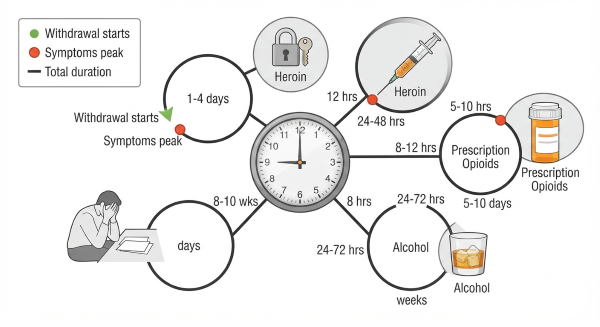
Timing of Onset: Short-acting opioids like heroin produce withdrawal symptoms within 6 to 12 hours of the last dose. Long-acting opioids like methadone take longer. Methadone withdrawal might not start for 24 to 96 hours after the last dose.
Peak Symptoms: For short-acting opioids, symptoms peak around day 2 or 3. You’re at your worst around day 2 to 3. For longer-acting opioids, peak comes later, around day 4 to 6.
Duration of Acute Withdrawal: Acute opioid withdrawal typically lasts 5 to 10 days. After about a week, major symptoms start improving. You feel better. The worst has passed.
What Withdrawal Feels Like: Opioid withdrawal is profoundly uncomfortable but not life-threatening. You experience muscle aches and pains. Insomnia and restlessness. Sweating and chills. Nausea and vomiting. Diarrhea and abdominal cramping. Anxiety and irritability. Intense cravings. Dilated pupils. Rapid heart rate.
Post-Acute Withdrawal: After acute withdrawal ends, some people experience post-acute withdrawal syndrome (PAWS). This involves lingering symptoms like mood swings, anxiety, trouble concentrating, persistent cravings, and fatigue. PAWS can last weeks to months, though symptoms gradually improve.
Important Note: Opioid withdrawal is not life-threatening, but it’s incredibly uncomfortable. The major risk is returning to use because the discomfort feels unbearable. Medication-assisted treatment using buprenorphine or methadone dramatically eases withdrawal and makes it manageable.
Alcohol Withdrawal Timeline
Alcohol withdrawal is more dangerous than opioid withdrawal and requires medical supervision.
Timing of Onset: Alcohol withdrawal can begin within 6 to 24 hours of the last drink. Some people experience symptoms even sooner.
Early Withdrawal (6 to 36 Hours): The first symptoms include tremors, sweating, nausea, headache, anxiety, and rapid heart rate. These are uncomfortable but not yet dangerous.
Acute Withdrawal (24 to 72 Hours): This is the danger zone. Symptoms intensify. Hallucinations can occur. Blood pressure and heart rate can become dangerously elevated. The most serious complication, withdrawal seizures, typically occurs 6 to 48 hours after the last drink. About 1 to 4 percent of people in alcohol withdrawal experience seizures, but they can be fatal.
Delirium Tremens (72+ Hours): The most severe form of alcohol withdrawal can occur 48 to 96 hours after the last drink. It involves severe agitation, confusion, hallucinations, rapid heart rate, and dangerous changes in blood pressure and temperature. Delirium tremens is life-threatening and require emergency medical care.
Duration: Acute alcohol withdrawal typically lasts 5 to 7 days, though some symptoms can linger longer.
Post-Acute Withdrawal: After acute withdrawal, some people experience PAWS with insomnia, mood changes, anxiety, and cravings lasting weeks.
Important Note: Alcohol withdrawal can be life-threatening. Never attempt to quit alcohol cold turkey without medical supervision. Medical detoxification with medications and monitoring is essential.
Worried about detoxing from alcohol or benzodiazepines alone? Palm Coast Treatment Solutions provides medically supervised detox.
Benzodiazepine Withdrawal Timeline
Benzodiazepine withdrawal from Xanax, Valium, Ativan, or other benzos is unpredictable and can be dangerous.
Timing of Onset: Short-acting benzodiazepines like Xanax produce withdrawal within 6 to 12 hours. Long-acting benzodiazepines like Valium take longer, often 24 to 48 hours.
Peak Symptoms: For short-acting benzos, symptoms peak around days 2 to 4. For long-acting benzos, the peak comes later, around days 3 to 7.
Duration: Acute benzodiazepine withdrawal typically lasts 10 to 14 days, though it can be longer. Some people experience protracted withdrawal lasting months or years.
What Withdrawal Feels Like: Severe anxiety and panic attacks. Tremors and shaking. Seizures (the most dangerous complication). Insomnia and nightmares. Muscle tension and pain. Sweating and chills. Sensitivity to light and sound. Hallucinations in severe cases.
Danger: Like alcohol, benzodiazepine withdrawal can cause seizures. These can be fatal. Never quit benzodiazepines cold turkey. Gradual tapering under medical supervision is essential.
Post-Acute Withdrawal: Benzodiazepine PAWS can last months or years. Anxiety, insomnia, mood swings, and difficulty concentrating can persist long after acute withdrawal ends.
Important Note: Benzodiazepine withdrawal is serious and requires medical management. Tapering schedules help minimize dangerous symptoms.
Stimulant Withdrawal Timeline
Withdrawal from cocaine, methamphetamine, or prescription stimulants like Adderall follows a different pattern.
Timing of Onset: Stimulant withdrawal begins within hours to a few days after the last use.
Peak Symptoms: Symptoms peak around days 2 to 5.
Duration: Acute stimulant withdrawal typically lasts 5 to 10 days.
What Withdrawal Feels Like: Unlike opioid or benzodiazepine withdrawal, stimulant withdrawal is not physically dangerous. But it’s psychologically devastating. Severe depression and anhedonia (inability to feel pleasure). Intense fatigue. Insomnia or hypersomnia. Severe cravings. Anxiety. Irritability. Potential suicidal thoughts.
Post-Acute Withdrawal: Stimulant PAWS can last weeks to months. Lingering depression, anhedonia, and cravings are common.
Important Note: While acute stimulant withdrawal isn’t life-threatening physically, the psychological effects can be severe. Suicidal ideation is possible. Professional support and antidepressant medication can help significantly.
Withdrawal Timelines by Drug
Here’s how different drugs compare for withdrawal duration and danger:
Drug | Onset | Peak | Acute Duration | Life-Threatening | PAWS Risk |
Heroin | 6-12 hours | Day 2-3 | 5-10 days | No | Moderate |
Methadone | 24-96 hours | Day 4-6 | 7-10 days | No | Moderate |
Alcohol | 6-24 hours | Day 1-3 | 5-7 days | Yes (seizures, delirium tremens) | Moderate |
Short-acting Benzos | 6-12 hours | Day 2-4 | 10-14 days | Yes (seizures) | High |
Long-acting Benzos | 24-48 hours | Day 3-7 | 10-14 days+ | Yes (seizures) | High |
Cocaine | Hours-days | Day 2-5 | 5-10 days | No (psychological) | Moderate |
Methamphetamine | Hours-days | Day 2-5 | 5-10 days | No (psychological) | High |
Kratom | Hours-days | Day 2-3 | 5-10 days | No | Moderate |
Alcohol and benzodiazepines are the only substances where acute withdrawal can be directly life-threatening.
Factors That Affect Withdrawal Duration
Several factors determine how long and how severe withdrawal will be.
- Duration of Use: Someone who used for weeks experiences different withdrawal than someone who used for years. Longer use means more adaptation, which means longer withdrawal.
- Amount Used: Higher doses mean more adaptation and potentially longer withdrawal.
- Frequency of Use: Daily use creates more dependence than occasional use.
- Individual Factors: Metabolism, age, overall health, mental health, genetics. Some people withdraw quickly. Others take longer.
- Polydrug Use: Using multiple drugs simultaneously complicates withdrawal because you’re detoxing from multiple substances at once.
- Medical Support: Medication-assisted treatment significantly shortens withdrawal and makes it manageable. Medical detoxification addresses withdrawal safely.
Medical Management of Withdrawal
Medical detoxification dramatically changes the withdrawal experience.
Opioid Withdrawal: Medication-assisted treatment using buprenorphine or methadone prevents withdrawal entirely. You feel normal. You’re not suffering. You can focus on recovery instead of enduring withdrawal. These medications can be tapered or continued as part of long-term treatment.
Alcohol Withdrawal: Benzodiazepines prevent seizures and delirium tremens. You’re monitored closely. If seizure risk emerges, you’re treated immediately. Medical detoxification turns potentially life-threatening withdrawal into a managed process.
Benzodiazepine Withdrawal: Slow tapering prevents seizures and minimizes symptoms. Instead of going cold turkey, you take gradually decreasing doses over weeks or months. This allows your body to slowly readjust.
Stimulant Withdrawal: While acute withdrawal isn’t dangerous, antidepressants and supportive care help with depression and suicidal ideation. Therapy addresses psychological symptoms.
The point is that withdrawal doesn’t have to be suffered through. Medical management makes withdrawal manageable, safer, and more likely to succeed.
Fear of withdrawal shouldn’t keep you from using. Call Palm Coast Treatment Solutions to start medically managed recovery.

Getting Help at Palm Coast Treatment Solutions
If you’re facing withdrawal, Palm Coast Treatment Solutions provides medical detoxification and comprehensive treatment.
We understand that withdrawal fear keeps people using. We understand that the thought of withdrawal is almost as terrifying as the addiction itself. We’re here to make withdrawal manageable and safe.
Our services include medical detoxification with medication management to ease withdrawal. Round-the-clock medical monitoring. Individual therapy addressing underlying issues. Group support connecting you with others in recovery. Medication-assisted treatment for opioid or benzodiazepine dependence. Antidepressant medication management. Comprehensive addiction treatment. Aftercare planning for ongoing recovery.
If you’re ready to stop using, if you’re terrified of withdrawal, or if you need medical help managing the process, reach out. Call us at (386) 284-4151 or visit our contact page. Our team is ready to help you through withdrawal and into recovery.
FAQs
Is withdrawal dangerous?
Withdrawal risks depend on the substance involved. Alcohol and benzodiazepine withdrawal can cause serious complications, including seizures and medical emergencies. Opioid and stimulant withdrawal are usually not life-threatening but can be extremely uncomfortable. Medical supervision is recommended to ensure safety and reduce complications.
Can I stop using cold turkey?
Stopping suddenly can be dangerous for certain substances, especially alcohol and benzodiazepines, because of the risk of severe withdrawal symptoms. For many people, medically supervised detoxification, tapering, or medication-assisted treatment offers a safer and more comfortable approach to beginning recovery.
How bad will withdrawal feel?
Withdrawal experiences vary based on the substance, length of use, and individual health factors. Symptoms can range from flu-like discomfort and intense cravings to anxiety, depression, and sleep problems. Professional medical support can significantly reduce symptoms and improve overall comfort during detoxification.
Will medication make withdrawal go away completely?
Certain medications, particularly for opioid use disorders, can greatly reduce or eliminate withdrawal symptoms. For other substances, medications may help manage discomfort, cravings, anxiety, or depression. However, some symptoms may still occur and often improve gradually with time and treatment.
How long until I feel normal after withdrawal?
Physical symptoms often improve within days or weeks, depending on the substance. Emotional and psychological recovery may take longer, with some people experiencing lingering symptoms for weeks or months. Ongoing treatment, therapy, and support can help promote long-term healing and stability.
Can I relapse during withdrawal?
Yes. Withdrawal is one of the highest-risk periods for relapse because cravings and discomfort can be intense. Having medical supervision, emotional support, and a structured treatment plan can significantly reduce relapse risk and improve the likelihood of successful recovery.
Is withdrawal painful?
Some forms of withdrawal can involve significant physical or emotional discomfort. Symptoms may include muscle aches, stomach problems, headaches, anxiety, or depression. The severity varies by substance and individual circumstances, and medical treatment can help manage pain and improve comfort during recovery.
What if I have a medical condition? Will withdrawal be different?
Certain medical conditions, such as heart disease, respiratory problems, or seizure disorders, can complicate withdrawal and require specialized care. It is important to tell your healthcare providers about any existing medical issues so they can create a safe and appropriate treatment plan.
Can I taper off drugs myself?
Some people attempt to taper on their own, but professional guidance is generally safer and more effective. Medical providers can monitor symptoms, adjust tapering schedules, and address complications that arise, particularly for substances associated with severe or potentially dangerous withdrawal symptoms.
What’s post-acute withdrawal syndrome?
Post-acute withdrawal syndrome, often called PAWS, refers to lingering emotional and psychological symptoms that continue after acute withdrawal ends. Symptoms may include mood changes, anxiety, sleep disturbances, and difficulty concentrating. Although uncomfortable, PAWS is manageable with ongoing treatment and recovery support.
References
- Guiding Road. “Drug Addiction Withdrawal Symptoms: What to Expect and How to Manage Them.” February 2026. https://guidingroad.com/recovery-journal/drug-addiction-withdrawal-symptoms/
- Orlando Recovery Center. “Stages of Opioid Withdrawal: Symptoms, Timeline & Management.” February 2025. https://www.orlandorecovery.com/drug-addiction-resources/opioids-opiates/stages-opioid-withdrawal/
- Lighthouse Recovery. “Understanding Withdrawal Timelines: What to Expect for Different Substances.” February 2026.https://lighthouserecoverytx.com/understanding-withdrawal-timelines-what-to-expect-for-different-substances/
- American Addiction Centers. “Drug Withdrawal Symptoms, Timelines, and Treatment.” April 2026. https://americanaddictioncenters.org/withdrawal-timelines-treatments
- NCBI. “Withdrawal Management: Clinical Guidelines for Withdrawal Management and Treatment of Drug Dependence.” https://www.ncbi.nlm.nih.gov/books/NBK459239/
- Palliative Care Network of Wisconsin. “Opioid Withdrawal.” December 2025. https://www.mypcnow.org/fast-fact/opioid-withdrawal/
- NCBI Bookshelf. “Withdrawal Syndromes.” September 2024. https://www.ncbi.nlm.nih.gov/books/NBK459239/
- Medscape. “Withdrawal Syndromes: Practice Essentials, Pathophysiology, Epidemiology.” https://emedicine.medscape.com/article/819502-overview
- SAMHSA. “Medication-Assisted Treatment.”
- National Institute on Drug Abuse. “Withdrawal and Relapse.” https://www.drugabuse.gov/
This content is for informational purposes only and does not constitute medical advice or a clinical recommendation. For a personalized assessment, please consult a licensed mental health professional. To learn more about evidence-based mental health and addiction treatment in Florida, visit palmcoastts.com or call (386) 284-4151.