Perhaps you have decided that tonight is the night you should quit drinking. Perhaps you are witnessing someone you care about attempting to quit and you are afraid of what lies ahead.
In any case, you should get real answers, not vague warnings. Withdrawal from alcohol can be uncomfortable to downright dangerous, depending on the quantity and duration of alcohol consumption.
That range matters. Knowing what is normal, what is a warning sign and when to call for help can change the next few days.
Let’s explore what takes place in the body when it no longer receives alcohol, so you or your loved one can make it through.
What are the Symptoms Of Stopping Drinking
When someone stops drinking, the symptoms occur because the brain has become accustomed to the continual presence of alcohol. This is known as alcohol withdrawals and may start hours after the last drink of alcohol.
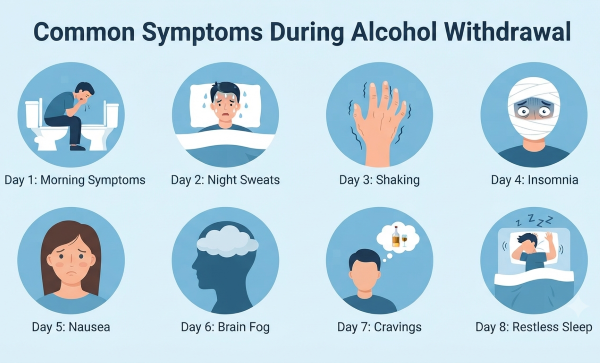
Mild symptoms often include anxiety, shaky hands, sweating, nausea, and trouble sleeping. For heavier or long-term drinkers, symptoms can escalate into something far more serious.
If you are at risk of severe alcohol withdrawal, it’s strongly recommended that you get medical attention before you stop drinking, since symptoms can progress quickly and become life-threatening without warning.
This isn’t meant to scare you away from quitting. It’s meant to help you quit safely, with the right support in place.
Common Alcohol Withdrawal Symptoms Explained
Alcohol withdrawal symptoms fall into a spectrum, from mild discomfort to medical emergencies, depending on drinking history and overall health. Most people experience some combination of the following.
Mild to moderate symptoms:
- Anxiety and irritability
- Headache
- Nausea or upset stomach
- Sweating
- Insomnia
- Rapid heartbeat
- Hand tremors
Severe symptoms that need immediate medical attention:
- Seizures
- Hallucinations, seeing or hearing things that aren’t there
- High fever
- Severe confusion or disorientation
- Extremely elevated heart rate or blood pressure
Severe symptoms are signs of a medical emergency. If you or someone you’re with experiences these, call 911 or go to the nearest emergency room right away.
What Is Alcohol Withdrawal
Alcohol withdrawal is the body’s reaction to the sudden absence of alcohol after a period of heavy or prolonged use. The brain has spent time adjusting its chemistry to function with alcohol present, and removing it too fast throws that balance off.
Long-term drinking suppresses certain brain signals and overactivates others. Once alcohol is gone, those suppressed systems rebound hard, which is what causes the shaking, anxiety, and in severe cases, seizures.
Alcohol withdrawal syndrome typically starts with minor symptoms like anxiety and stomach upset, but can progress to alcohol withdrawal delirium, a condition that carries a real risk of death without proper treatment.
Symptoms Of Quitting Drinking By Timeline
Symptoms of quitting drinking usually follow a general pattern, though the exact timing varies by individual. This table gives a realistic overview, not a guarantee.
Timeframe | What Typically Happens |
6 to 12 hours | Anxiety, headache, nausea, and insomnia begin |
12 to 24 hours | Symptoms intensify, tremors and an elevated heart rate |
24 to 48 hours | Peak risk period for withdrawal seizures |
48 to 96 hours | Peak onset window for delirium tremens |
Beyond 1 week | Most physical symptoms resolve, but psychological symptoms may linger |
Not everyone experiences the most severe stages. Risk depends heavily on how much and how long someone has been drinking, along with overall health.
FACT: Alcohol withdrawal seizures most often occur within 24 to 48 hours
Signs Of Alcohol Addiction To Recognize
Alcohol addiction, also called alcohol use disorder, shows up as a pattern of drinking that continues despite clear negative consequences. Recognizing it early can prevent withdrawal from becoming more dangerous later.
Common warning signs include:
- Drinking more or longer than intended
- Unsuccessful attempts to cut back
- Needing more alcohol to feel the same effect
- Withdrawal symptoms between drinking sessions
- Neglecting responsibilities at work or home
- Continuing to drink despite relationship or health problems
The more of these signs are present, and the longer they’ve been happening, the higher the risk of a difficult withdrawal when drinking stops.
Recognizing these drinking patterns in yourself or someone close? Palm Coast Treatment Solutions can help you plan a safe next step.
When Alcohol Withdrawal Becomes Dangerous
Alcohol withdrawal becomes dangerous when it progresses to seizures or delirium tremens, both of which require emergency medical care. This typically happens in people with a long history of heavy daily drinking.
Risk factors for severe withdrawal include:
- Years of heavy, consistent alcohol use
- A previous history of withdrawal seizures or delirium tremens
- Underlying liver, heart, or neurological conditions
- Older age
- Poor overall nutrition or health
Delirium tremens carry a mortality rate as high as 15 to 40 percent when left untreated, compared to roughly 1 to 5 percent when patients receive proper medical care.
If any of these risk factors apply to you or your loved one, please don’t attempt to stop drinking without medical supervision. A supervised medical detox exists specifically to manage this risk safely.
Concerned about risk factors for severe withdrawal before quitting? Call Palm Coast Treatment Solutions to discuss supervised detox options.
What Withdrawal Symptoms Can Improve Fast
Many mild withdrawal symptoms start improving within the first week once the body stabilizes. This is often the point where people start to feel like themselves again.
Sleep, appetite, and basic physical steadiness typically return first. Anxiety and irritability tend to ease as the nervous system recalibrates without alcohol.
What Takes Longer To Heal After Drinking
Some effects of long-term alcohol use take months to fully resolve, especially mood instability, sleep quality, and cognitive sharpness. Patience during this stage matters as much as the first few days of withdrawal.
Post-acute withdrawal symptoms, sometimes called PAWS, can include lingering anxiety, low mood, and trouble concentrating for weeks or months after the physical symptoms fade.
This is normal, and it’s also exactly why ongoing therapy and support make such a difference in long-term recovery.
Steps To Safely Stop Drinking
Stopping drinking safely usually follows a clear process, especially for anyone with a heavy or long-term drinking history.
- Talk to a doctor or addiction treatment provider before stopping
- Get an honest assessment of withdrawal risk based on drinking history
- Consider a medically supervised detox if risk factors are present
- Begin therapy to address the root causes of drinking
- Build a relapse prevention plan for the weeks and months ahead
- Stay connected to ongoing support, whether therapy, groups, or both
Experts Advice: Get a medical risk assessment before stopping, especially with heavy drinking history.

Alcohol Addiction Treatment At Palm Coast Treatment Solutions
If you’ve read this far, you’re already taking the safest possible approach, which is learning what to expect before taking the next step.
Palm Coast Treatment Solutions provides evidence-based alcohol addiction treatment through our Partial Hospitalization, Intensive Outpatient, and Outpatient programs, built around a full clinical assessment of your specific needs and risk factors.
Our team uses Cognitive Behavioral Therapy, Dialectical Behavior Therapy, and dual diagnosis treatment to address alcohol addiction alongside any co-occurring mental health condition, since the two so often go hand in hand.
You don’t have to face withdrawal alone or unprepared. Call us at (386) 284-4151 or reach out through our contact page for a confidential conversation about your options.
FAQs
Q: How long do alcohol withdrawal symptoms last?
Most mild alcohol withdrawal symptoms peak within 24 to 72 hours after the last drink and improve significantly within five to seven days. However, some people experience post-acute withdrawal symptoms, including anxiety, sleep disturbances, and mood changes, that can persist for weeks or even months.
Q: Can alcohol withdrawal kill you?
Yes. Severe alcohol withdrawal can become life-threatening if it progresses to seizures or delirium tremens. Without prompt medical treatment, these complications can be fatal. Anyone with heavy or long-term alcohol use should seek medical supervision before attempting to stop drinking to reduce serious health risks.
Q: What are the first signs of alcohol withdrawal?
Early alcohol withdrawal symptoms often begin within 6 to 12 hours after the last drink. Common signs include anxiety, headache, nausea, sweating, tremors, irritability, and difficulty sleeping. Because symptoms can worsen quickly, early medical evaluation and monitoring are strongly recommended for heavy drinkers.
Q: Is it safe to quit drinking cold turkey?
For occasional or light drinkers, stopping abruptly may be safe. However, heavy or long-term alcohol use can cause dangerous withdrawal symptoms, including seizures and delirium tremens. Medical supervision provides medications and monitoring that greatly reduce the risk of serious complications during withdrawal.
Q: What is delirium tremens?
Delirium tremens, or DTs, is the most severe form of alcohol withdrawal. It causes confusion, hallucinations, severe agitation, rapid heartbeat, fever, and dangerous blood pressure changes. Symptoms usually develop 48 to 96 hours after the last drink and require immediate emergency medical treatment.
Q: How do I know if I have alcohol addiction?
Signs of alcohol addiction include drinking more than intended, unsuccessful attempts to quit, withdrawal symptoms when not drinking, strong cravings, and continued alcohol use despite negative consequences. A healthcare professional can perform a comprehensive assessment to determine whether you meet diagnostic criteria for alcohol use disorder.
Q: Do I need medical detox to stop drinking?
It depends on your drinking history, overall health, and previous withdrawal experiences. People with heavy alcohol use, prior withdrawal seizures, delirium tremens, or significant medical conditions should always receive a medical evaluation before stopping alcohol to determine whether supervised detox is necessary.
Q: What helps with alcohol withdrawal symptoms?
Medical detox can reduce withdrawal symptoms using prescribed medications, hydration, nutritional support, vitamin supplementation, and continuous monitoring. After detox, therapy, counseling, and ongoing addiction treatment help address the underlying causes of alcohol use and support long-term recovery and relapse prevention.
Q: Can withdrawal symptoms come back after they stop?
Yes. Some people experience post-acute withdrawal syndrome (PAWS), which can cause anxiety, mood swings, sleep problems, and difficulty concentrating after physical withdrawal has ended. These symptoms may come and go for weeks or months but generally improve with continued treatment and recovery support.
Q: Is anxiety after quitting drinking normal?
Yes. Anxiety is one of the most common symptoms during alcohol withdrawal because the brain is adjusting to functioning without alcohol. While it often improves over time, therapy, medication when appropriate, and ongoing recovery support can make this transition significantly easier and more manageable.
Q: How much drinking causes withdrawal symptoms?
There is no exact amount of alcohol that guarantees withdrawal. Generally, the risk increases with heavier, more frequent, and longer-term drinking. Even people who consume moderate amounts of alcohol daily may develop withdrawal symptoms when they suddenly stop drinking after prolonged use.
Q: What should I do if I see severe withdrawal symptoms in a loved one?
Call 911 or seek emergency medical care immediately if your loved one develops seizures, hallucinations, severe confusion, high fever, or extreme agitation during alcohol withdrawal. These symptoms may indicate delirium tremens or another life-threatening medical emergency requiring immediate professional treatment and continuous monitoring.
References
- Cleveland Clinic, Alcohol Withdrawal
- NCBI StatPearls, Alcohol Withdrawal Syndrome
- PMC, National Library of Medicine, Alcohol Withdrawal Syndrome Overview
- MedlinePlus, Delirium Tremens
- National Institute on Alcohol Abuse and Alcoholism, Alcohol Use Disorder
- SAMHSA, Substance Use and Co-Occurring Mental Disorders
- World Health Organization, Alcohol Fact Sheet
- Mayo Clinic, Alcohol Use Disorder Symptoms and Causes
- Palm Coast Treatment Solutions, Alcohol Addiction Treatment
- Palm Coast Treatment Solutions, Partial Hospitalization Program
This blog is for educational purposes only and is not a substitute for professional medical advice. If you or a loved one is experiencing severe withdrawal symptoms, seek emergency medical care immediately. For treatment support, Palm Coast Treatment Solutions is available to help.