When you are considering giving up drinking alcohol after years of excessive drinking, you must have likely heard that it is dangerous to quit drinking alcohol at once. It is so, and that is the very reason why so many people begin to study how to quit alcohol themselves.
Tapering off alcohol refers to the gradual decrease of alcohol consumption rather than the abrupt cessation and is done to reduce the severity of withdrawal. But alcohol withdrawal may also be accompanied by seizures and delirium tremens, which can be life-threatening. Medical experts highly advise monitored detox as opposed to self-prescribed tapering, particularly in those who consume liquor heavily or daily.
This guide clarifies the idea of tapering, how exactly alcohol withdrawal appears, and how medical supervision alters the whole safety scenario. The same applies to you, in case you are assisting someone you love to get through this.
What is Alcohol Tapering
Alcohol tapering is the practice of gradually reducing alcohol intake over time rather than stopping all at once, to ease the body into sobriety and lower the intensity of withdrawal symptoms.
The idea behind tapering makes sense on paper. Sudden cessation after heavy, prolonged drinking can trigger dangerous withdrawal reactions, so a slower reduction seems safer by comparison.
“Home detox without any medical supervision is dangerous and not recommended for anyone with moderate-to-severe dependence.”
In practice, tapering without medical guidance is unpredictable. The right pace depends on how much and how long someone has been drinking, their overall health, and factors a person cannot fully assess on their own.
Thinking about cutting back on alcohol? Palm Coast Treatment Solutions can guide you safely.
How To Safely Reduce Your Alcohol Intake
The safest way to reduce alcohol intake is under the guidance of a medical professional who can assess your drinking history, monitor your symptoms, and adjust the plan as your body responds.
A medically guided approach typically includes:
- A full assessment of drinking history, frequency, and quantity
- Monitoring for withdrawal risk factors like prior seizures or DTs
- Medication support to prevent seizures and ease symptoms
- Regular check-ins as the body adjusts
Attempting to calculate your own reduction schedule without this oversight removes the safety net that makes tapering viable in the first place. This is why treatment centers offer structured medical detox instead of self-guided plans.
Fact: Delirium tremens carry up to a 15 percent mortality rate without proper medical treatment.
100% Confidential Support is Available 24/7
No matter what you’re going through, you’re not alone. Our dedicated team is here to provide a safe, judgment-free space where you can talk openly and honestly. Whether you need emotional support, resources, or just someone to listen.
We’re here for you—completely confidential and always respectful of your privacy. Call us today!
Alcohol Withdrawal Explained
Alcohol withdrawal is the set of physical and psychological symptoms that occur when someone who has been drinking heavily reduces or stops alcohol use, caused by the brain’s attempt to rebalance after prolonged alcohol exposure.
“Once a person stops drinking, GABA-related inhibition drops while glutamate-related excitatory activity becomes overactive,” producing the hyperexcitable state behind withdrawal symptoms.
Roughly half of people with alcohol use disorder experience some degree of withdrawal when they cut back, though severity varies widely from mild discomfort to a medical emergency.
Worried about withdrawal symptoms in yourself or a loved one? Call Palm Coast Treatment Solutions.
Contact Palm Coast Treatment Solutions
Battling with Drug and Alcohol Addition? Remember, you are not alone and we are here to help you!
Alcohol Withdrawal Timeline and Symptoms
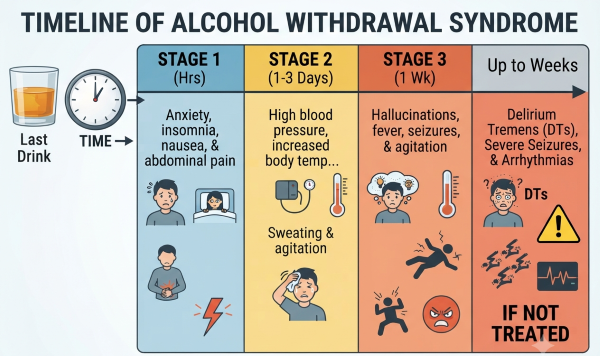
Alcohol withdrawal symptoms typically begin within six hours of the last drink and follow a general progression, though the exact timeline varies by individual.
Timeframe | What Typically Happens |
6 to 12 hours | Anxiety, shakiness, sweating, nausea |
12 to 48 hours | Symptoms may escalate; hallucinations and seizure risk peak |
48 to 72 hours | Highest risk period for delirium tremens |
Days 4 to 7 | Acute symptoms typically ease with proper care |
Expert Advice: Seek emergency care immediately if seizures or confusion appear during withdrawal.
Overcome Addiction with Palm Coast Treatment Solutions.
Book an appointment.
Signs of Severe Alcohol Withdrawal
Recognizing the warning signs of severe alcohol withdrawal can be lifesaving, since both seizures and delirium tremens can occur suddenly and without much warning.
Seek emergency medical care if you or a loved one experiences:
- Seizures of any kind
- Severe confusion or disorientation
- Hallucinations, seeing or hearing things that are not there
- Rapid heart rate or high fever
- Extreme agitation or tremors that will not settle
“Delirium tremens is one of the few drug withdrawal syndromes that can kill you directly.”
What Makes Alcohol Withdrawal Dangerous
Alcohol withdrawal becomes dangerous because the brain has adapted to constant alcohol exposure, and removing it abruptly can trigger seizures, delirium tremens, and other life-threatening complications.
Risk factors that increase danger include:
- Heavy daily drinking over an extended period
- A history of prior withdrawal seizures or DTs
- Older age
- Co-occurring health conditions, including liver or heart disease
- Poor nutrition or dehydration
Anyone with these risk factors should not attempt to reduce drinking without medical involvement, regardless of how gradual the plan seems.
Overcome Addiction with Palm Coast Treatment Solutions.
Book an appointment.
Why Medical Supervision Matters Most
Medical supervision matters because trained professionals can monitor vital signs, administer medication that prevents seizures, and respond immediately if withdrawal becomes severe, none of which is possible during a self-directed taper at home.
Supervised alcohol withdrawal typically includes:
- Continuous monitoring using standardized withdrawal assessment tools
- Medications, often benzodiazepines, to reduce seizure risk
- Thiamine and fluid support to address nutritional deficits
- A structured setting where complications can be treated immediately
With proper medical care, the mortality risk from severe alcohol withdrawal drops dramatically compared to attempting it alone.
Alcohol Withdrawal Safe Methods
There is no truly safe way to manage moderate to severe alcohol withdrawal entirely on your own. The safest path forward is a professional evaluation that determines the right level of care for your specific situation.
Levels of care may include:
- Inpatient or residential medical detox for higher-risk cases
- Partial hospitalization with daily medical monitoring
- Outpatient support for lower-risk individuals under close supervision
A professional assessment, not a generic online schedule, determines which of these fits your circumstances.
Overcome Addiction with Palm Coast Treatment Solutions.
Book an appointment.
What Happens After Withdrawal Ends
Getting through withdrawal safely is only the first step. Long-term recovery from alcohol use disorder depends on continued treatment and support after the physical symptoms resolve.
Many people experience lingering effects for weeks or months after detox, including sleep disruption, mood changes, and low energy, which is why ongoing care matters just as much as the detox itself.

Alcohol Addiction Treatment At Palm Coast Treatment Solutions
At Palm Coast Treatment Solutions, we understand how frightening it can feel to consider stopping alcohol use, especially after hearing about the risks of withdrawal. Our team is here to guide you or your loved one through a safe, medically informed process rather than leaving you to figure it out alone.
Our alcohol addiction treatment program connects clients with the right level of care, whether that means our partial hospitalization program, intensive outpatient program, or outpatient program. Many clients also benefit from individual therapy and family therapy as part of a complete recovery plan.
Reach out through our contact page or call (386) 284-4151 to speak confidentially with our admissions team about your safest path forward.
FAQs
How to taper off alcohol effectively?
Effective alcohol tapering requires an individualized plan developed with a healthcare professional. Gradually reducing alcohol intake under medical supervision allows providers to monitor withdrawal symptoms, adjust the pace when needed, and recommend medications or other treatments that make the process safer and more comfortable.
What is alcohol tapering?
Alcohol tapering is the gradual reduction of alcohol consumption over time instead of stopping abruptly. The goal is to lessen withdrawal symptoms while transitioning toward abstinence. Because withdrawal can become unpredictable, tapering should only be attempted with guidance from a qualified medical professional.
How to safely reduce your alcohol intake?
The safest approach begins with a medical evaluation of your drinking pattern, overall health, and withdrawal risk. Based on this assessment, a healthcare provider can recommend a supervised taper, medical detox, or medication-assisted treatment to reduce complications and support long-term recovery.
What are the first signs of alcohol withdrawal?
Early alcohol withdrawal symptoms often include anxiety, shakiness, sweating, nausea, headache, difficulty sleeping, increased heart rate, and irritability. These symptoms commonly begin within six to twelve hours after the last drink, although timing varies depending on the individual and their drinking history.
How long does alcohol withdrawal last?
Acute alcohol withdrawal generally peaks between 24 and 72 hours after the last drink and begins improving within four to seven days. However, some people experience lingering symptoms, such as sleep disturbances, anxiety, or mood changes, for several weeks during recovery.
Is it safe to detox from alcohol at home?
Home alcohol detox is not recommended for anyone with moderate to severe alcohol dependence or a history of withdrawal complications. Serious problems, including seizures and delirium tremens, can develop unexpectedly and require immediate medical treatment, making professional supervision the safest option.
What is delirium tremens?
Delirium tremens (DTs) is the most severe form of alcohol withdrawal. It can cause confusion, hallucinations, severe agitation, rapid heartbeat, fever, dangerously high blood pressure, and seizures. DTs are a medical emergency that require immediate hospital treatment because they can be life-threatening without prompt care.
Can alcohol withdrawal cause seizures?
Yes. Alcohol withdrawal seizures most commonly occur within 24 to 48 hours after the last drink and may develop even in people with no previous seizure disorder. Because they can occur without warning, medical supervision is strongly recommended when stopping heavy or long-term alcohol use.
Who is at higher risk for severe alcohol withdrawal?
People with a history of withdrawal seizures or delirium tremens, prolonged heavy alcohol use, older age, poor nutrition, liver disease, or co-occurring medical or mental health conditions have a higher risk of developing severe withdrawal complications and should seek medical guidance before reducing alcohol.
Does tapering eliminate the risk of severe withdrawal?
No. Although tapering may reduce withdrawal severity for some individuals, it cannot completely eliminate the risk of seizures, delirium tremens, or other serious complications. Medical supervision remains the safest approach for anyone with significant alcohol dependence or risk factors for severe withdrawal.
What treatment is used for alcohol withdrawal?
Medical alcohol detox often includes benzodiazepines to reduce the risk of seizures and delirium tremens, along with thiamine, intravenous fluids, electrolyte replacement, nutritional support, and close monitoring. Additional medications may be used to manage symptoms such as nausea, insomnia, or elevated blood pressure.
When should someone seek professional help for alcohol withdrawal?
Anyone who drinks heavily or daily, has experienced previous withdrawal symptoms, has underlying medical conditions, or has a history of withdrawal seizures or delirium tremens should seek professional medical care before reducing or stopping alcohol use to ensure withdrawal is managed safely.
References
- NIAAA – Alcohol Withdrawal
- Cleveland Clinic – Alcohol Withdrawal
- Cleveland Clinic – Delirium Tremens
- American Society of Addiction Medicine – Alcohol Withdrawal
- Mayo Clinic – Alcohol Use Disorder
- MedlinePlus – Alcohol Withdrawal
- CDC – Excessive Alcohol Use
- NCBI Bookshelf – Alcohol Withdrawal Syndrome
- Palm Coast Treatment Solutions – Alcohol Addiction Treatment
This information is for educational purposes only and is not a substitute for professional medical advice. Alcohol withdrawal can be life-threatening, and anyone considering stopping or reducing alcohol use should consult a qualified healthcare provider first. Visit Palm Coast Treatment Solutions to learn more about safe, supervised treatment options.