Life brings challenges that affect emotional, physical, and mental well-being. Understanding the different types of coping skills can help you respond to stress in healthier ways, build resilience, and support long-term recovery from mental health conditions or substance use. Whether you’re facing everyday stress, anxiety, depression, grief, or addiction, practicing real coping strategies can make a genuine difference in daily life.
Healthy coping skills don’t eliminate problems, but they help you manage difficult emotions, make better decisions, and hold onto your overall well-being. With consistent practice, these skills become habits that support steadier relationships and lasting recovery.
Key Takeaways
- Understanding the different types of coping skills helps you manage stress in healthier ways.
- Healthy coping skills support emotional, mental, and physical well-being together.
- Problem-focused, emotion-focused, social, physical, and cognitive strategies each serve a different purpose.
- Avoiding unhealthy coping methods reduces the risk of worsening anxiety, depression, or addiction.
- Professional treatment can help build coping skills tailored to your specific situation.
Why are Coping Skills Important?
Everyone experiences stress differently. What overwhelms one person feels manageable to another, and the difference often comes down to the coping strategies each person actually has available. Healthy coping skills reduce stress and anxiety, improve emotional regulation, build resilience, strengthen relationships, prevent burnout, support addiction recovery, and improve decision-making generally. Without them, stress tends to accumulate over time and contribute to mental health concerns, unhealthy behaviors, or substance misuse.
What are Coping Skills?
Coping skills are the healthy actions, thoughts, or behaviors that help you deal with difficult emotions, stressful situations, and life’s challenges. Rather than ignoring a problem or reacting on impulse, coping skills help you respond thoughtfully. They can be learned at any stage of life and genuinely improve with practice, which is exactly why mental health professionals teach them directly in therapy, both for everyday stress and more serious emotional challenges.
100% Confidential Support is Available 24/7
No matter what you’re going through, you’re not alone. Our dedicated team is here to provide a safe, judgment-free space where you can talk openly and honestly. Whether you need emotional support, resources, or just someone to listen.
We’re here for you—completely confidential and always respectful of your privacy. Call us today!
Understanding the Different Types of Coping Skills
No single coping skill works for every situation. Having a range of techniques gives you more flexibility when stress shows up in different forms. Below are the most common types and how each one tends to help.
Problem-Focused Coping Skills
Problem-focused coping addresses the actual source of stress instead of just managing the feeling it produces, and it works best when you have real control over the situation: building a realistic action plan, breaking a large task into smaller steps, setting priorities, asking questions to get clarity, managing time deliberately, resolving conflict through direct communication, or seeking practical advice. If work deadlines are the stressor, for instance, building a schedule and organizing tasks reduces the pressure while actually increasing output. This kind of coping tends to build confidence because it’s centered on taking action rather than just absorbing the stress.
Emotion-Focused Coping Skills
Some situations can’t be changed right away. In those cases, emotion-focused coping helps manage the emotional response while there’s still time to process what’s happening: deep breathing, meditation, journaling, calming music, gratitude practice, talking with someone you trust, time in nature, or prayer and spiritual practice. These activities reduce emotional intensity and improve regulation, specifically during the stretch when the situation itself can’t be fixed.
Cognitive Coping Skills
Cognitive coping focuses on changing how you think about a stressful event rather than the event itself, replacing worst-case assumptions with more balanced, realistic thinking: challenging a negative thought, reframing a setback as something to learn from, practicing self-compassion, using deliberate positive self-talk, accepting what’s genuinely outside your control, or sticking to facts instead of assumptions. Swapping “I always fail” for “this is difficult, but I can learn from it and improve” is a small example, but changing the thought pattern often shifts the emotional response that follows it too.
Physical Coping Skills
The link between physical and mental health is stronger than most people give it credit for. Physical coping lowers stress hormones while raising mood-supporting chemicals like endorphins through activities like walking, running, yoga, stretching, strength training, dancing, real sleep, balanced meals, and staying hydrated. Even a short walk outside can measurably lift mood and cut stress.
Social Coping Skills
People are naturally social, and healthy relationships genuinely help during hard stretches: talking openly with family, spending time with supportive friends, joining a support group, staying involved in community activities, asking for help when it’s needed, communicating clearly, and setting healthy boundaries. Isolation tends to deepen emotional distress, while real connection supports healing.
Creative Coping Skills
Creative activities provide an emotional outlet that reduces stress while naturally encouraging mindfulness: painting, drawing, writing, photography, playing music, gardening, cooking, or other crafting. Creative expression lets emotion move without needing the exact right words for it.
Spiritual Coping Skills
Many people find real comfort through spirituality or personal belief, and this doesn’t require organized religion specifically: prayer, meditation, reading something meaningful, quiet reflection, practicing forgiveness, small acts of kindness, or volunteering. These practices often create a sense of hope, purpose, and inner steadiness during hard periods.
Healthy vs. Unhealthy Coping Skills
Not every coping strategy actually helps. Some provide short-term relief while creating bigger problems down the line.
Healthy Coping Skills | Unhealthy Coping Skills |
Exercise | Substance use |
Meditation | Emotional eating |
Journaling | Gambling |
Talking with friends | Social withdrawal |
Therapy | Self-isolation |
Deep breathing | Avoiding responsibilities |
Healthy hobbies | Angry outbursts |
Time management | Impulsive spending |
Recognizing the unhealthy patterns is the real first step toward replacing them with something that actually works.
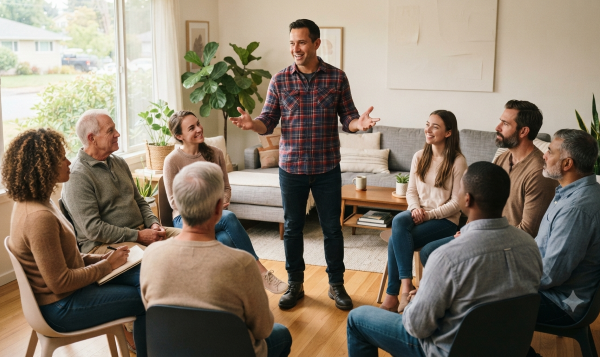
How Coping Skills Support Addiction Recovery
For anyone recovering from alcohol or drug addiction, coping skills are among the most important tools for avoiding relapse. Stress, anxiety, loneliness, grief, and conflict are common relapse triggers, and without a healthy way to handle them, it’s common to return to substance use just to escape the discomfort.
Recovery-focused coping tends to include identifying personal triggers, attending support group meetings, practicing mindfulness, calling a sponsor or trusted support person, keeping a structured daily routine, exercising regularly, staying in therapy, and building real social connections. Developing these habits directly strengthens the resilience that supports long-term sobriety.
When Should You Seek Professional Help?
Healthy coping skills genuinely help, but they’re not always enough on their own. If stress, anxiety, depression, trauma, or substance use is interfering with work, relationships, or daily life despite your best efforts, that’s the point to bring in professional support. Therapists and addiction specialists can build coping strategies specifically matched to your situation rather than a generic list.
Find Healthier Ways to Cope with Palm Coast Treatment Solutions
If unhealthy coping habits are affecting your life or the life of someone you love, reach out to Palm Coast Treatment Solutions today. Taking the first step toward professional support can lead to something genuinely healthier.
What Are the 5 Main Types of Coping Skills?
Researchers and clinicians don’t always agree on exactly how many categories coping falls into; some group it broadly, others split it further. One commonly used five-part framework covers the following:
- Problem-Focused Coping: Addressing the source of stress directly through solutions, plans, or practical action.
- Emotion-Focused Coping: Regulating emotion when a stressful situation can’t be changed right away, through mindfulness, journaling, or deep breathing.
- Cognitive Coping: Reworking unhelpful thought patterns into something more balanced and realistic, a core piece of cognitive behavioral therapy specifically.
- Social Coping: Drawing on trusted family, friends, therapists, or support groups to reduce isolation and get real guidance.
- Physical Coping: Exercise, real sleep, healthy eating, and relaxation techniques, which support emotional well-being alongside physical health.
Together, these five give a fairly complete toolkit for handling most of what life brings.
What Are the 7 Types of Coping Skills?
Other clinicians expand the same underlying skills into seven categories to capture a wider range of emotional and behavioral responses: problem-focused, emotion-focused, cognitive, physical, social, creative, and spiritual coping, the same seven covered in detail above.
This is really the same territory as the five-part version, just with cognitive, physical, creative, and spiritual coping treated as distinct categories instead of being grouped. Building strength across each area, rather than relying on just one, tends to produce better results than leaning on a single method for every kind of stress.
What Are the 4 Types of Coping Strategies?
A more condensed, academically grounded model, building on Lazarus and Folkman’s foundational 1984 research on stress and coping, groups strategies into four broad types instead.1
Problem-Focused Coping: Focused on solving the actual issue causing stress.
Emotion-Focused Coping: Helps manage the emotional reaction when circumstances can’t be changed.
Meaning-Focused Coping: Finding purpose, hope, gratitude, or personal growth within a difficult experience.
Social Coping: Seeking encouragement, advice, or emotional support from other people.
Using a mix of these, rather than relying on just one, tends to produce the best long-term results regardless of which specific framework you use to think about it.
What Are the 5 C’s of Coping?
The 5 C’s offer a simpler, more memorable framework for building resilience.
Calm. Practicing relaxation techniques before reacting to a stressful situation, not after.
Control. Directing your energy toward what you can actually influence instead of what you can’t.
Confidence. Trusting your ability to handle challenges based on your actual strengths and past successes.
Connection. Keeping healthy relationships with people who genuinely support your well-being.
Commitment. Staying consistent with healthy habits, therapy, and personal goals even when progress feels slow.
What are the 10 Healthy Coping Skills?
For a practical starting list: practice deep breathing, exercise regularly, keep a journal, get enough sleep, spend time outdoors, talk with supportive friends or family, practice mindfulness or meditation, listen to relaxing music, set realistic daily goals, and seek professional counseling when you need it. The more consistently these get practiced, the more automatically they show up during an actual stressful moment.
What are Strong Coping Skills?
Strong coping skills are healthy, flexible strategies that help you handle real challenges without harming yourself or anyone else: emotional awareness, effective communication, real problem-solving, stress management, self-care, positive thinking, time management, healthy boundaries, seeking help early, and building resilience over time. People with strong coping skills tend to recover faster from setbacks while keeping their relationships and emotional balance intact.
What are 5 Unhealthy Coping Strategies?
Some behaviors reduce stress temporarily while making things worse over time: alcohol or drug misuse, avoiding responsibilities altogether, emotional overeating, social isolation, and aggressive or impulsive behavior. Recognizing these patterns for what they are is a genuine step toward replacing them with something that supports long-term wellness instead.
How to Build Better Coping Skills Every Day
Learning healthier habits takes time, but small, consistent actions add up. Start the morning with a few minutes of mindfulness, take short movement breaks through the day, keep a gratitude journal, stay connected with supportive people, set realistic expectations for yourself, practice self-compassion when things don’t go as planned, and reach out for professional help if stress starts to feel like too much. Coping skills improve with repetition; the more often they get used, the more effective they become.
Recovery is Easier with the Right Support
Everyone experiences stress, but no one has to face it alone. If unhealthy coping habits have contributed to anxiety, depression, trauma, or substance use, professional treatment can help build healthier ways to respond. At Palm Coast Treatment Solutions, treatment plans are built around identifying unhealthy patterns, strengthening real coping skills, and building a foundation for lasting wellness specific to each client.
Frequently Asked Questions
What are the best coping skills for anxiety?
Healthy coping skills for anxiety include deep breathing, mindfulness, regular exercise, journaling, positive self-talk, and speaking with a trusted friend or therapist. Combining several strategies often provides better long-term relief than relying on just one technique.
Can coping skills help prevent relapse during addiction recovery?
Yes. Healthy coping skills reduce the impact of stress, cravings, and emotional triggers that commonly contribute to relapse. Therapy, support groups, structured routines, and mindfulness are especially valuable during long-term recovery.
How long does it take to develop healthy coping skills?
Developing new coping habits varies from person to person. With regular practice and support, many people notice improvements within a few weeks, while lasting behavioral changes typically develop over several months of consistent use.
Are coping skills different for children and adults?
The basic principles are similar, but children often benefit from age-appropriate activities such as play, art, storytelling, and simple breathing exercises. Adults may use more advanced cognitive, emotional, and problem-solving techniques.
Should I see a therapist if my coping skills are not working?
Yes. If stress, anxiety, depression, trauma, or substance use continues to interfere with your daily life despite your efforts, a licensed mental health professional can help you build personalized coping strategies and address underlying concerns.
Disclaimer
This blog is intended for educational and informational purposes only and should not be considered medical, psychological, or mental health advice. Every individual has unique needs. If you are experiencing persistent emotional distress, substance use concerns, or a mental health crisis, consult a qualified healthcare provider or licensed mental health professional for personalized evaluation and treatment.
References
- American Psychological Association (APA). Stress and Coping Resources.
- National Institute of Mental Health (NIMH). Caring for Your Mental Health.
- Substance Abuse and Mental Health Services Administration (SAMHSA). Behavioral Health Resources.
- Centers for Disease Control and Prevention (CDC). Mental Health and Coping During Stressful Situations.