In This Blog
- What does alcohol rehab duration mean
- Typical timelines for detox and rehab
- Differences between inpatient and outpatient programs
- Factors that affect rehab length
- Stages of alcohol rehab
- Why duration varies by individual
- Role of aftercare and long-term support
- When to consider professional support
There is no one definite timeline to alcohol rehabilitation. Rehab time will differ with the needs of the individual, the extent to which the person has been using alcohol, and the kind of rehab program that is chosen. Others might undergo a brief period of detoxification, but others might go through longer and more professional programs which offer constant support.
Realistic expectations can be established by knowing how long alcohol rehab usually takes. It also enables people and families to have a plan for the time commitment needed to be spent on professional care. Rehab is not an event but a process that can involve a series of steps, which are aimed at promoting stability and long-term change.
This guide clarifies the various schedules on alcohol rehabilitation, such as detox, inpatient, outpatient and aftercare. It also provides factors of duration and planned professional support.
Expert Advice: Rehab duration depends on severity, progress, and level of professional care required.
What Does Alcohol Rehab Duration Mean?
Alcohol rehab duration is the sum of time that an individual spends under formal care regarding alcohol use. This can be in various stages which include detox, residential programmes and outpatient services.
Rehab duration is not limited to a single program. Many individuals move through different levels of care depending on their progress and needs. As a result, total recovery timelines may extend beyond initial treatment phases.
How Long Does Alcohol Detox Take?
Alcohol rehab programs are often categorized into standard timeframes, although actual duration varies.
Common program lengths
- Short-term programs: 7 to 14 days
- Standard programs: 30 days
- Extended programs: 60 to 90 days
- Long-term programs: 3 months or longer
Many treatment programs are designed in 30, 60, or 90-day formats, with longer durations often recommended for better outcomes.
Overview of Rehab Program Durations
Program Type | Typical Duration | Purpose |
Detox | 5–10 days | Initial stabilization |
Short-term rehab | 2–4 weeks | Early professional support |
Standard rehab | 30 days | Foundational treatment |
Extended rehab | 60–90 days | Deeper behavioral support |
FACT: Most alcohol rehab programs commonly range between 30 and 90 days.
How Long Does Alcohol Detox Take?
Detox is usually the first stage of alcohol rehab and focuses on managing withdrawal symptoms safely.
Detox timeline
- Begins within hours after last use
- Typically lasts several days to about a week
- May extend longer depending on severity
Detox alone is not considered complete recovery. It prepares individuals for further professional support, which addresses behavioral patterns and long-term stability.
How Long is Inpatient Alcohol Rehab?
Inpatient or residential rehab involves staying at a treatment facility for a specific period.
Typical inpatient timelines
- 28 to 30 days (standard)
- 60 days (extended support)
- 90 days or longer (intensive care)
Thirty-day programs are common, but longer stays are often recommended depending on individual needs and progress.
What inpatient rehab includes
- professional daily schedules
- Individual and group therapy
- Behavioral support programs
How Long Does Outpatient Alcohol Rehab Last?
Outpatient programs allow individuals to receive support while continuing daily responsibilities.
Types of outpatient programs
- Standard outpatient: a few hours per week
- Intensive outpatient (IOP): 9–20 hours weekly
- Partial hospitalization (PHP): 20+ hours weekly
These programs may last several weeks to several months, depending on progress and level of care required.
Inpatient vs Outpatient Duration
Program Type | Time Commitment | Duration Range |
Inpatient | Full-time stay | 30–90 days |
PHP | Daily sessions | 3–6 weeks |
IOP | عدة days weekly | Several weeks |
Outpatient | Flexible | Months or longer |
What Affects How Long Alcohol Rehab Takes?
Rehab duration is influenced by several individual factors.
Key factors include
- Severity of alcohol use
- Duration of alcohol use history
- Physical and mental health conditions
- Response to treatment
- Previous treatment experiences
These factors determine how long professional support is needed and whether multiple levels of care are required.
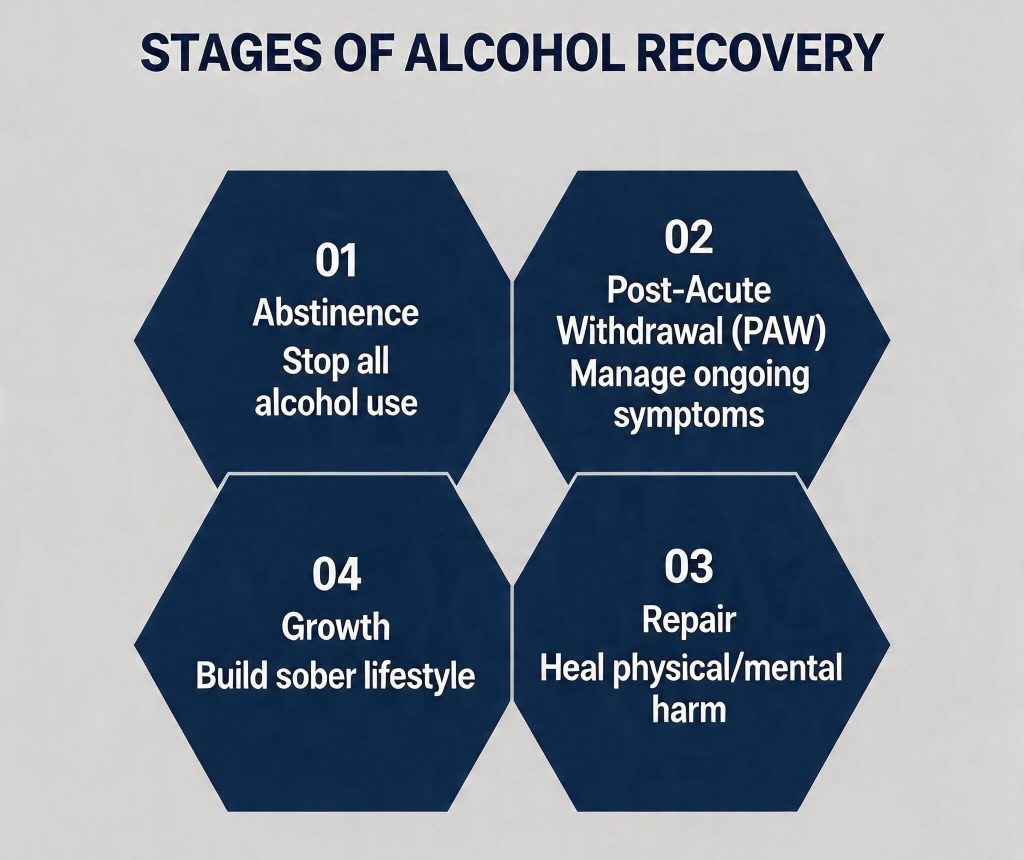
What are the Stages of Alcohol Rehab?
Alcohol rehab is often divided into stages rather than a single timeline.
Common stages
- Detox and stabilization
- Residential or inpatient care
- Outpatient programs
- Aftercare and ongoing support
Each stage serves a specific purpose and contributes to long-term stability.
Stages and Estimated Timeframes
Stage | Duration | Focus |
Detox | Days to 1 week | Stabilization |
Inpatient rehab | 30–90 days | Intensive support |
Outpatient care | Weeks to months | Continued therapy |
Aftercare | Months to years | Maintenance |
Why Does Alcohol Rehab Last Longer for Some People?
There is no single timeline that applies to everyone. Rehab duration is based on individual progress and needs.
Some individuals may benefit from shorter programs followed by outpatient care, while others may require extended residential support. Research suggests that longer engagement in professional care is associated with improved outcomes.
How Does Aftercare Fit Into the Alcohol Rehab Timeline?
Aftercare is an essential part of the rehab process and often extends beyond initial treatment.
Aftercare may include
Aftercare can continue for months or longer, depending on individual needs and goals.
How Do You Know When You are Ready to Move Forward in Alcohol Rehab?
Rehab duration is often adjusted based on ongoing progress rather than a fixed timeline. Regular evaluations help determine whether an individual is ready to transition to the next level of care.
What progress reviews may consider?
- Consistency in participation
- Behavioral improvements
- Ability to manage triggers
- Stability in daily functioning
These evaluations help ensure that care remains aligned with individual needs instead of following a rigid schedule.
How Does Your Home Environment Affect Alcohol Rehab Length?
The environment in which a person receives support can influence how long rehab may last.
Environmental considerations
- Availability of stable housing
- Exposure to triggers or high-risk situations
- Level of family or social support
Individuals in more stable environments may transition sooner to outpatient care, while others may benefit from extended professional settings for added support and stability.
Factors That May Extend or Shorten Rehab Duration
Factor | May Extend Duration | May Shorten Duration |
Severity of alcohol use | Higher severity | Lower severity |
Support system | Limited support | Strong support network |
Co-occurring conditions | Present | Absent |
Treatment engagement | Inconsistent | Active participation |
Living environment | High-risk | Stable and supportive |
When is a Short Alcohol Rehab Program Not Enough?
Short-term programs can provide initial support but may not address deeper behavioral patterns.
Programs shorter than 30 days are often supplemented with additional care to support long-term stability.
When Should You Consider Getting Help for Alcohol Use?
Professional support may be helpful when alcohol use begins to affect daily functioning.
Signs to consider
- Difficulty stopping alcohol use
- Increasing tolerance
- Impact on responsibilities
Seeking guidance early allows individuals to explore available options and determine appropriate levels of care.
Not sure how long alcohol rehab takes? Call Palm Coast Treatment Solutions, and we’ll walk you through what to expect.

Why Alcohol Rehab Looks Different for Everyone
Rehab should be viewed as a process rather than a single program with a fixed duration.
Individuals may move between different levels of care based on progress, needs, and personal circumstances. This flexibility allows treatment plans to adapt over time.
Ready to explore your alcohol rehab options? Call Palm Coast Treatment Solutions at (386) 284-4151 and let us help you find the right fit.
Palm Coast Treatment Solutions offers professional programs that include detox, residential care, and ongoing support, focusing on coordinated planning and continuity of care tailored to individual alcohol use patterns and recovery needs.
Medical Disclaimer: This article is for informational purposes only and is not a substitute for professional medical advice.
Key Takeaways
- Alcohol rehab duration varies based on individual needs and progress
- Common program lengths include 30, 60, and 90 days
- Detox is a short initial phase, not complete recovery
- Inpatient and outpatient programs differ in time commitment
- Longer engagement in professional care is often recommended
- Aftercare plays a key role in long-term stability
FAQs
How long does alcohol rehab usually last?
Alcohol rehab typically lasts between 30 and 90 days for professional programs. However, total recovery timelines may extend longer when including outpatient care and aftercare. The exact duration depends on individual needs, severity of alcohol use, and response to treatment, making each timeline unique.
Is 30 days enough for alcohol rehab?
A 30-day program can provide initial support and stabilization, but it may not be sufficient for everyone. Many individuals benefit from extended care or continued outpatient support. Longer durations allow more time to address behavioral patterns and build strategies for maintaining long-term stability.
How long does alcohol detox take to complete?
Alcohol detox usually lasts several days to about one week, depending on severity and individual health factors. It focuses on managing withdrawal symptoms safely. Detox is only the first step in recovery and is typically followed by professional programs that address behavioral and psychological aspects.
What factors affect rehab duration the most?
Rehab duration is influenced by severity of alcohol use, length of use history, physical and mental health conditions, and individual response to treatment. Additional factors such as support systems and previous treatment experiences also play a role in determining how long professional care is needed.
Can rehab last longer than 90 days?
Yes, rehab can extend beyond 90 days depending on individual needs. Some people transition into long-term outpatient care or aftercare programs that continue for months or longer. Extended support helps reinforce behavioral changes and provides ongoing guidance during recovery.