Yes, particularly when using high amounts of alcohol or for extended periods. The thing is, the connection between alcohol and diabetes isn’t as simple as it seems.
In reality, moderate and heavy drinking are two distinct types of drinking that have vastly different impacts on your body. Drinking a few times a week may even reduce the likelihood of a Type II diabetes diagnosis. However, constant overindulgence can cause serious damage to your pancreas and disrupt your blood glucose regulation.
Let’s take a look at the effects of alcohol on diabetes risk and the necessary information to keep you healthy.
How Does Alcohol Affect Diabetes Risk?
Alcohol and diabetes are not a simple connection. This is dependent on the amount of water you consume and the frequency.
This study reveals a “U-shaped” or “J-shaped” relationship. This suggests that a few drinks a day for women and men (moderate drinking) may reduce your diabetes risk compared to those who do not drink. However, the more you drink, the higher the risk. Heavy drinkers have the same (or even greater) diabetes risk as non-drinkers.
Why does this happen? It comes down to how alcohol affects your body. When you drink a small amount, it can actually improve how your insulin works. Your cells become more sensitive to insulin, which helps control blood sugar. But when you drink too much, everything flips. Your body stops responding to insulin properly, and your pancreas gets tired from trying to keep up.
“Light to moderate alcohol consumption seems to reduce the risk of type 2 diabetes by 30%, while heavy drinkers have the same or higher risk than total abstainers.” – Research published in ScienceDirect
How Alcohol Damages Your Ability to Control Blood Sugar
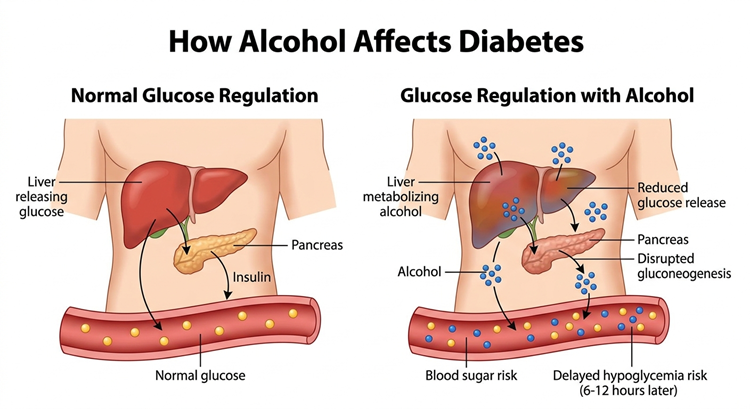
Understanding how alcohol damages your blood sugar control is important. Your body has a delicate system for managing glucose, and alcohol throws a wrench in the works at multiple points.
- First, let’s talk about your pancreas. This is the organ that makes insulin, the hormone that tells your cells to take in glucose (blood sugar) for energy. When you drink heavily over time, alcohol damages the beta cells in your pancreas. These cells are responsible for making insulin. Once they’re damaged, they can’t produce enough insulin, which means your blood sugar stays too high.
- Second, alcohol messes with your liver’s job. Your liver is like your body’s glucose factory. It stores sugar and releases it when you need energy. When you drink, your liver focuses on breaking down the alcohol instead of managing glucose. This causes your blood sugar to drop dangerously low, especially if you haven’t eaten. Your liver can’t do both jobs at once.
- Third, chronic heavy drinking creates something called insulin resistance. This means your cells stop listening to insulin’s signal. Even if your pancreas makes plenty of insulin, your muscles and fat cells don’t respond.
- Fourth, heavy drinking causes inflammation throughout your body. This inflammation interferes with how insulin works and damages your pancreatic beta cells even more. It’s a vicious cycle that gets worse the longer you drink.
“Chronic heavy alcohol use leads to impaired glucose tolerance, which is a combination of impaired secretion of insulin and reduced insulin sensitivity or resistance.” – The Diabetes and Metabolism Journal
100% Confidential Support is Available 24/7
No matter what you’re going through, you’re not alone. Our dedicated team is here to provide a safe, judgment-free space where you can talk openly and honestly. Whether you need emotional support, resources, or just someone to listen.
We’re here for you—completely confidential and always respectful of your privacy. Call us today!
Alcohol and Pancreatitis: The Hidden Risk Factor
One of the most serious ways alcohol can lead to diabetes is through a condition called chronic pancreatitis. This is inflammation of the pancreas that doesn’t go away.
Alcohol is the single most common cause of chronic pancreatitis. When you drink heavily over months or years, the pancreas becomes inflamed and swollen. Over time, this chronic inflammation causes permanent damage. The pancreas starts to scar and shrink. Once scarring happens, it can’t be fixed.
Here’s why this matters for diabetes: a scarred pancreas can’t make insulin properly. Some people with chronic pancreatitis develop what doctors call “pancreatogenic diabetes” or type 3c diabetes. This is a form of diabetes caused directly by pancreatic damage.
The scary part is that you might not know you have chronic pancreatitis until serious damage has already happened. Some people feel pain in their upper belly or back. Others have trouble digesting food or experience weight loss. But some people have no symptoms at all until their pancreas is already severely damaged.
Contact Palm Coast Treatment Solutions
Battling with Drug and Alcohol Addition? Remember, you are not alone and we are here to help you!
Does Alcohol Cause Weight Gain?
Alcohol has a sneaky way of contributing to weight gain, and weight gain is a major risk factor for type 2 diabetes.
While your liver is busy breaking down alcohol, your body puts fat burning on hold. This can last for up to 12 hours after you drink. So if you have a drink at dinner and another one later, your body is basically ignoring the fat it’s supposed to be burning. All those extra calories from alcohol end up getting stored as fat.
And the calories aren’t even the worst part. The calories in alcohol come with zero nutritional value. You’re drinking calories without getting vitamins, minerals, or fiber. Meanwhile, many alcoholic drinks also contain added sugars, especially beer and sweet wine.
Overcome Addiction with Palm Coast Treatment Solutions.
Book an appointment.
Alcohol’s Effects on Blood Sugar With Existing Diabetes
If you already have diabetes, alcohol becomes even more dangerous. People with diabetes need to be especially careful because alcohol can cause serious blood sugar problems.
When someone with diabetes drinks alcohol without eating, it can cause hypoglycemia (dangerously low blood sugar). Your liver is so busy processing the alcohol that it forgets to release glucose when your blood sugar drops. This can lead to shaking, sweating, confusion, and in severe cases, seizures or loss of consciousness.
The problem is that low blood sugar from alcohol looks a lot like being drunk. You might feel dizzy, sleepy, and confused in both situations. Someone watching you might think you’re just intoxicated when really your blood sugar is dropping to dangerous levels.
Alcohol can also interfere with diabetes medications. If you’re taking insulin or certain other diabetes pills, alcohol can make them work too well, causing your blood sugar to drop even lower.
How Different Drinking Amounts Affect Diabetes Risk
Let’s break down exactly how alcohol consumption levels affect your diabetes risk:
Drinking Level | Frequency | Diabetes Risk | Health Effects |
Abstinence | No alcohol | Baseline (normal risk) | Lowest risk for alcohol-related diabetes |
Light Drinking | 1-2 drinks per week | Reduced (10-15% lower) | May improve insulin sensitivity |
Moderate Drinking | 1 drink/day (women), 2 drinks/day (men) | Reduced (15-30% lower) | Possible protective effect from antioxidants |
Heavy Drinking | 3+ drinks/day most days | Significantly increased | Insulin resistance, pancreatic damage risk |
Binge Drinking | 4+ drinks in one sitting | Severely increased | Immediate blood sugar spikes, inflammation |
Chronic Heavy | 16+ drinks per day | Extremely elevated | Pancreatitis, severe beta cell damage |
Overcome Addiction with Palm Coast Treatment Solutions.
Book an appointment.
Connection Between Alcohol Addiction and Diabetes
The combination of heavy daily drinking plus poor nutrition (because addiction takes priority over self-care) creates a perfect storm for developing diabetes. Someone struggling with addiction might not be eating regular, healthy meals. They might be getting most of their calories from alcohol and junk food. They’re not exercising. They’re stressed. All of these factors combine to make diabetes almost inevitable.
And here’s the really difficult part: if someone develops diabetes because of heavy drinking, they can’t simply drink less and expect the damage to heal. Once your pancreas has been damaged by chronic pancreatitis, that damage is usually permanent. If your liver has developed cirrhosis or fatty liver disease from years of heavy drinking, that’s also permanent.
The only way forward is to stop drinking completely and get professional help. This is why treating alcohol addiction early is so important. The longer someone waits, the more damage gets done to organs that might never fully recover.
Can You Reverse Alcohol-Related Diabetes Damage?
This is a question many people ask with hope: if I quit drinking, can I undo the damage and get my blood sugar back to normal?
The answer depends on how much damage has been done and how long you’ve been drinking.
If you’re in the early stages, before your pancreas has been severely damaged, quitting drinking can improve your situation. Your insulin sensitivity can improve. Weight loss becomes possible again because your liver stops burning alcohol and starts burning fat. Your blood sugar levels can stabilize.
But if you’ve been drinking heavily for years, the situation is different. Permanent scarring of the pancreas doesn’t heal. Chronic pancreatitis damage doesn’t go away. If you’ve developed type 3c diabetes from pancreatitis, you’ll have diabetes for life.
Overcome Addiction with Palm Coast Treatment Solutions.
Book an appointment.
How Much Alcohol Is Actually Safe?
The research tells us clearly what “safe” amounts are:
- For women: no more than one standard drink per day, and no more than seven per week. A standard drink is 12 ounces of regular beer, 5 ounces of wine, or 1.5 ounces of hard liquor.
- For men: no more than two standard drinks per day, and no more than fourteen per week.
- For people at risk of diabetes or already diagnosed: the American Diabetes Association recommends talking to your doctor about whether any alcohol is safe for you. It might not be.
- For people with alcohol addiction: the answer is zero. If you struggle with alcohol, any amount puts you at risk because you can’t stick to moderate drinking.
If you’re regularly drinking more than these amounts, you’re significantly increasing your diabetes risk. Your pancreas is being damaged. Your blood sugar control is being compromised.

Getting Help for Alcohol Addiction and Diabetes Prevention
If you’re concerned about your drinking and your diabetes risk, help is available. This isn’t about judgment; it’s about health.
Palm Coast Treatment Solutions offers comprehensive treatment for alcohol addiction that addresses both the addiction and the health consequences. Our evidence-based addiction treatment programs combine medical care with therapy to help people recover safely and completely.
Our alcohol addiction treatment includes:
- Medical supervision during withdrawal to keep you safe
- Cognitive Behavioral Therapy (CBT) to address the thoughts and patterns that fuel addiction
- Dialectical Behavior Therapy (DBT) to build coping skills for life without alcohol
- Group therapy to connect with others in recovery
- Family therapy to heal relationships damaged by addiction
- Personalized treatment plans that account for your health needs, including diabetes risk
We understand that alcohol addiction doesn’t happen in isolation. It affects your health, your relationships, your work, and your future. That’s why we treat the whole person, not just the addiction.
Our Intensive Outpatient Program (IOP) lets you live at home while attending treatment sessions several days a week. Our Partial Hospitalization Program (PHP) provides more intensive support if you need it. And our outpatient treatment allows flexibility as you build your recovery.
If you’re struggling with alcohol or worried about diabetes risk, call us at (386) 284-4151 or visit our contact page. All conversations are completely confidential. We’re here to help you take control of your health before more damage is done.
FAQs
Q: Can one drink a night cause diabetes?
One drink per night is within the moderate drinking guidelines and isn’t likely to cause diabetes by itself. However, if you have a family history of diabetes or other risk factors, even moderate drinking might increase your risk. The safest approach if you’re concerned is to talk to your doctor.
Q: Does beer or wine cause more diabetes risk?
Different alcoholic drinks affect blood sugar differently. Regular beer and sweet wines have more carbohydrates and sugar, which can spike blood sugar. Hard liquor has fewer carbs but is more concentrated alcohol. The amount and frequency matter more than the type, but sweet drinks are generally worse for diabetes risk.
Q: How quickly can alcohol damage your pancreas?
It varies from person to person, but heavy drinking can start causing pancreatic damage within months of regular heavy consumption. Chronic pancreatitis can develop from years of heavy drinking. The longer you drink heavily, the more likely serious damage becomes.
Q: If I have prediabetes, can I still drink alcohol?
People with prediabetes should be very careful. Talk to your doctor before drinking. Many doctors recommend avoiding alcohol if you have prediabetes because alcohol makes it harder to reverse the condition. Quitting alcohol is one of the most effective ways to improve your prediabetes.
Q: Can alcohol cause type 1 diabetes?
Alcohol doesn’t cause type 1 diabetes, which is an autoimmune condition where your body attacks its own beta cells. However, if you have type 1 diabetes, alcohol is still dangerous because it interferes with blood sugar management.
Q: How much weight will I lose if I quit drinking?
It depends on how much you were drinking, but cutting out alcohol typically leads to noticeable weight loss within weeks. If you were drinking 1,000 calories per day from alcohol, you could lose roughly two pounds per week just from eliminating those calories. Weight loss often continues as your metabolism improves.
Q: Is diabetic ketoacidosis from alcohol reversible?
Diabetic ketoacidosis (DKA) is a medical emergency that requires immediate hospital treatment. If treated quickly, you can recover from an episode. But repeated episodes cause cumulative damage. The best approach is to prevent it by avoiding alcohol if you have diabetes.
Q: Can quitting alcohol cure my diabetes?
If you developed diabetes from alcohol-related pancreatitis, quitting won’t cure it because the pancreatic damage is permanent. However, if you quit early before severe damage occurs, you might prevent diabetes from developing. If you have prediabetes, quitting can often reverse it completely.
Q: What if I have both diabetes and alcohol addiction?
This is a serious health situation that requires professional help. You need treatment that addresses both conditions simultaneously. Medical detox, diabetes management, and addiction therapy all need to work together. Our treatment programs address these co-occurring issues.
Q: How do I know if I’m drinking too much?
If you’re drinking more than the safe limits (1 drink/day for women, 2 for men), you’re drinking too much. If you find it hard to stick to limits, if drinking is affecting your health or relationships, or if you experience withdrawal symptoms when you don’t drink, you likely have a drinking problem that needs professional help.
Q: Does my family history matter?
Yes. If diabetes runs in your family, you’re already at higher risk. Adding heavy drinking to that genetic risk is dangerous. People with a family history of diabetes should be especially careful about alcohol consumption.
References
- American Diabetes Association, “Alcohol and Diabetes”
- Diabetes Care Journal, “Alcohol Consumption and the Risk of Type 2 Diabetes”
- ScienceDirect, “Alcohol and Type 2 Diabetes: A Review”
- National Institutes of Health, “Alcohol Consumption and Genetic Risk in Type 2 Diabetes”
- WebMD, “Drinking Alcohol and Blood Sugar”
- The Diabetes and Metabolism Journal, “Alcoholism and Diabetes Mellitus”
- PubMed/NCBI, “Alcohol as a Risk Factor for Type 2 Diabetes”
- American Physiological Society, “Heavy Alcohol Use and Type 2 Diabetes Risk”
- Nature Scientific Reports, “Chronic Heavy Alcohol Consumption and Diabetes Development”
- Gastroenterology Journal, “The Role of Alcohol in Pancreatic Diseases”
Medical Disclaimer: This blog provides educational information about alcohol and diabetes and is not a substitute for professional medical advice. Always consult with a healthcare provider or registered dietitian before making changes to your diet, alcohol consumption, or health routine. If you or a loved one is struggling with alcohol addiction, Palm Coast Treatment Solutions offers evidence-based treatment programs in Palm Coast, Florida. Contact us at (386) 284-4151 for confidential support.