It strikes suddenly and without warning. Now, one minute you’re okay. Then you’re overcome by feelings that are overpowering and all in your heart. Your chest tightens. Your thoughts spiral. Everything feels catastrophic. You say things that you don’t mean. You do things that you will regret. And you feel completely out of control.
It is an episode of BPD. It is an “emotional hurricane,” as those with borderline personality disorder say. It’s not sadness. It’s not anger. It’s an overwhelming storm of multiple intense emotions happening simultaneously. If this is happening to you or someone you know, it’s important to understand what is going on. Without understanding, it’s impossible to manage.
Understanding BPD Episodes
“BPD episodes” is a term people use to describe periods of intense emotional dysregulation, rapid mood shifts, impulsive behaviors, and interpersonal crises.
An episode can last hours. Sometimes it stretches into days. Sometimes the intensity comes and goes in waves throughout a day. There’s no standard duration because BPD is deeply individual. What matters is recognizing what’s happening so you can take action.
Borderline personality disorder itself is characterized by severe difficulty regulating emotions, moods, and behaviors. It involves intense fear of abandonment, unstable relationships that swing between idealization and devaluation, chronic feelings of emptiness, difficulty controlling anger, and impulsive self-destructive behaviors. Episodes are when these underlying features intensify dramatically.
Think of it this way. The features of BPD are always there to some degree. But episodes are when they reach a crisis level. They’re when the pain becomes unbearable and the behaviors become dangerous.
Phases of a BPD Episode
Understanding the progression of a BPD episode helps you intervene earlier.
The Trigger Phase happens first. Something happens that activates the core fears of BPD. It might be perceived rejection. A partner taking longer than usual to text back. Someone expressing disagreement or criticism. A change in plans. A social situation where the person feels excluded. A reminder of past abandonment or rejection. The trigger itself might seem minor to observers, but to someone with BPD, it hits the core wound.
The Escalation Phase happens next. The emotional intensity begins rising. You might notice physical symptoms: chest tightness, difficulty breathing, shaking, hot flashes. Thoughts become increasingly negative and catastrophic. “They don’t really care about me.” “Everyone hates me.” “I’m worthless.” “I can’t survive this.” The emotional intensity is rising but you’re not yet at the peak.
The Peak Phase is the crisis moment. Emotional intensity is maximal. You feel multiple emotions simultaneously, often contradictory ones. Rage and despair. Intense fear and numbness. Shame and anger. Your thinking becomes very black and white. The person who yesterday was perfect is now completely untrustworthy. You might engage in self-harm, substance use, reckless behavior, verbal outbursts, or desperate attempts to prevent abandonment. You might make threats or statements about wanting to die. Your capacity for rational thought is severely impaired.
The De-escalation Phase comes next. Usually the peak only lasts minutes to hours. The intensity begins decreasing. You might feel ashamed or guilty about things you said or did. You might become apologetic or withdraw. You might feel empty or numb. This phase can last hours to days depending on the person and situation.
The Recovery Phase is when emotional intensity returns closer to baseline. You reflect on what happened. You might feel guilt or shame. You might worry that the relationship is damaged. You might promise yourself this won’t happen again. This phase is important because how you process it affects future episodes.
Symptoms of a BPD Episode
Recognizing the symptoms of an episode, especially early in the progression, gives you the best chance of managing it effectively.
Emotional Symptoms include intense fear or anxiety, overwhelming sadness or despair, intense rage or anger that feels out of proportion, shame or embarrassment, rapid mood swings within minutes, feelings of numbness or emptiness, or suicidal thoughts or self-harm urges.
Cognitive Symptoms include catastrophic thinking, believing people hate you or want to abandon you, black and white thinking where everything is all good or all bad, difficulty concentrating or thinking clearly, racing thoughts, or rumination about perceived slights or rejections.
Behavioral symptoms include self-harm like cutting or burning, substance abuse, reckless spending or other impulsive behaviors, aggressive or verbally abusive outbursts, threatening to harm yourself or others, withdrawing from people, or engaging in risky sexual behavior.
Physical symptoms include chest pain or tightness, rapid heartbeat, difficulty breathing, shaking or tremors, hot flashes or chills, headaches, or stomach pain.
The presence of multiple symptoms simultaneously indicates an episode is developing or underway.
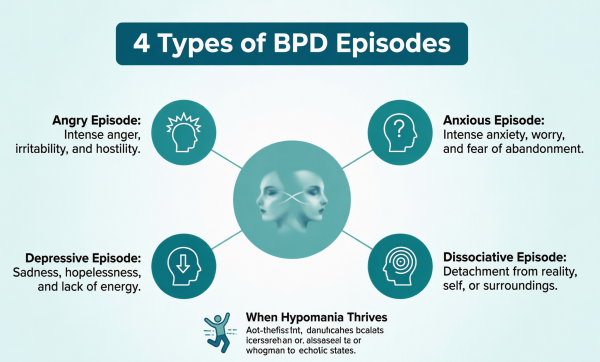
What Triggers a BPD Episode
Episodes don’t happen randomly. They’re triggered by specific situations. Understanding your personal triggers helps you avoid or prepare for them.
Abandonment Fears are the core trigger for most BPD episodes. Real or perceived rejection activates this fear. A partner being late. A friend canceling plans. Someone taking hours to text back. A breakup. Someone saying they need space. Someone expressing criticism. All of these can trigger abandonment fears.
Interpersonal Conflict triggers episodes. Arguments with loved ones. Perceived disrespect. Feeling unheard or invalidated. Family drama. Romantic relationship instability.
Changes or Instability trigger episodes. Changes in routine. Job loss or job changes. Moving. Relationship status changes. Financial instability. Anything that threatens your sense of security.
Reminders of Past Trauma or Abandonment trigger episodes. Anniversaries of traumatic events. Seeing someone who reminds you of a person who hurt you. Being in places where past abandonment happened. Hearing news about people who hurt you.
Feeling Invisible or Invalidated triggers episodes. When your emotions are dismissed as “overreacting.” When people don’t understand your pain. When you feel like no one cares. When your needs are ignored.
Stress triggers episodes. Work stress. Financial stress. Health stress. School stress. Any kind of significant stress can lower your threshold and make episodes more likely.
Your personal triggers are unique. Understanding what triggers you personally allows you to prepare mentally, adjust your environment, or seek support proactively.
BPD Episodes vs. Other Conditions
BPD episodes are sometimes confused with other conditions. Understanding the differences helps in getting appropriate help.
Feature | BPD Episode | Anxiety Attack | Depression Episode | Bipolar Mania | Bipolar Depression |
Trigger | Usually interpersonal | Usually stress or fear | Often unknown | Usually unknown | Usually unknown |
Duration | Hours to days | Minutes to hours | Weeks to months | Days to weeks | Weeks to months |
Mood Pattern | Rapid, multiple emotions | Primarily anxiety | Persistent low mood | Elevated and expansive | Low and flat |
Relationships | Central to episode | Not central | May withdraw | May be overly social | May withdraw |
Impulsivity | High, self-harm risk | May occur | Usually low | Very high | Usually low |
Suicidal Risk | High during episode | Low | Variable | Low | High |
After Episode | Guilt and shame | Relief | Persistent sadness | Return to baseline | Persistent sadness |
Understanding these differences helps you and healthcare providers develop appropriate treatment.
Crisis Management Strategies
During an episode, having concrete strategies matters.
In the Moment of Activation: Pause. Notice what’s happening before you react. Take three deep breaths using the 4-7-8 technique: inhale for 4 seconds, hold for 7 seconds, exhale for 8 seconds. This activates your parasympathetic nervous system and calms the physical response.
Temperature and Sensation Techniques: Hold ice in your hands or splash cold water on your face. The shock interrupts the emotional spiral. Intense exercise can burn off the adrenaline and anxiety. Going for a run or doing pushups can help metabolize the stress chemicals.
Mindfulness and Grounding: Focus on five things you see, four things you can touch, three things you hear, two things you smell, one thing you taste. This grounds you in the present moment rather than staying in the catastrophic thoughts.
Self-Compassion: Remind yourself that this feeling will pass. You’re having a medical crisis, not a character flaw. The pain is real and valid even if the thoughts are distorted.
Reach Out for Support: Call a therapist if available. Text a trusted friend. Go to an emergency room if you’re having thoughts of harming yourself. Don’t isolate yourself.
Avoid Major Decisions: Don’t break up. Don’t quit your job. Don’t say things you might regret. Write them down and revisit them when you’re calm if you need to process them.
Self-Care: Once the peak passes, take care of yourself. Sleep. Eat. Shower. Move your body gently. Do something soothing.

Getting Help at Palm Coast Treatment Solutions
If you’re experiencing BPD episodes that are affecting your life, professional help makes a tremendous difference.
Palm Coast Treatment Solutions specializes in treating borderline personality disorder. We understand BPD episodes. We understand that they feel terrifying and real even when thoughts are distorted. And we know how to help.
With proper treatment, most people achieve complete remission of BPD symptoms. It’s treatable. It gets better. You don’t have to live in this cycle forever.
If you’re struggling with BPD episodes, reach out. Call us at (386) 284-4151 or visit our contact page to discuss treatment options. Our team understands BPD and is ready to help. We’re available 24/7 for crisis support.
FAQs
How Long Do BPD Episodes Usually Last?
BPD episodes can vary greatly in length depending on the individual, circumstances, and triggering events. Intense emotional reactions may last minutes or hours, while lingering distress can continue for days. Effective coping strategies and treatment often help reduce both the duration and severity of episodes.
Can I Prevent BPD Episodes?
While it may not be possible to prevent every episode, many people can reduce their frequency and intensity through therapy, stress management, healthy routines, and coping skills. Identifying personal triggers, maintaining consistent self-care, and practicing emotional regulation techniques can significantly improve symptom management over time.
Is It My Fault When I Have an Episode?
No. Borderline Personality Disorder is a recognized mental health condition, and episodes are symptoms of the disorder rather than personal failures. However, learning coping skills, participating in treatment, and seeking support can help individuals manage symptoms more effectively and improve overall emotional wellbeing.
What Should I Do if Someone I Love Is Having a BPD Episode?
Remain calm, listen without judgment, and avoid escalating conflicts. Acknowledge the person’s emotional pain even if you disagree with their perspective. Encourage healthy coping strategies and professional support while maintaining appropriate boundaries. Caring for your own emotional wellbeing is also an important part of providing support.
Can Medication Help With BPD Episodes?
There is no medication specifically approved to treat Borderline Personality Disorder itself. However, medications may help manage co-occurring symptoms such as anxiety, depression, mood instability, or sleep difficulties. A psychiatrist can determine whether medication may be beneficial as part of a broader treatment plan.
Is DBT Really Effective for BPD?
Yes. Dialectical Behavior Therapy (DBT) is considered one of the most effective treatments for Borderline Personality Disorder. Research shows that DBT can reduce emotional instability, self-harming behaviors, and relationship difficulties while improving coping skills, distress tolerance, emotional regulation, and overall daily functioning.
What If I Hurt Myself or Someone Else During an Episode?
If there is a risk of harm to yourself or others, seek immediate professional assistance. Emergency services, crisis hotlines, mental health professionals, or emergency departments can provide urgent support. Prompt intervention helps ensure safety and connects individuals with appropriate treatment and crisis management resources.
Can I Manage BPD Episodes Without Treatment?
Some self-help strategies may reduce distress, but professional treatment generally offers the greatest improvement. Evidence-based therapies such as DBT help individuals develop healthier coping mechanisms, improve emotional regulation, and reduce symptom severity. Ongoing treatment often leads to better outcomes than self-management alone.
Will I Always Have BPD Episodes?
Not necessarily. Many people experience substantial improvement with appropriate treatment and support. Episodes often become less frequent, less intense, and easier to manage over time. Some individuals achieve long-term remission of symptoms and enjoy healthy relationships, stable functioning, and improved quality of life.
Is BPD Curable?
Borderline Personality Disorder is generally considered a treatable condition rather than one with a traditional cure. However, many individuals experience significant symptom reduction or remission through therapy and ongoing support. With proper treatment, it is possible to build a fulfilling, productive, and meaningful life.
References
- Harmony Hills. “Coping Techniques for Borderline Personality Disorder.” September 2025. https://www.hhills.com/rehab-blog/3-techniques-to-help-your-personality-disorder-and-mental-health/
- HelpGuide. “Borderline Personality Disorder: BPD Symptoms, Signs, Help.” https://www.helpguide.org/mental-health/personality-disorders/borderline-personality-disorder
- Alvarado Parkway Institute. “Coping Strategies for Managing Borderline Personality Disorder.” February 2025. https://apibhs.com/2025/01/16/coping-strategies-for-managing-borderline-personality-disorder
- PB Psychiatric Services. “Understanding BPD: Episodes, Coping Strategies, and Support.” June 2025. https://pbpsychiatricservices.com/bpd-episode-signs/
- SUN Behavioral Columbus. “Borderline Personality Disorder and Emotional Crisis: A Guide to Managing Acute Episodes.” June 2025. https://suncolumbus.com/borderline-personality-disorder-and-emotional-crisis-a-guide-to-managing-acute-episodes/
- Legacy Recovery Center. “BPD Episode: How to Recognize and Cope with Intense Emotions.” December 2025. https://www.legacyrecoverycenter.com/blog/borderline-personality-disorder-episode-how-to-cope-effectively/
- NAMI. “Borderline Personality Disorder.” https://www.nami.org/mental-health/personality-disorders/borderline-personality-disorder
- American Psychiatric Association. “Diagnostic and Statistical Manual of Mental Disorders.” https://www.psychiatry.org/
- National Institute of Mental Health. “Borderline Personality Disorder.” https://www.nimh.nih.gov/
- Linehan Institute. “Dialectical Behavior Therapy for BPD.” https://www.linehaninstitute.org/
This content is for informational purposes only and does not constitute medical advice or a clinical recommendation. For a personalized assessment, please consult a licensed mental health professional. To learn more about evidence-based mental health and addiction treatment in Florida, visit palmcoastts.com or call (386) 284-4151.