Adderall could make an appearance in ADHD-related discussions or perhaps a doctor has advised you or someone you know to use it. You may ask yourself what this medicine is and what the risks and safety areas are. Perhaps you are worried because you know someone who has been misusing adderall, and you want to know what they are going through.
Regardless of why you’re here, it’s important to know what Adderall is, the benefits it provides, and how it works so that you can make a sound decision about your well-being or you can offer the person you care for the best support possible. Let’s discuss the whole truth about this potent medicine.
What is Adderall?
Adderall is a prescription stimulant medication, that contains two amphetamine compounds (amphetamine and dextroamphetamine).
They are stimulants that affect the central nervous system (CNS) of the body and stimulate the brain and nervous system. The medication does this by raising the levels of two chemicals that are important in the brain, namely dopamine and norepinephrine. These are important chemicals for attention, focus, wakefulness and impulse control.
Adderall comes in two main forms: immediate-release tablets that work quickly and extended-release capsules (Adderall XR) that release medication slowly throughout the day. This allows for different dosing schedules depending on individual needs.
Medical Uses of Adderall
Adderall has two FDA-approved medical uses.
Attention-Deficit/Hyperactivity Disorder (ADHD)
ADHD is a neurodevelopmental condition affecting attention, impulse control, and sometimes activity levels. People with ADHD struggle to focus, make impulsive decisions, get distracted easily, and may be excessively active or restless.
Adderall helps by increasing dopamine and norepinephrine in the brain’s prefrontal cortex, the area responsible for attention and executive function. With proper dosing, people with ADHD experience:
- Improved ability to focus and concentrate
- Decreased impulsivity
- Better organization and time management
- Improved academic or work performance
- Enhanced ability to follow through on tasks
Studies show Adderall effectively treats ADHD symptoms in approximately 70 to 80 percent of people who take it. It’s often prescribed as part of a comprehensive treatment plan that includes therapy, educational support, and behavioral strategies.
Narcolepsy
Narcolepsy is a chronic sleep disorder characterized by excessive daytime sleepiness, sudden loss of muscle tone (cataplexy), sleep paralysis, and hallucinations during sleep-wake transitions. People with narcolepsy cannot control when they fall asleep and may do so suddenly and inappropriately.
Adderall helps by promoting wakefulness. By increasing norepinephrine levels, it helps people with narcolepsy stay awake during the day. This allows them to function better at work, school, and in relationships. Narcolepsy is a lifelong condition requiring long-term management, and Adderall is one of the most effective medications for managing excessive daytime sleepiness.
How Adderall Works
When you take Adderall, it enters your bloodstream and crosses into your brain. Once there, it increases the availability of dopamine and norepinephrine in specific brain regions.
Dopamine is involved in pleasure, reward, motivation, and the brain’s reinforcement system. People with ADHD typically have lower dopamine levels in the prefrontal cortex, affecting their ability to focus and control impulses. By increasing dopamine, Adderall helps normalize these functions.
Norepinephrine affects alertness, attention, and arousal. Increasing norepinephrine helps people feel more alert and focused. It also helps suppress appetite, which is why appetite loss is a common side effect.
The medication typically begins working within one to two hours of taking an immediate-release tablet. Extended-release versions release medication slowly, providing steadier effects throughout the day and requiring only one or two doses daily.
100% Confidential Support is Available 24/7
No matter what you’re going through, you’re not alone. Our dedicated team is here to provide a safe, judgment-free space where you can talk openly and honestly. Whether you need emotional support, resources, or just someone to listen.
We’re here for you—completely confidential and always respectful of your privacy. Call us today!
Effects of Adderall When Used as Prescribed
When taken at prescribed doses for legitimate medical reasons, Adderall produces specific, beneficial effects.
People with ADHD typically experience:
- Improved concentration and focus
- Reduced impulsivity and more thoughtful decision-making
- Better organization
- Enhanced ability to complete tasks
- Improved academic or work performance
- Better emotional regulation
- More effective in social situations
For people with narcolepsy:
- Reduced excessive daytime sleepiness
- Ability to stay awake and alert during the day
- Improved work and social functioning
- Better quality of life overall
At therapeutic doses, these effects help people function better in their daily lives. The goal is not to make someone feel “high” but to help their brain function more normally.
Contact Palm Coast Treatment Solutions
Battling with Drug and Alcohol Addition? Remember, you are not alone and we are here to help you!
Side Effects of Adderall Use (Prescribed)
Like any medication, Adderall can cause side effects even when used as prescribed.
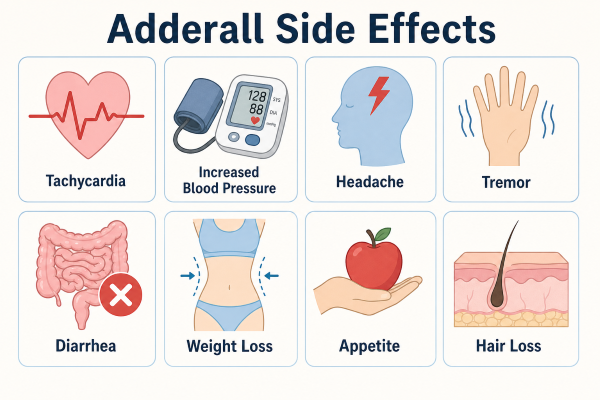
Common side effects:
- Decreased appetite
- Insomnia or sleep problems
- Headaches
- Dry mouth
- Dizziness
- Anxiety
- Irritability
- Nausea
These side effects are usually mild and often decrease over time as the body adjusts. Taking Adderall earlier in the day can help with sleep problems.
Less common but more serious side effects:
- Increased heart rate or blood pressure
- Chest pain
- Shortness of breath
- Severe headaches
- Vision problems
- Allergic reactions
- Psychosis or hallucinations (rare)
If serious side effects occur, it’s important to stop taking the medication and contact a healthcare provider immediately.
Overcome Addiction with Palm Coast Treatment Solutions.
Book an appointment.
Adderall Misuse and Addiction
While Adderall can be beneficial when used as prescribed, misuse carries serious risks.
Misuse includes taking someone else’s prescription, taking more than prescribed, crushing and snorting tablets, injecting the powder, or taking it for purposes other than medical treatment. College students sometimes misuse Adderall as a study aid. Some people use it for weight loss.
When misused, particularly at high doses, Adderall creates a powerful dopamine surge. This produces euphoria, increased energy, improved focus, and a sense of well-being much stronger than therapeutic use. The brain learns to crave this feeling.
With continued misuse, tolerance develops. The person needs increasingly higher doses to feel the same effect. Eventually, they’re taking Adderall not to feel good but to avoid feeling terrible when they don’t take it. This is when addiction develops.
Signs of Adderall addiction include:
- Taking higher doses or for longer than intended
- Unsuccessful attempts to cut back
- Continued use despite knowing it’s causing harm
- Giving up activities to get and use Adderall
- Using it despite physical health problems
- Needing more to feel the same effect
- Experiencing withdrawal symptoms without it
The FDA warns that Adderall has a high potential for abuse and misuse that can lead to addiction, overdose, and death, particularly when used in unapproved ways like snorting or injection.
Long-Term Effects of Adderall Misuse
Chronic misuse of Adderall creates serious long-term health consequences.
Physical effects include the following:
- Cardiovascular problems (irregular heartbeat, high blood pressure, heart attack, stroke)
- Severe weight loss and malnutrition
- Kidney damage
- Seizures
- Sleep disturbances and chronic insomnia
- Increased risk of sexually transmitted infections (through risky behavior)
- Premature aging
Psychological and neurological effects include:
- Paranoia and extreme suspicion
- Psychosis and hallucinations
- Severe anxiety and panic attacks
- Depression (especially during withdrawal)
- Cognitive problems and memory impairment
- Aggression and violent behavior
- Suicidal thoughts
Social and occupational effects include:
- Job loss or academic failure
- Damaged relationships
- Financial problems
- Legal issues
- Social isolation
Once addiction develops, stopping use triggers withdrawal symptoms, including depression, fatigue, anxiety, irritability, and powerful cravings. The psychological withdrawal from stimulant addiction is particularly challenging.
Overcome Addiction with Palm Coast Treatment Solutions.
Book an appointment.
Adderall vs. Other ADHD Medications
Adderall is one option among several ADHD medications:
Medication | Type | Benefits | Drawbacks | Risk Profile |
Adderall | Amphetamine stimulant | Fast-acting, effective, various forms | Appetite suppression, insomnia, addiction risk | High abuse potential |
Ritalin | Methylphenidate stimulant | Fast-acting, effective, shorter duration | Appetite suppression, insomnia, addiction risk | High abuse potential |
Concerta | Methylphenidate extended-release | Once-daily dosing, steady effects | Appetite suppression, insomnia, addiction risk | High abuse potential |
Strattera | Non-stimulant atomoxetine | Lower abuse potential, no appetite loss | Slower onset, less effective for some | Lower addiction risk |
Intuniv | Non-stimulant guanfacine | Lower abuse potential | Slower onset, may cause drowsiness | Lower addiction risk |
Wellbutrin | Antidepressant bupropion | Non-stimulant, improved mood | Requires higher doses, slower onset | Lower addiction risk |
Non-stimulant options have lower abuse potential but are often less effective than stimulants. The choice depends on individual response, side effect profile, and addiction risk.

Getting Help for Adderall Addiction
If you or someone you care about is struggling with Adderall misuse or addiction, professional help is essential.
Palm Coast Treatment Solutions offers comprehensive treatment for stimulant addiction, including Adderall misuse. We understand that prescription stimulant addiction is a serious medical condition requiring specialized care.
Our treatment approach includes:
- Assessment and Evaluation of your specific situation
- Medical Detoxification to manage withdrawal safely
- Individual Therapy addressing addiction roots
- Cognitive Behavioral Therapy (CBT) to change patterns
- Group Therapy for peer support
- Co-occurring Treatment for depression, anxiety, or ADHD
- Intensive Outpatient Programs for flexible care
- Residential Treatment for intensive support
Recovery from Adderall addiction is possible. With proper treatment, people successfully overcome dependence and rebuild their lives.
If you’re struggling with Adderall misuse, call us at (386) 284-4151 or visit our contact page. Our team is available 24/7, and all conversations are completely confidential.
Overcome Addiction with Palm Coast Treatment Solutions.
Book an appointment.
FAQs
Q: Is Adderall safe when prescribed by a doctor?
Yes, when prescribed at appropriate doses for legitimate medical conditions and used as directed, Adderall is relatively safe. Regular monitoring by a healthcare provider helps manage side effects and ensure continued appropriateness.
Q: Why do doctors prescribe such a strong medication for ADHD?
Untreated ADHD causes serious problems: academic failure, job loss, relationship damage, and increased risk of accidental injury. For many people, Adderall significantly improves functioning. The benefits outweigh the risks when used appropriately.
Q: Can you become addicted to Adderall if prescribed?
Physical dependence can occur even with prescribed use, but true addiction (compulsive use despite harm) is less common at therapeutic doses. People with addiction histories are at higher risk and should be carefully monitored.
Q: How long does Adderall stay in your system?
Immediate-release Adderall typically stays in your system for 4-6 hours. Extended-release formulations last 10-12 hours. Traces can be detected in urine for 24-48 hours after use.
Q: Is Adderall the same as methamphetamine?
Both are amphetamines with similar chemical structures and effects, but they’re not identical. Methamphetamine (“meth”) is more potent, illegal, and causes more severe damage. However, the abuse potential and addiction risks are similarly serious.
Q: Can you overdose on Adderall?
Yes. Overdose can cause rapid heart rate, elevated blood pressure, fever, seizures, coma, and death. The FDA warns that overdose risk increases with higher doses or unapproved administration methods like snorting or injection.
Q: What’s the difference between Adderall and Adderall XR?
Adderall is immediate-release, reaching peak effects in 1-2 hours but lasting only 4-6 hours. Adderall XR is extended-release, reaching peak effects slower but lasting 10-12 hours. XR requires fewer doses daily.
Q: Can adults develop ADHD later in life?
ADHD is a lifelong neurodevelopmental condition that begins in childhood. However, some people aren’t diagnosed until adulthood. This isn’t new ADHD—it’s undiagnosed childhood ADHD.
Q: What should I do if I suspect someone is misusing Adderall?
Have a caring conversation about your concerns. Avoid judgment or blame. Encourage professional help. Set boundaries about how their use affects you. Consider family therapy. Remember you can’t force someone into recovery.
Q: Is Adderall being overprescribed?
This is debated. Diagnosis of ADHD has increased, partly from better recognition. However, evidence suggests some overprescribing occurs, particularly to students without ADHD seeking academic enhancement.
References
- FDA Label for Adderall
- Medical News Today, “Adderall: Uses, Side Effects, and Dosage”
- Drugs.com, “Adderall Information”
- Addiction Center, “Adderall Addiction and Abuse”
- Recovery First, “Adderall Short & Long Term Effects”
- Compassion Behavioral Health, “Long-Term Effects of Adderall”
- Oxford Treatment Center, “Adderall Misuse and Treatment Options”
- WebMD, “Adderall Abuse and Addiction: Signs”
- RupaHealth, “Understanding Dextroamphetamine-Amphetamine”