In This Blog:
- What Suboxone is and why it is used
- Understanding the half-life of buprenorphine and naloxone
- Detection times for various screening methods
- Factors that influence how your body processes the substance
- The journey of the medication through your internal systems
- Important interactions and safety considerations
- Practical steps for those seeking professional support
Suboxone is a special prescription drug that is mainly used to assist one in coping with opioid use disorder. It is a polysubstance drug that is a mixture of two major substances: buprenorphine and naloxone. Buprenorphine is a partial opioid agonist, and it decreases cravings and withdrawal symptoms, whereas naloxone is an antagonist that prevents misuse.
The awareness of the time interval during which the substance is active and can be detected is critical to organize care, prepare for employment screening, or switch between various support regimens. The metabolism of these components in the body is complicated and depends on numerous biological processes. This guide is an evidence-based review of the science that supports its metabolism and its unique detection windows in various testing formats.
Expert Advice: Buprenorphine has a long half-life, meaning it remains detectable for several days.
What is Suboxone, and how does it work
Suboxone is created to provide a more stable stabilization for people who are shifting off of short-acting opioids. It attaches to the same receptors in the brain as the other substances, but it inhibits the high, and it helps in avoiding withdrawal effects.
The medication is typically administered as a sublingual film or tablet. This delivery method ensures that the buprenorphine is absorbed efficiently into the bloodstream through the tissues under the tongue.
FACT: Suboxone detection windows vary based on individual metabolic rates and health.
Buprenorphine vs. Naloxone
Buprenorphine is the primary active ingredient responsible for the long-term effects. It attaches firmly to opioid receptors but only partially activates them, providing a “ceiling effect” that enhances safety.
Naloxone is included as a safety mechanism. If the medication is taken as directed, very little naloxone enters the bloodstream; however, if the film is injected, the naloxone triggers immediate withdrawal symptoms to prevent misuse.
Component | Role in the Body | Primary Action |
Buprenorphine | Partial Agonist | Reduces cravings and prevents withdrawal |
Naloxone | Antagonist | Discourages misuse via injection |
How Long Does Suboxone Stay in Your Body?
The half-life of a substance refers to the amount of time it takes for the concentration of the drug in the body to be reduced by exactly one-half. This is a critical metric for determining how long a medication will remain present.
Buprenorphine has an exceptionally long half-life, typically ranging from 24 to 42 hours. This is why many people can maintain stability with once-daily dosing, as the levels in the body do not drop rapidly.
Metabolism and Clearance
The liver is the primary organ responsible for breaking down the components of this medication. It converts buprenorphine into various metabolites, such as norbuprenorphine, which also remain in the system for an extended period.
Clearance is considered complete when the substance is no longer detectable by standard laboratory equipment. Given the long half-life, it can take over a week for the body to fully eliminate buprenorphine after the final dose.
How Long Suboxone Stays in Your System (Urine, Blood, Saliva, Hair)
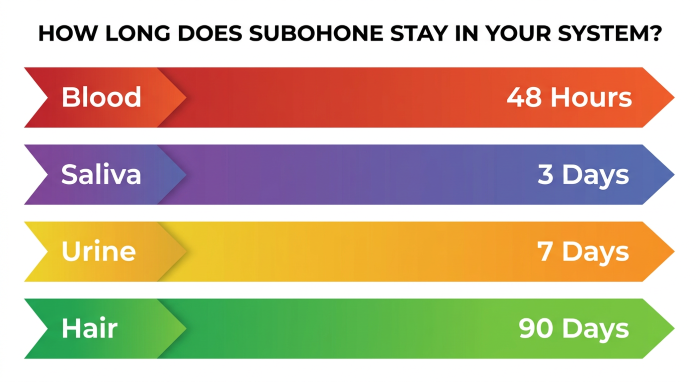
Different screening methods have varying levels of sensitivity and look for the substance in different biological markers. Most standard five-panel employment screenings do not automatically check for buprenorphine, but specialized tests do.
Urine testing is the most frequent method used in professional and support settings. Because the body excretes metabolites through the renal system, these markers are present for several days.
Testing Method | Estimated Detection Window |
Urine | 5 to 8 days |
Blood | Up to 2 days |
Saliva | Up to 3 days |
Hair | Up to 90 days |
Factors Affecting Detection
Individual biology plays a massive role in these timeframes. Factors such as body mass index, age, and organ health can either accelerate or slow down the rate at which the body processes the medication.
Additionally, the duration of use matters. Those who have used the medication for a long period may have higher concentrations stored in their tissues, potentially extending the detection window in urine or hair.
What Affects How Your Body Breaks Down Suboxone
Every individual processes substances at a unique speed. Liver health is perhaps the most significant variable, as an impaired liver will struggle to break down the medication efficiently, leading to longer retention times.
Age also contributes to metabolic speed. Generally, younger individuals have faster metabolic rates, while older adults may experience a slower clearance of the medication due to natural changes in organ function.
Physical Composition and Hydration
Buprenorphine is lipophilic, meaning it can be stored in fatty tissues. Individuals with a higher body fat percentage might retain the substance slightly longer than those with lower percentages.
Hydration levels and urinary pH can also influence how quickly the kidneys can filter out metabolites. Staying well-hydrated supports the body’s natural detoxification pathways, though it will not “flush” the drug out instantly.
How Suboxone Works in The Body
When the film is placed under the tongue, the ingredients enter the bloodstream directly through the mucous membranes. This avoids the “first-pass metabolism” that occurs when a pill is swallowed and processed by the stomach first.
Once in the blood, the buprenorphine travels to the brain and attaches to the mu-opioid receptors. It stays attached for a long time, which provides the sustained relief that characterizes the medication’s effectiveness.
Elimination Routes
After the liver breaks down the chemicals, the resulting metabolites are primarily eliminated through feces and urine. Approximately two-thirds of the substance is excreted through the bowels, while the remainder leaves through the renal system.
The kidneys play a supportive role in this final stage. If a person has impaired kidney function, the elimination process may be slightly delayed, though not as significantly as with liver impairment.
Factor | Impact on System Duration |
High Liver Function | Faster metabolism and clearance |
Frequent Long-term Use | Longer detection in hair and urine |
Dehydration | Potential for concentrated, detectable metabolites |
Suboxone side effects
While this medication is a cornerstone of modern recovery, it is not without potential side effects. Most individuals tolerate it well, but some may experience discomfort as their body adjusts to the dosage.
Common experiences include nausea, headaches, or constipation. These are typically manageable and often subside as the body becomes accustomed to the regular presence of the medication.
Interactions to Avoid
It is vital to avoid combining this medication with other central nervous system depressants, such as alcohol or benzodiazepines. These combinations can lead to dangerous respiratory depression.
Always ensure that any professional providing care is aware of all supplements and over-the-counter medications being taken. This transparency prevents adverse reactions and ensures the medication works as intended.
Seek professional support for your journey at Palm Coast Treatment Solutions by calling.

Is Suboxone Legal and Will It Show on Drug Tests
Suboxone is a Schedule III controlled substance, meaning it has a recognized use but also a potential for misuse. It must be used under the guidance of a professional with the appropriate licensing.
For those concerned about drug testing, having a valid prescription is a legal protection. Employers and screening administrators should be informed of the prescription to ensure the results are interpreted correctly.
When To Get Help for Opioid Use or Suboxone Treatment
Determining the right path for recovery is a personal process that should be guided by experts. Every person’s journey is different, and a tailored plan is necessary to address specific health needs and goals.
Professional settings offer the safety and accountability needed to navigate the complexities of substance use. This ensures that the transition is handled with the highest standards of care and respect for the individual’s well-being.
Palm Coast Treatment Solutions provides professional support and professional programs designed to help individuals achieve long-term stability. Their team focuses on evidence-based methods and personalized care to ensure every person receives the resources necessary for a healthy and sustainable future in recovery.
Medical Disclaimer: This article is for informational purposes only and is not a substitute for professional medical advice.
Key Takeaways
- Buprenorphine has a long half-life, staying in the body for over a week.
- Urine tests can typically detect the substance for 5 to 8 days.
- Liver health and age are major factors in how quickly the drug clears.
- Mixing this medication with alcohol or benzodiazepines is extremely dangerous.
Professional support is essential for a successful long-term recovery process.
FAQs
How long does Suboxone stay in your urine?
Suboxone can generally be detected in urine for five to eight days after the last use. This window can extend for individuals who have used the medication frequently over a long period, as metabolites can accumulate in the body’s tissues and be released slowly over several days.
Can a standard drug test detect Suboxone?
Most standard five-panel drug tests do not screen for buprenorphine. However, many specialized or expanded screenings used by employers and recovery programs now include it. If you have a valid prescription, providing documentation to the testing facility ensures that a positive result is recorded as a negative.
What factors make Suboxone stay longer?
Factors such as impaired liver function, older age, and higher body mass index can slow down the clearance process. Additionally, the frequency and dosage of use play a role; those on higher maintenance doses for extended periods will typically have a longer detection window than one-time users.
Is Suboxone detectable in a blood test?
Yes, but the detection window for blood is much shorter than for urine. Buprenorphine is typically detectable in the bloodstream for up to 48 hours. Because of this short window and the invasive nature of the test, blood screenings are less common than urine or saliva tests.
Does Suboxone show up in hair tests?
Suboxone can be detected in hair follicles for up to 90 days, similar to most other substances. Hair testing provides a much longer historical record of substance use compared to fluid-based tests, making it a common choice for situations requiring a long-term overview of an individual’s history.