In This Blog
- Understanding the Biological Timeline of Alcohol Detection
- A Certain Window of Accuracy of Blood Testing
- How the Body Processes and Eliminates Ethanol.
- Individual factors that influence metabolic rates.
- Possible risks of Persistent Alcohol Presence in the System.
- Practical Stabilization and Long-Term Recovery Support.
The question of how long alcohol is in your blood is a very common one among individuals who have to find their way through the requirements of the workplace, legal matters, or the doctor. Even though it may seem that the physical body impacts of alcohol may decline within just a few hours, the biological remnant of alcohol may still be present in the blood for a specific window of time.
Alcohol is a central nervous system depressant that is seemingly absorbed into the blood almost immediately.
Once in the blood, it is circulated throughout the body, making an impact on all the organs and body parts until it reaches the liver.
These complicated issues of alcohol metabolism are a vital aspect of learning about personal well-being.
This may be a time to think about the use patterns and to learn more about the possibilities of professional help to those who feel threatened by the detection windows.
Navigating the complexities of alcohol metabolism is an essential part of understanding one’s own health and the risks associated with frequent consumption. For those who find themselves concerned about detection windows, it may be an opportunity to reflect on use patterns and explore professional support options.
Expert Advice: Blood tests offer a highly accurate but narrow window for detecting recent alcohol consumption.
How Does Your Body Break Down Alcohol?
When one drinks alcohol, it is transported via the digestive system to the bloodstream via the stomach and small intestine.
Breaking down ethanol to usable or excretable parts at a constant rate is mainly done by the liver.
This is regulated by enzymes that will always operate at the same rate of action i.e. the body has a limit to the amount of alcohol it can handle at any one time.
- Absorption: In the stomach, about one-fifth of the alcohol is absorbed and then the rest enters into the blood via small intestine.
- Distribution: The ethanol is transported to the brain, heart and muscles, causing the physical feelings of intoxication.
- Elimination: The liver can cope with an average of one standard drink per hour though this varies in other people.
FACT: Alcohol is generally detectable in the blood for up to six hours.
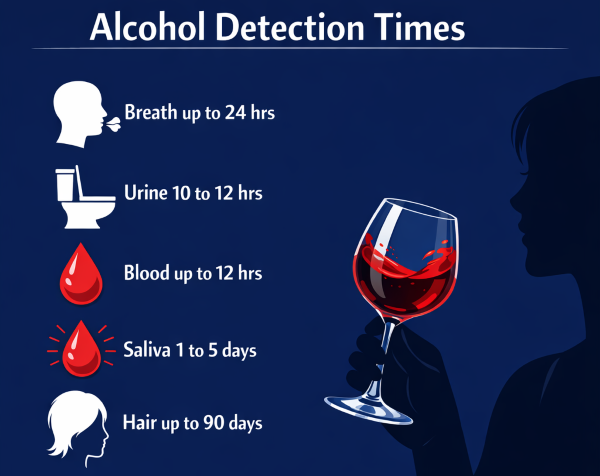
How Long Does Alcohol Show Up in a Blood Test?
Blood testing is regarded as the most important in the measurement of Blood Alcohol Concentration (BAC), as it shows the amount of alcohol in the system that is present at the moment.
Under normal circumstances, alcohol can be detected in the blood within 6 hours of the latest consumption. However, more complex lab tests may be able to spot any evidence of consumption a little further in heavy users.
The efficiency of the body in giving priority to eliminating ethanol explains the narrowness of the blood detection window.
The use of other forms of testing, like urine or hair, could provide a historical view of use, but blood testing is focused in the present.
This makes it the most significant instrument to be used in the emergency departments and by the police in the assessment of impairment on a real-time basis.
What Affects How Long Alcohol Stays in Your Blood?
Although the average metabolism rate is fairly stable, there are a number of personal factors which can affect the speed at which alcohol is cleared of the blood of an individual.
These aspects explain the difference between two individuals who consume the same amount but may have differing scores in BAC scores in an hour.
Factor | Influence on Metabolism |
Body Weight | Higher body mass often results in a lower BAC as alcohol is distributed over more tissue. |
Biological Sex | Women generally have less body water and different enzyme levels, leading to higher BACs. |
Liver Health | A healthy liver processes alcohol more efficiently than one damaged by chronic use. |
Age | Metabolic processes often slow down with age, leading to longer detection times in the blood. |
Does Eating or Drinking Water Help Clear Alcohol From Your Blood?
Food in the stomach could reduce the rate at which alcohol is absorbed in the blood but will not speed up the rate of liver metabolism.
Likewise, consuming water can aid in rehydration but will not reduce the BAC or eliminate alcohol more quickly.
- Gastric Emptying: Food slows the rate of alcohol entry into the small intestine and decelerates the initial spike in blood levels.
- Water Intake: Hydration does not influence the rate of ethanol oxidation, but hydration has a close association with physical recovery.
- Medication Interactions: There are some medicines which may interact with the liver enzyme, and this may slow down the process of elimination.
How Do Alcohol Blood Tests Compare to Other Testing Methods?
This guide, though focusing on blood, is helpful to understand how other tests compare with each other, in relation to their detection capabilities. Each method has different aims.
Test Type | Detection Window | Primary Use Case |
Blood | Up to 6 Hours | Measuring current, active impairment levels. |
Breath | Up to 24 Hours | Roadside testing and immediate screening. |
Urine | 12 to 48 Hours | Employment screening and abstinence monitoring. |
Hair | Up to 90 Days | Identifying long-term patterns of heavy consumption. |
What are the Health Risks of Alcohol Staying in Your Blood?
The long-term presence of alcohol in the blood or the regular consumption of alcohol puts a large strain on the essential organs of the body.
The heart needs to work harder to force the blood through, and the liver can become inflamed as it must keep up with metabolic demand.
This could lead to long-term health issues, which could last long after the alcohol has been transferred.
The perpetual presence of the depressant in the blood can alter the brain chemistry that changes moods, increases anxiety and disrupts sleep.
The effect of such a change typically becomes a cycle of further use as the individual becomes in need of getting rid of the pain that the substance itself is causing.
Being conscious of these risks is an essential way of making a choice of a healthy and stable life.
For professional assistance with recovery, contact Palm Coast Treatment Solutions.
More profound work of recovery like behavioral therapy and lifestyle change is founded on stabilization.
It allows the brain to set into motion the resetting of the reward circuits without the ethanol interference in the blood. Such an initiation can be a significant part of long-term stability and relapse prevention.
What Therapies Help With Alcohol Recovery?
In the case where the blood is clear and the individual in question is steady, behavioral therapies are available to remove the psychological reasons to use.
Methods such as Cognitive Behavioral Therapy (CBT) enable individuals to be able to identify the triggers, which causes them to drink.
By creating new coping strategies, participants will be able to cope with stress and social circumstances even without the use of substances.
- Identifying Triggers: Learn to identify persons, environments, or moods that arouse the urge to drink.
- Coping Skills: Learning a positive reaction to stressful circumstances.
- Relapse Prevention: Formulating an all-inclusive plan to maintain wellness after the post formal program.
Why Does a Support Network Matter in Alcohol Recovery?
The process of sustainable wellness can hardly be accomplished in isolation; a supportive community is involved.
This includes professional and peer support, small groups, and family members aware of the complexities of recovery.
Opening up to others will relieve loneliness and embarrassment that is common with alcohol related sufferings.
A good support system offers responsibility and support in the good and bad times of life. Family education is part of many professional programs to enable loved ones to offer healthy support.
Such a unified environment makes the person more resilient to survive in the new and stable environment.
How Do You Build Long-Term Wellness After Alcohol Recovery?
It is only in a gradual process before it forms part of the long-term health that is beyond the time of blood detection.
It involves commitment to lifelong self-management, including regular therapy, proper nutrition and exercise.
The person acquires a sense of independence and control to their own future as the body and brain heal.
The services offered by professionals are meant to offer the atmosphere and experience required for this change.
With the help of a continuum of care, i.e., stabilization, to outpatient support, one can be sure that his/her recovery will be based on firm ground.
Each action to pursue wellness is one that is invested in a greater quality of living and a more secure future.
How Do You Plan for a Stable Future After Alcohol Recovery?
Mindfulness and stress management are popular approaches to comprehensive support plans. These are used to control the nervous system, which has probably been impaired by a long time of alcohol consumption.
Having a strong and flexible plan, people will be able to have autonomy once again and be certain with their objectives.
Professional services concentrate on the objectives of providing the advice and climate that will result in this achievement.
Any move towards stabilization is a step towards a more predictable and gratifying future.
Palm Coast Treatment Solutions provides evidence-informed programs and professional support for those navigating the complexities of alcohol recovery. Our team focuses on providing the tools and professional environment necessary for individuals to achieve stability and build a foundation for sustainable, long-term wellness through manageable pathways.
Medical Disclaimer: This article is for informational purposes only and is not a substitute for professional medical advice.
Key Takeaways
- Alcohol can be detected in the blood about 6 hours of its intake.
- Metabolism occurs at a fixed rate of about one standard drink per hour.
- Factors like weight, sex, and age significantly influence an individual’s BAC level.
- Blood tests are the most accurate way to measure current impairment levels.
- Long-term wellness requires addressing behavioral patterns beyond the detection window.
FAQs
How long does it take for alcohol to leave your blood?
On average, alcohol is detectable in the blood for up to 6 hours after the last drink was consumed. The body metabolizes ethanol at a steady rate of roughly 0.015% per hour, meaning it takes time for the liver to process the substance completely regardless of how much water you drink or food you eat.
Can you speed up the metabolism of alcohol?
No, there is no scientifically proven way to speed up the liver’s metabolism of alcohol. While coffee or cold showers might make you feel more alert, they do not change the blood alcohol concentration or the rate at which the liver enzymes break down the ethanol. Only time allows the body to clear the blood of alcohol.
Is a blood test more accurate than a breathalyzer?
Yes, a blood test is considered more accurate than a breathalyzer because it directly measures the concentration of ethanol circulating in the bloodstream. Breathalyzers measure the alcohol in your breath to estimate the blood level, which can sometimes be influenced by external factors or recent consumption. Blood tests provide a definitive clinical measurement.
Does food help clear alcohol from your blood?
Food does not help clear alcohol that is already in your blood. Eating before or while drinking can slow down the absorption of alcohol into the bloodstream, which may result in a lower peak BAC, but once the alcohol has been absorbed, the liver processes it at the same fixed rate regardless of food intake.
When should someone seek professional help for drinking?
You should seek professional help if you find that alcohol use is negatively impacting your health, relationships, or professional life. If you experience withdrawal symptoms like tremors or anxiety when you stop, or if you find it difficult to control the amount you consume, a professional stabilization program can provide a safe and professional start to recovery.