Introduction
The first step toward healing is recognizing the signs of substance abuse, whether in yourself or someone you love. Substance abuse is the excessive use of drugs or alcohol in a way that harms a person’s health, relationships, or ability to function at work or school. It affects people regardless of age or background, and left untreated, it can progress into a full substance use disorder. This guide covers the different types of substance abuse, common symptoms, what tends to cause it, and how to find professional help.
Key Takeaways
- Substance abuse is the harmful use of alcohol, illicit drugs, or prescription medications, whether or not it meets the clinical threshold for addiction.
- The earlier someone takes action, the better the recovery outcomes tend to be.
- Addiction is not a matter of willpower or poor discipline; it’s a treatable medical condition.
- Treatment for substance use and co-occurring mental health conditions is widely available.
- A range of therapy options exist, and the right fit depends on the individual.
What is Substance Abuse?
Substance abuse is the harmful or risky use of alcohol, illegally obtained prescription drugs, or other substances in a way that damages a person’s health and interferes with work, school, relationships, or daily responsibilities. It applies even to people who don’t meet the clinical definition of addiction but still experience real problems tied to their use.
According to the American Psychological Association, substance use isn’t an all-or-nothing category. Some people misuse a substance without using it constantly; others use it regularly enough that it becomes a diagnosable substance use disorder.
The most commonly misused substances include alcohol, prescription opioids, fentanyl, cocaine, methamphetamine, marijuana, benzodiazepines, and nicotine. A licensed substance abuse counselor typically assesses the severity of use and recommends the type of care most likely to help.
Types of Substance Abuse
Different substances carry different risks, and recognizing the specific pattern is what helps someone know when outside help is needed.
Alcohol abuse. Alcohol remains the most commonly abused substance in the U.S. Drinking more than intended, or drinking despite knowing it will cause problems, counts as abuse, and both patterns can lead to dependence, along with real damage to the heart and liver over time.
Abuse of prescription drugs. This can look like taking more of a prescribed medication than directed, taking someone else’s prescription, or using a medication specifically for its euphoric effect. Prescription opioids, benzodiazepines, sleep medications, and ADHD stimulants are the categories most often involved.
Abuse of illegal drugs. Heroin, cocaine, methamphetamine, MDMA, and fentanyl all carry serious long-term health risks and a real risk of overdose, made worse by the fact that street supplies are often inconsistent or contaminated.
Abuse of cannabis. Despite legal changes across the U.S., cannabis misuse still exists, and heavy use can disrupt cognitive function and mental health.
Polysubstance use. Combining multiple substances, sometimes called drug stacking, is both common and especially dangerous. Mixing alcohol with opioids or benzodiazepines specifically raises the risk of fatal respiratory failure.
Understanding which type is involved is what allows a provider to recommend the right treatment rather than a generic one.
Why Does Substance Abuse Develop?
Substance use disorders rarely come down to a single cause. Usually, several factors combine: biological, psychological, and environmental or social. Common risk factors include a family history of substance use, adverse childhood experiences or trauma, chronic stress, untreated mental health conditions like anxiety or depression, peer pressure, easy access to a substance, and chronic pain. None of these guarantee that someone will develop a problem, but they raise the odds.
Common Substance Abuse Examples
Recognizing these patterns in yourself or someone else is often the first sign professional help is worth considering: drinking daily despite problems at work or home; regularly taking more pain medication than prescribed; using someone else’s prescription; using cocaine despite real financial or legal consequences; combining alcohol with anti-anxiety medication; or using substances specifically to cope with stress, anxiety, or depression.
Become Part of the Start of Recovery
There’s no need to face substance use or dependence alone. Palm Coast Treatment Solutions has a team ready to walk through a range of treatment options to help someone heal from addiction, including ongoing support for anyone who has relapsed and help building a personal treatment plan alongside therapy.
Call for Admissions to talk with someone.
Expert Perspective
“Recovery tends to start the moment someone stops seeing addiction as a personal failing and starts treating it as the medical condition it actually is,” says the clinical team at Palm Coast Treatment Solutions. “Early assessment and a plan built around the individual give people the best shot at lasting recovery.”
Substance Abuse Treatment and Support
Treatment recommendations depend on each person’s specific needs.
Treatment Option | Purpose | Best For |
Medical Detox | Safely manage withdrawal symptoms | Moderate to severe substance dependence |
Residential Treatment | 24/7 structured care | Individuals needing intensive support |
Partial Hospitalization Program (PHP) | Daytime clinical treatment | Those needing intensive care while living at home |
Intensive Outpatient Program (IOP) | Flexible treatment with therapy | Individuals balancing work, school, or family |
Individual Counseling | Address emotional and behavioral concerns | Nearly all stages of recovery |
Group Therapy | Peer support and shared learning | Building recovery skills |
Family Therapy | Improve communication and healing | Families affected by substance use |
Aftercare Planning | Prevent relapse and support long-term recovery | Maintaining lasting sobriety |
Successful treatment usually combines behavioral therapy, education, relapse prevention planning, family involvement, and continued support after formal treatment ends.
Symptoms of Substance Abuse
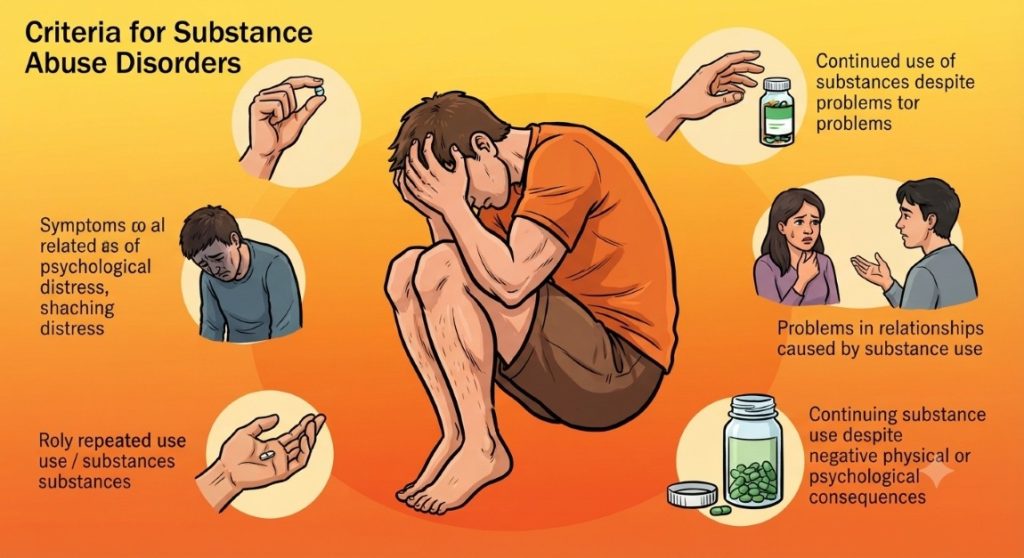
Substance abuse tends to develop gradually, which is exactly why families and even the person involved often don’t catch it right away. Symptoms affect physical health, emotions, behavior, and relationships, and vary somewhat by substance.
Physical symptoms are often the earliest sign and can include an irregular sleep schedule, red eyes or enlarged pupils, sudden weight changes, frequent headaches, poor personal hygiene, slurred speech, or tremors.
Emotional and mental symptoms show up because substances affect the brain directly, producing mood swings, anxiety, depression, irritability, trouble concentrating, poor decision-making, a loss of motivation, and increased secrecy.
Behavioral symptoms tend to become more visible as use continues: missing work or school, declining performance, financial trouble, risky behavior, legal problems, pulling away from family and friends, losing interest in hobbies that used to matter, and continuing to use despite clear negative consequences.
No two people show identical symptoms, but a cluster of these showing up together is a reasonable signal that it’s time to talk to a professional.
Causes of Substance Abuse
No single factor fully explains substance abuse. It’s typically the product of biological, psychological, environmental, and social influences together.
Genetics
Research shows that genetics can meaningfully raise a person’s risk of developing a substance use disorder, and having a close family member with one increases that risk further.
Mental health conditions
People living with anxiety, depression, PTSD, bipolar disorder, or other psychiatric conditions sometimes turn to substances to numb or distract from emotional pain. Left untreated, that cycle tends to get harder to break over time.
Trauma and stress
Childhood trauma, family violence, military experience, grief, and chronic stress can all drive people toward substances as a coping mechanism when healthier options haven’t been available or taught.
Peer and social influence
Friends, family, workplace culture, and the broader social environment all shape substance use. Repeated exposure to others using drugs or alcohol can normalize experimenting or regular use.
Availability
Easy access to prescription medication, alcohol, or illegal drugs, combined with emotional or social stress, raises the likelihood of misuse.
Understanding what’s actually driving substance abuse is what allows a clinician to treat the root cause instead of just managing the symptoms.
What to Do If You Think You Need Help
Step 1: Be honest about your substance use. Consider whether your drinking or drug use is genuinely affecting your health, work, relationships, finances, or daily responsibilities. An honest assessment is what makes real change possible.
Step 2: Schedule a professional assessment. A licensed behavioral health professional can evaluate the level of use and help build a plan for what comes next. Starting this process earlier tends to improve the outcome.
Step 3: Follow your personalized treatment plan. Recovery looks different for everyone. Your plan might include counseling, outpatient or residential treatment, family therapy, support groups, or other evidence-based approaches. Staying connected to treatment and support systems is what tends to make progress last.
You Don’t Have to Face Substance Abuse Alone
Asking for help, for yourself or someone you love, is one of the most effective things you can do. Palm Coast Treatment Solutions provides individualized addiction treatment in a supportive, safe environment built to give recovery a real foundation.
Contact Palm Coast Treatment Solutions today for a confidential evaluation.

Substance Abuse Treatment Center
Choosing the right treatment center genuinely affects recovery. Substance use doesn’t look the same for everyone, which is why care at Palm Coast Treatment Solutions is built around each person’s physical, emotional, and psychological needs rather than a single fixed program. The team focuses on the root causes behind the substance use and helps clients build coping tools that hold up well past the treatment process itself.
Services include comprehensive clinical assessments, medical detox referrals, residential treatment referrals, Partial Hospitalization Program (PHP), Intensive Outpatient Program (IOP), individual therapy, group counseling, family therapy, relapse prevention planning, and post-treatment support.
Recovery isn’t just about stopping drug or alcohol use. It’s about rebuilding trust, reconnecting with the people who matter, and making real progress physically and mentally toward a better future. Whether you’ve been dealing with this for years or just recognized it recently, the team here is ready to help.
Recovery isn’t just about stopping drug or alcohol use. It’s about rebuilding trust, reconnecting with the people who matter, and making real progress physically and mentally toward a better future. Whether you’ve been dealing with this for years or just recognized it recently, the team here is ready to help.
Conclusion
Education is one of the most effective early tools for preventing, recognizing, and treating substance abuse. It can affect anyone, regardless of age, background, or circumstance, but it’s also highly treatable with the right support. The real benefits of early intervention show up in health, relationships, and the avoidance of bigger problems down the road.
Don’t wait for things to get worse if you notice the signs in yourself or someone you love. Every recovery journey starts with the same first step: asking for help.
Take the First Step
You don’t have to face addiction to drugs or alcohol on your own. Palm Coast Treatment Solutions provides evidence-based treatment around the clock, built around your specific recovery goals.
Contact Palm Coast Treatment Solutions today for a confidential consultation.
.
Frequently Asked Questions
What is the definition of substance abuse?
Substance abuse is the repeated or harmful use of alcohol, prescription medications, or illegal drugs in ways that negatively affect a person’s health, relationships, work, school, or daily responsibilities. When substance use continues despite harmful consequences, professional evaluation and treatment may be appropriate.
Which best defines substance abuse?
The best definition of substance abuse is the continued use of substances despite physical, emotional, social, legal, or financial harm. It involves patterns of use that interfere with normal functioning and may increase the risk of developing a substance use disorder if left untreated.
What is considered to be substance abuse?
Substance abuse includes behaviors such as binge drinking, misusing prescription medications, using illegal drugs, mixing substances, or repeatedly using alcohol or drugs despite negative consequences. These behaviors can affect health, relationships, employment, education, and overall quality of life.
What are the six types of substance abuse?
Six common categories include alcohol misuse, opioid misuse, stimulant misuse, depressant misuse, cannabis misuse, and polysubstance use. Each type presents unique health risks and may require different treatment approaches based on the individual’s needs and the severity of substance use.
What are five examples of substance abuse?
Examples include drinking alcohol excessively, taking prescription opioids without a prescription, using cocaine recreationally, mixing alcohol with sedatives, and continuing to use drugs despite family or work problems. These behaviors may indicate the need for professional assessment and treatment.
What is substance abuse called?
Today, healthcare professionals commonly use the term “substance use disorder” (SUD) to describe ongoing patterns of problematic substance use. While the phrase “substance abuse” is still widely recognized, “substance use disorder” is the preferred clinical term because it reflects a diagnosable medical condition with varying levels of severity.
Author Bio
Zach Miller is the Director of Operations at Palm Coast Treatment Solutions and has more than 10 years of experience supporting individuals and families affected by substance use disorders. He collaborates with multidisciplinary behavioral health teams to improve access to evidence-based addiction treatment and recovery resources. Learn more by visiting the About Us page at Palm Coast Treatment Solutions or connecting through the organization’s professional profiles.
Disclaimer
This article is intended for educational and informational purposes only and should not be considered medical advice, diagnosis, or treatment. If you or someone you know is experiencing problems related to alcohol or drug use, consult a qualified healthcare professional or contact Palm Coast Treatment Solutions for a confidential assessment. If you believe someone is experiencing a medical emergency or overdose, call 911 immediately.
References
- American Psychological Association (APA). Substance Use, Misuse, and Addiction.
https://www.apa.org/topics/substance-use-abuse-addiction - Mayo Clinic. Drug Addiction (Substance Use Disorder): Symptoms and Causes.
https://www.mayoclinic.org/diseases-conditions/drug-addiction/symptoms-causes/syc-20365112 - Substance Abuse and Mental Health Services Administration (SAMHSA). National Helpline and Treatment Resources.
https://www.samhsa.gov - National Institute on Drug Abuse (NIDA). Drugs, Brains, and Behavior: The Science of Addiction.
https://nida.nih.gov